Cong Ming, Lv Jiasen, Liu Xiaoli, Zhao Jianmin, Wu Huifeng
Key Laboratory of Coastal Zone Environmental Processes, Yantai Institute of Coastal Zone Research(YIC), Chinese Academy of Sciences(CAS); Shandong Provincial Key Laboratory of Coastal Zone Environmental Processes, YICCAS, Yantai Shandong, 264003 P. R. China.
Springerplus. 2013 May 20;2(1):232. doi: 10.1186/2193-1801-2-232. Print 2013 Dec.
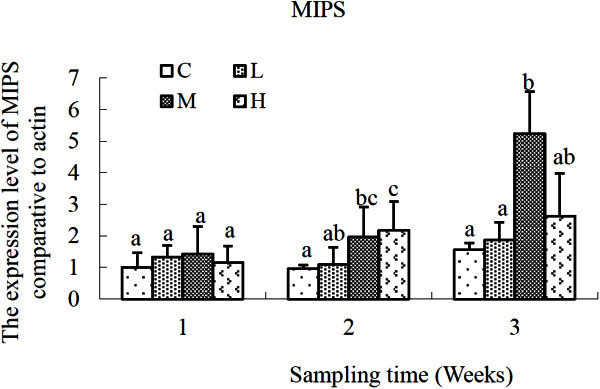
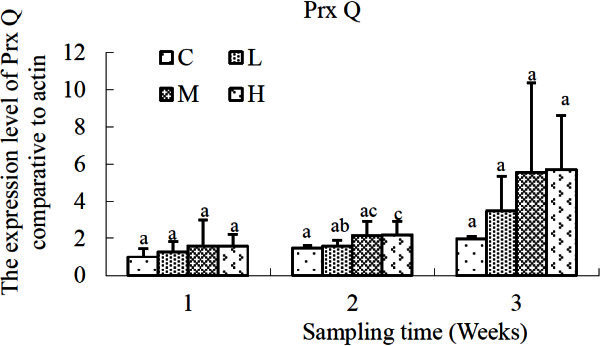
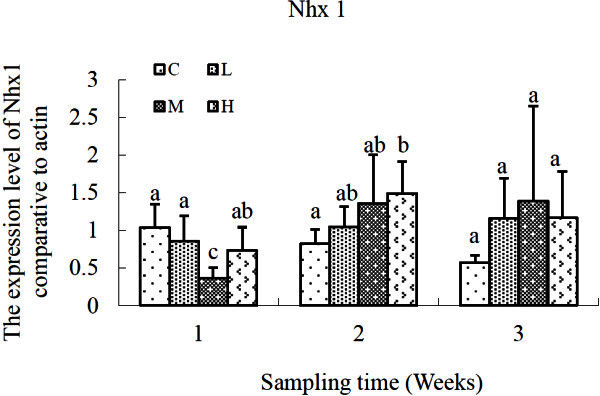
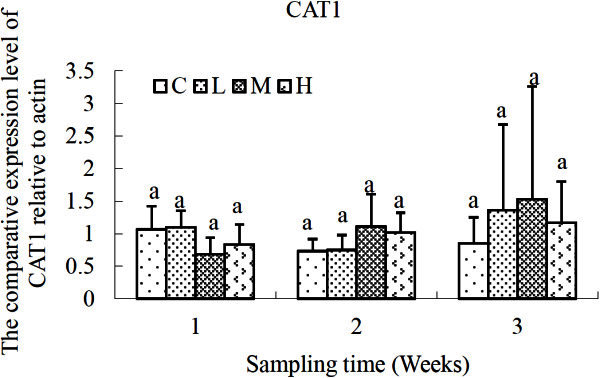
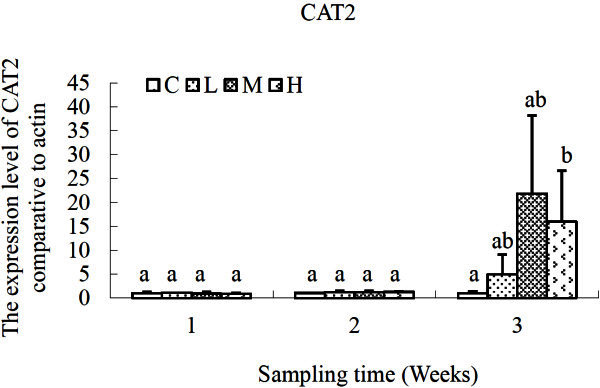
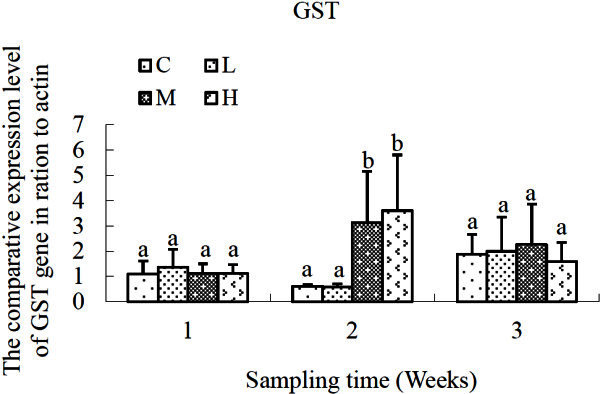
Coastal line is now polluted by many kinds of sewage including heavy metals discharged by intensive human activities. Cadmium is a nonessential heavy metal for organisms and can cause many kinds of adverse effect on the organisms. Suaeda salsa, a pioneer halophyte in intertidal zone of the Bohai coast, was proved to have cadmium-tolerant capacity. Given that, S. salsa was suggested as a potential coastal bio-indicator plant for cadmium contamination in the intertidal zone. Therefore, it is essential to investigate the responsive mechanism of S. salsa to cadmium since few studies focus on this subject till now. In the present study, six genes were selected to investigate the variation profiles of mRNA expression by fluorescent real-time quantitative PCR, including those involved in myo-inositol synthesis, redox reaction, salt-tolerant reaction. Results showed that cadmium exposure significantly modulate the mRNA expressions of MIPS, Nhx1, CAT2, GST, Prx Q genes. It suggested that cadmium exposure exerted an oxidative stress on S. salsa, disturbed Na(+) homeostasis across membranes and interfered with the metabolism of inositol. In addition, CAT2 gene could be used as a gene marker in S. salsa to indicate cadmium pollution.
海岸线目前受到多种污水的污染,包括人类密集活动排放的重金属。镉是生物体非必需的重金属,会对生物体造成多种不利影响。碱蓬是渤海海岸潮间带的先锋盐生植物,已被证明具有耐镉能力。鉴于此,碱蓬被认为是潮间带镉污染潜在的海岸生物指示植物。因此,研究碱蓬对镉的响应机制至关重要,因为到目前为止很少有研究关注这个问题。在本研究中,选择了六个基因,通过荧光实时定量PCR研究mRNA表达的变化情况,包括参与肌醇合成、氧化还原反应、耐盐反应的基因。结果表明,镉暴露显著调节了MIPS、Nhx1、CAT2、GST、Prx Q基因的mRNA表达。这表明镉暴露对碱蓬施加了氧化应激,扰乱了跨膜Na(+)稳态并干扰了肌醇代谢。此外,CAT2基因可作为碱蓬中指示镉污染的基因标记。