Key Laboratory of Biopesticide and Chemical Biology, Ministry of Education, Fujian Agriculture and Forestry University, Fuzhou 350002, Fujian, P R China.
BMC Microbiol. 2013 Jun 17;13:135. doi: 10.1186/1471-2180-13-135.
The current study was undertaken to elucidate the mechanism of yield decline in ratoon sugarcane using soil metaproteomics combined with community level physiological profiles (CLPP) analysis.
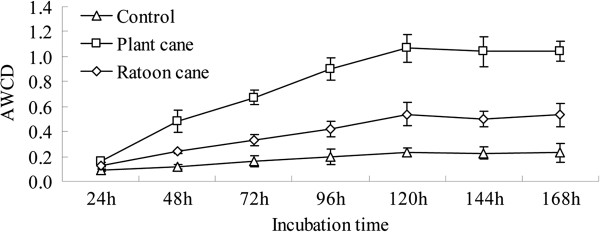
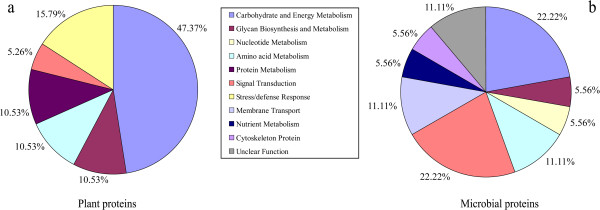
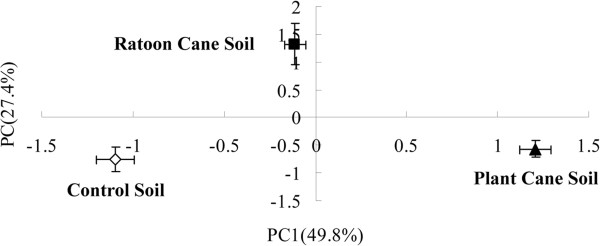
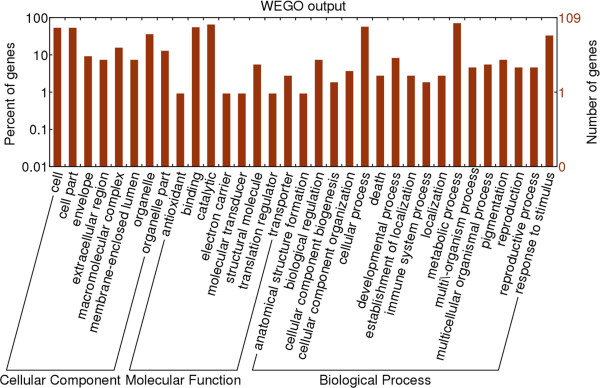
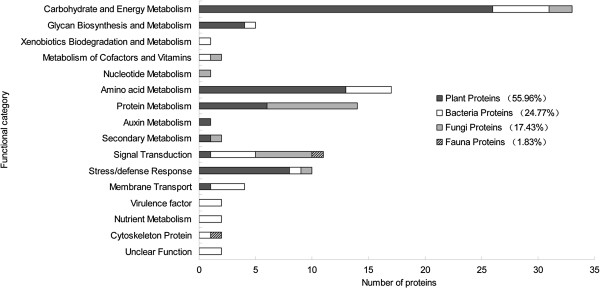
The available stalk number, stalk diameter, single stalk weight and theoretical yield of ratoon cane (RS) were found to be significantly lower than those of plant cane (NS). The activities of several carbon, nitrogen and phosphorus processing enzymes, including invertase, peroxidase, urease and phosphomonoesterase were found to be significantly lower in RS soil than in NS soil. BIOLOG analysis indicated a significant decline in average well-color development (AWCD), Shannon's diversity and evenness indices in RS soil as compared to NS soil. To profile the rhizospheric metaproteome, 109 soil protein spots with high resolution and repeatability were successfully identified. These proteins were found to be involved in carbohydrate/energy, amino acid, protein, nucleotide, auxin and secondary metabolisms, membrane transport, signal transduction and resistance, etc. Comparative metaproteomics analysis revealed that 38 proteins were differentially expressed in the RS soil as compared to the control soil or NS soil. Among these, most of the plant proteins related to carbohydrate and amino acid metabolism and stress response were up-regulated in RS soil. Furthermore, several microbial proteins related to membrane transport and signal transduction were up-regulated in RS soil. These proteins were speculated to function in root colonization by microbes.
Our experiments revealed that sugarcane ratooning practice induced significant changes in the soil enzyme activities, the catabolic diversity of microbial community, and the expression level of soil proteins. They influenced the biochemical processes in the rhizosphere ecosystem and mediated the interactions between plants and soil microbes.
本研究旨在利用土壤宏蛋白质组学结合群落水平生理图谱(CLPP)分析阐明甘蔗宿根产量下降的机制。
发现宿根蔗(RS)的有效茎数、茎径、单茎重和理论产量均显著低于新植蔗(NS)。RS 土壤中几种碳、氮和磷处理酶的活性,包括转化酶、过氧化物酶、脲酶和磷酸单酯酶,均明显低于 NS 土壤。BIOLOG 分析表明,与 NS 土壤相比,RS 土壤的平均好氧显色发展(AWCD)、香农多样性和均匀度指数显著下降。为了描绘根际宏蛋白质组,成功鉴定了 109 个具有高分辨率和可重复性的土壤蛋白质斑点。这些蛋白质参与碳水化合物/能量、氨基酸、蛋白质、核苷酸、生长素和次生代谢物、膜转运、信号转导和抗性等代谢途径。比较宏蛋白质组学分析显示,RS 土壤中有 38 种蛋白质与对照土壤或 NS 土壤相比存在差异表达。其中,与碳水化合物和氨基酸代谢以及应激反应相关的大多数植物蛋白在 RS 土壤中上调。此外,RS 土壤中与膜转运和信号转导相关的几种微生物蛋白上调。这些蛋白质被推测在微生物根定植中起作用。
我们的实验表明,甘蔗宿根栽培实践引起了土壤酶活性、微生物群落的分解代谢多样性和土壤蛋白质表达水平的显著变化。它们影响了根际生态系统的生化过程,并介导了植物与土壤微生物之间的相互作用。