School of Biological, Biomedical and Environmental Sciences, University of Hull, Hull, United Kingdom.
PLoS One. 2013 Jun 11;8(6):e65908. doi: 10.1371/journal.pone.0065908. Print 2013.
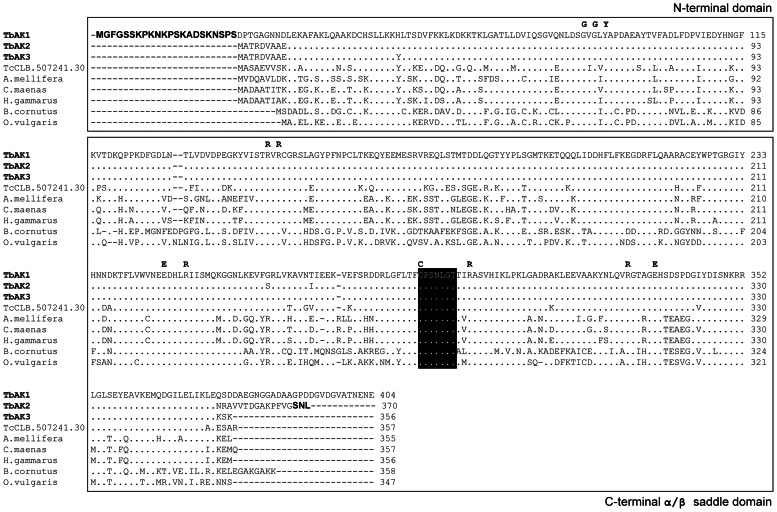
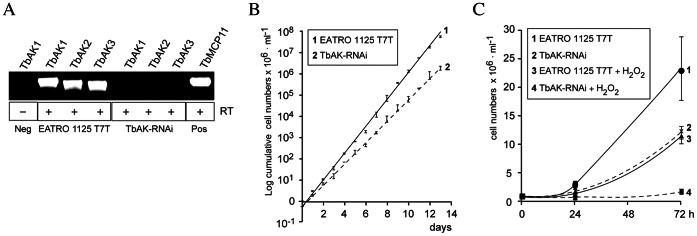
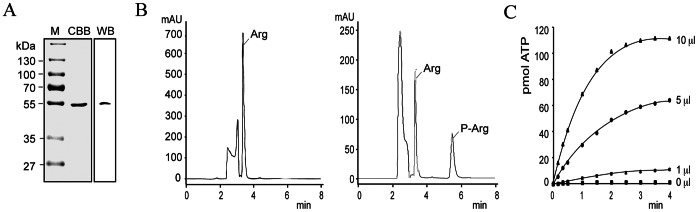
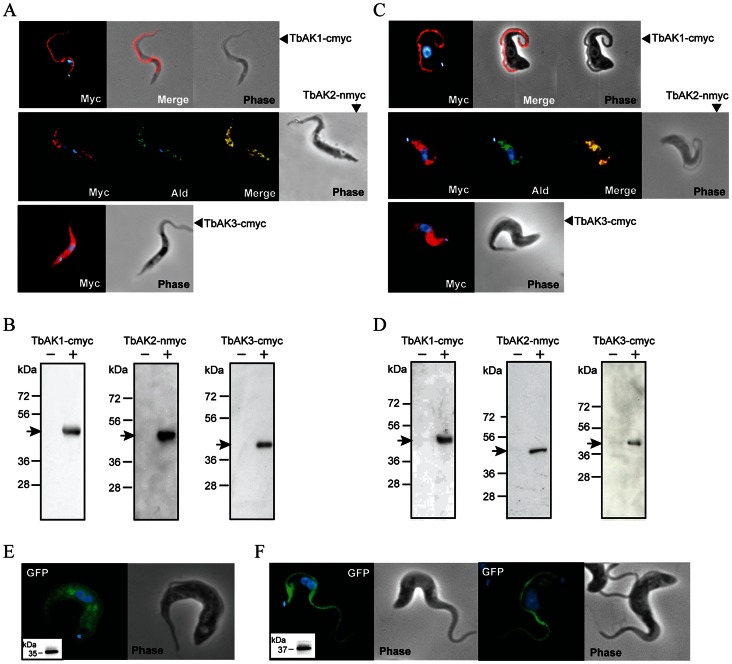
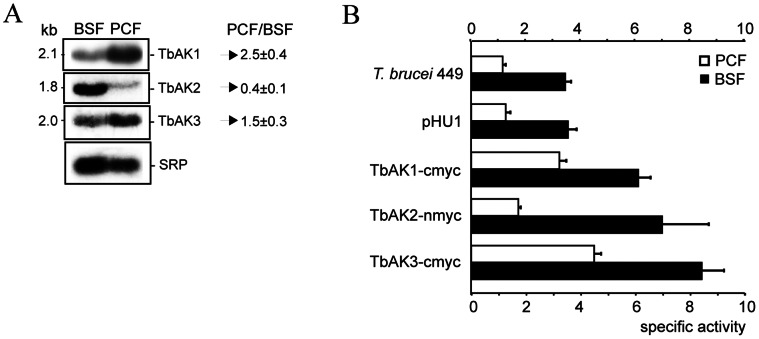
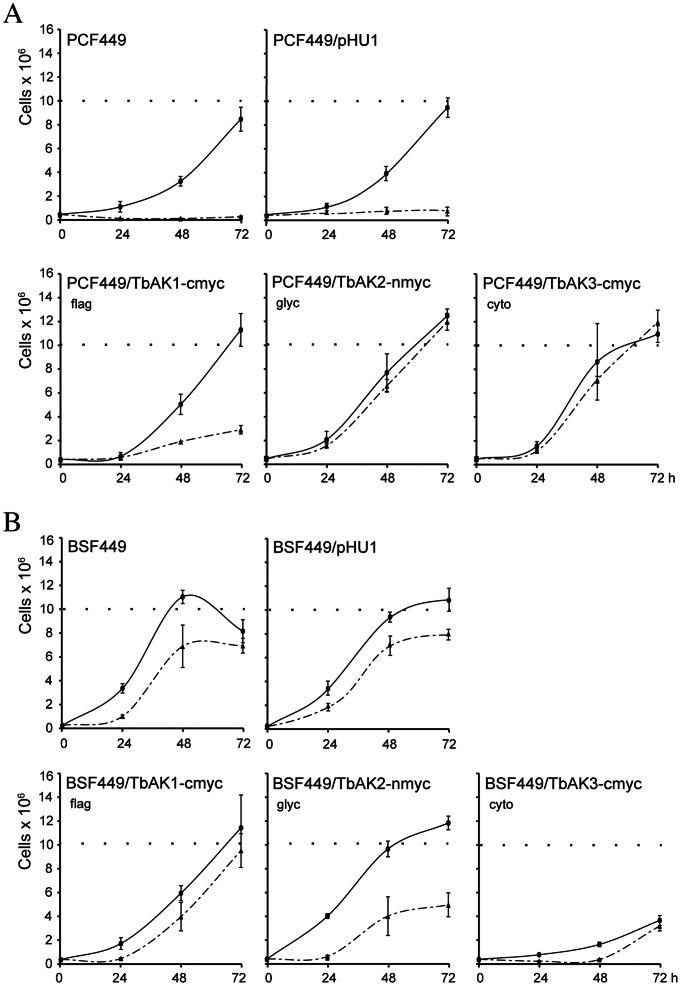
Phosphagen energy-buffering systems play an essential role in regulating the cellular energy homeostasis in periods of high-energy demand or energy supply fluctuations. Here we describe the phosphoarginine/arginine kinase system of the kinetoplastid parasite Trypanosoma brucei, consisting of three highly similar arginine kinase isoforms (TbAK1-3). Immunofluorescence microscopy using myc-tagged protein versions revealed that each isoform is located in a specific subcellular compartment: TbAK1 is exclusively found in the flagellum, TbAK2 in the glycosome, and TbAK3 in the cytosol of T. brucei. The flagellar location of TbAK1 is dependent on a 22 amino acid long N-terminal sequence, which is sufficient for targeting a GFP-fusion protein to the trypanosome flagellum. The glycosomal location of TbAK2 is in agreement with the presence of a conserved peroxisomal targeting signal, the C-terminal tripeptide 'SNL'. TbAK3 lacks any apparent targeting sequences and is accordingly located in the cytosol of the parasite. Northern blot analysis indicated that each TbAK isoform is differentially expressed in bloodstream and procyclic forms of T. brucei, while the total cellular arginine kinase activity was 3-fold higher in bloodstream form trypanosomes. These results suggest a substantial change in the temporal and spatial energy requirements during parasite differentiation. Increased arginine kinase activity improved growth of procyclic form T. brucei during oxidative challenges with hydrogen peroxide. Elimination of the total cellular arginine kinase activity by RNA interference significantly decreased growth (>90%) of procyclic form T. brucei under standard culture conditions and was lethal for this life cycle stage in the presence of hydrogen peroxide. The putative physiological roles of the different TbAK isoforms in T. brucei are further discussed.
磷酸原能量缓冲系统在高能需求或能量供应波动时期调节细胞能量稳态中发挥着重要作用。在这里,我们描述了动基体原生动物寄生虫布鲁氏锥虫的磷酸精氨酸/精氨酸激酶系统,该系统由三种高度相似的精氨酸激酶同工型(TbAK1-3)组成。使用带有 myc 标签的蛋白版本进行免疫荧光显微镜检查显示,每种同工型都位于特定的亚细胞隔室中:TbAK1 仅存在于鞭毛中,TbAK2 存在于糖酵解体中,TbAK3 存在于 T. brucei 的细胞质中。TbAK1 的鞭毛定位依赖于 22 个氨基酸长的 N 端序列,该序列足以将 GFP 融合蛋白靶向到锥虫鞭毛。TbAK2 的糖酵解体定位与保守的过氧化物酶体靶向信号,即 C 末端三肽“SNL”一致。TbAK3 没有任何明显的靶向序列,因此位于寄生虫的细胞质中。Northern blot 分析表明,每种 TbAK 同工型在布鲁氏锥虫的血液体和前鞭毛体中均有差异表达,而血液体锥虫的总细胞精氨酸激酶活性高 3 倍。这些结果表明,在寄生虫分化过程中,时间和空间能量需求发生了重大变化。增加的精氨酸激酶活性可改善过氧化氢氧化应激下前鞭毛体 T. brucei 的生长。通过 RNA 干扰消除总细胞精氨酸激酶活性会显著降低标准培养条件下前鞭毛体 T. brucei 的生长(>90%),并且在存在过氧化氢的情况下对该生命周期阶段具有致命性。进一步讨论了不同 TbAK 同工型在 T. brucei 中的潜在生理作用。