Bayer CropScience N.V., Gent, Belgium.
Plant Biotechnol J. 2013 Oct;11(8):933-41. doi: 10.1111/pbi.12085. Epub 2013 Jun 18.
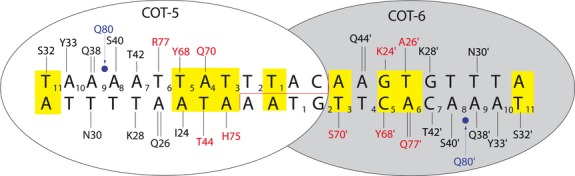
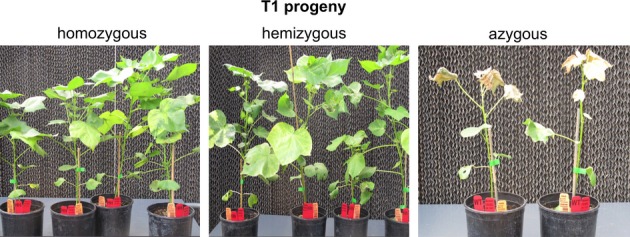
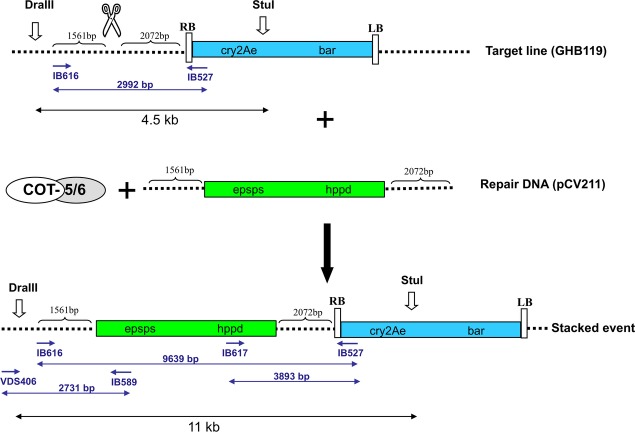
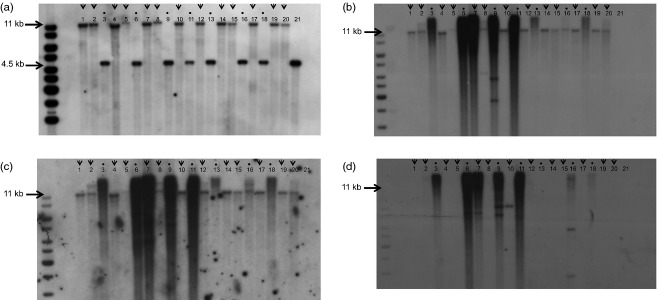
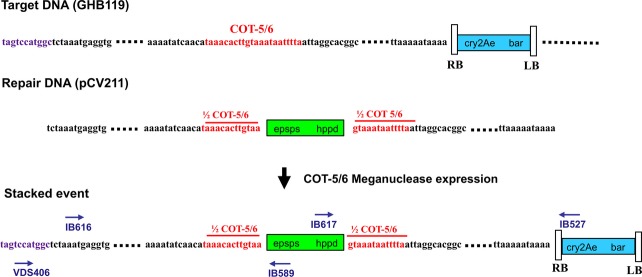
Recent developments of tools for targeted genome modification have led to new concepts in how multiple traits can be combined. Targeted genome modification is based on the use of nucleases with tailor-made specificities to introduce a DNA double-strand break (DSB) at specific target loci. A re-engineered meganuclease was designed for specific cleavage of an endogenous target sequence adjacent to a transgenic insect control locus in cotton. The combination of targeted DNA cleavage and homologous recombination-mediated repair made precise targeted insertion of additional trait genes (hppd, epsps) feasible in cotton. Targeted insertion events were recovered at a frequency of about 2% of the independently transformed embryogenic callus lines. We further demonstrated that all trait genes were inherited as a single genetic unit, which will simplify future multiple-trait introgression.
近年来,靶向基因组修饰工具的发展为如何组合多个性状带来了新的概念。靶向基因组修饰是基于使用具有定制特异性的核酸酶在特定靶标位点引入 DNA 双链断裂 (DSB)。设计了一种经过重新设计的大型核酸酶,用于特异性切割棉花中转基因昆虫控制基因座附近的内源性靶序列。靶向 DNA 切割和同源重组介导的修复的结合使得在棉花中精确靶向插入额外的性状基因(HPPD、EPSPS)成为可能。靶向插入事件的回收率约为独立转化的胚性愈伤组织系的 2%。我们进一步证明,所有性状基因都作为一个单一的遗传单位遗传,这将简化未来的多性状导入。