Faculdade de Medicina, Universidade de São Paulo, Heart Institute (InCor), Pulmonary Division, São Paulo/SP, Brazil.
Clinics (Sao Paulo). 2013 Apr;68(4):441-8. doi: 10.6061/clinics/2013(04)02.
Chronic paracoccidioidomycosis can diffusely affect the lungs. Even after antifungal therapy, patients may present with residual respiratory abnormalities due to fungus-induced lung fibrosis.
A cross-sectional analysis of 50 consecutive inactive, chronic paracoccidioidomycosis patients was performed using high resolution computed tomography, pulmonary function tests, ergospirometry, the six-minute walk test and health-related quality of life questionnaires.
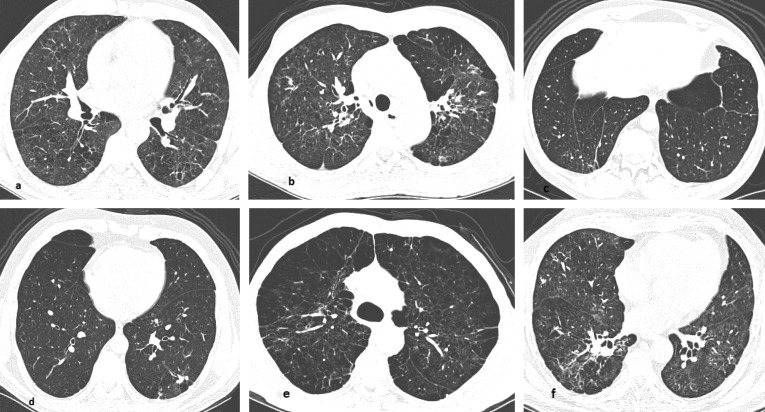
Radiological abnormalities were present in 98% of cases, the most frequent of which were architectural distortion (90%), reticulate and septal thickening (88%), centrilobular and paraseptal emphysema (84%) and parenchymal bands (74%). Patients typically presented with a mild obstructive disorder and a mild reduction in diffusion capacity with preserved exercise capacity, including VO2max and six-minute walking distance. Patient evaluation with the Saint-George Respiratory Questionnaire showed low impairment in the health-related quality of life, and the Medical Research Council questionnaire indicated a low dyspnea index. There were, however, patients with significant oxygen desaturation upon exercise that was associated with respiratory distress compared with the non-desaturated patients. The initial counterimmunoelectrophoresis of these patients was higher and lung emphysema was more prominent; however, there were no differences in the interstitial fibrotic tomographic abnormalities, tobacco exposure, functional responses, exercise capacity or quality of life.
Inactive, chronic paracoccidioidomycosis patients show persistent and disseminated radiological abnormalities by high resolution computed tomography, short impairments in pulmonary function and low impacts on aerobic capacity and quality of life. However, there was a subset of individuals whose functional impairment was more severe. These patients present with higher initial serology and more severe emphysema, stressing the importance of adequate treatment associated with tobacco exposure cessation.
慢性球孢子菌病可广泛影响肺部。即使在抗真菌治疗后,由于真菌引起的肺纤维化,患者仍可能出现残留的呼吸异常。
对 50 例连续的非活动性慢性球孢子菌病患者进行了横断面分析,使用高分辨率计算机断层扫描、肺功能测试、运动肺功能测试、六分钟步行测试和健康相关生活质量问卷。
影像学异常见于 98%的病例,最常见的是结构扭曲(90%)、网状和间隔增厚(88%)、小叶中心和小叶间隔气肿(84%)和实质带(74%)。患者通常表现为轻度阻塞性障碍和轻度弥散能力下降,但运动能力正常,包括 VO2max 和六分钟步行距离。圣乔治呼吸问卷评估患者的健康相关生活质量受损程度较低,而医学研究委员会问卷表明呼吸困难指数较低。然而,一些患者在运动时出现明显的氧饱和度下降,与非低氧饱和患者相比,这些患者出现呼吸窘迫。这些患者的初始补体结合免疫电泳较高,肺气肿更明显;然而,在间质性纤维化的影像学异常、吸烟暴露、功能反应、运动能力或生活质量方面没有差异。
非活动性慢性球孢子菌病患者通过高分辨率计算机断层扫描显示持续和弥散的影像学异常,肺功能短暂受损,有氧能力和生活质量受影响较小。然而,有一部分人的功能损伤更为严重。这些患者的初始血清学更高,肺气肿更严重,强调了适当治疗和戒烟的重要性。