Center for Traditional Medicine and Drug Research, Kenya Medical Research Institute, Nairobi, Kenya.
PLoS One. 2013 Jun 13;8(6):e65619. doi: 10.1371/journal.pone.0065619. Print 2013.
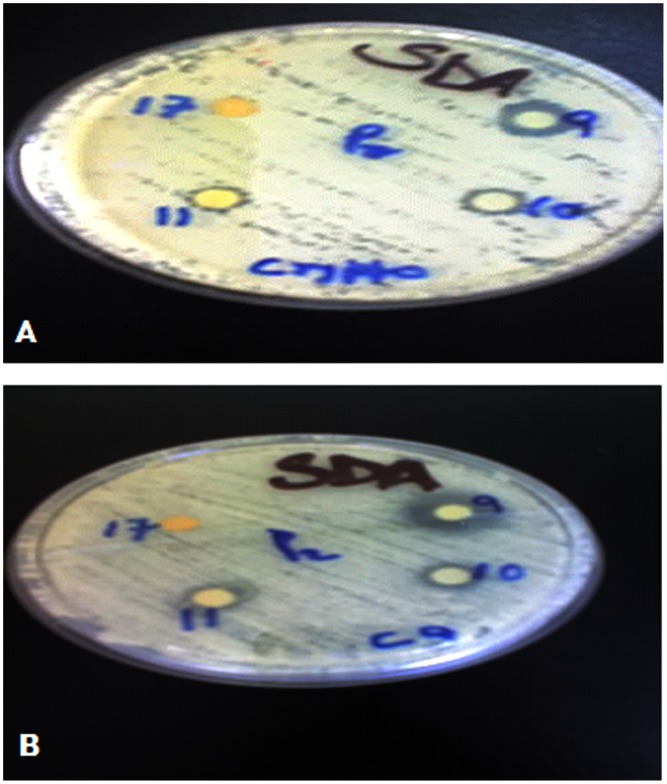
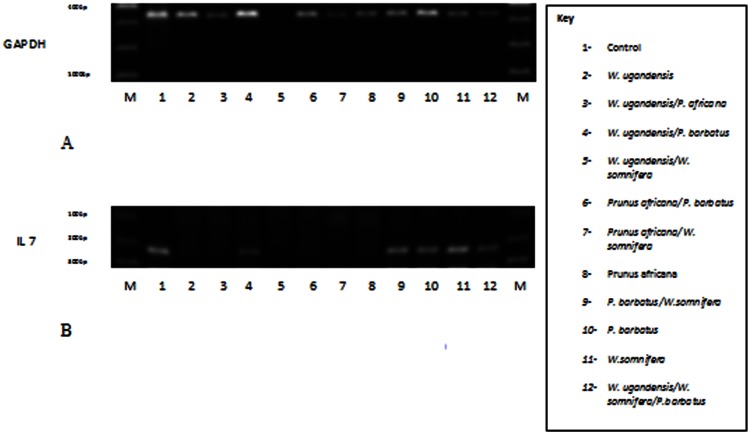
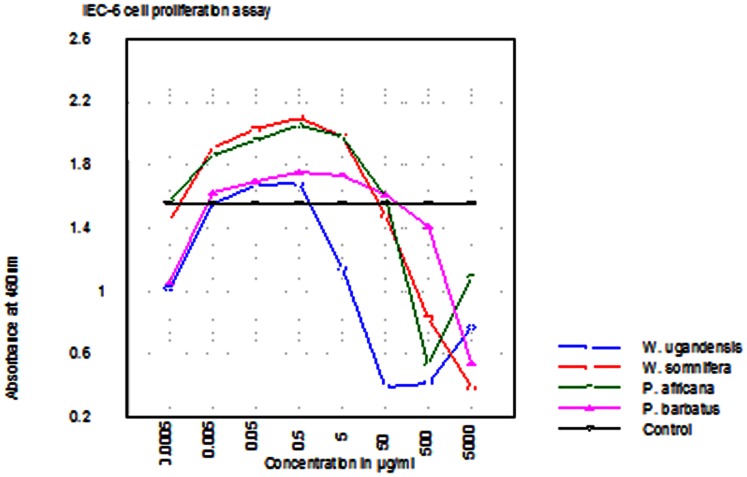
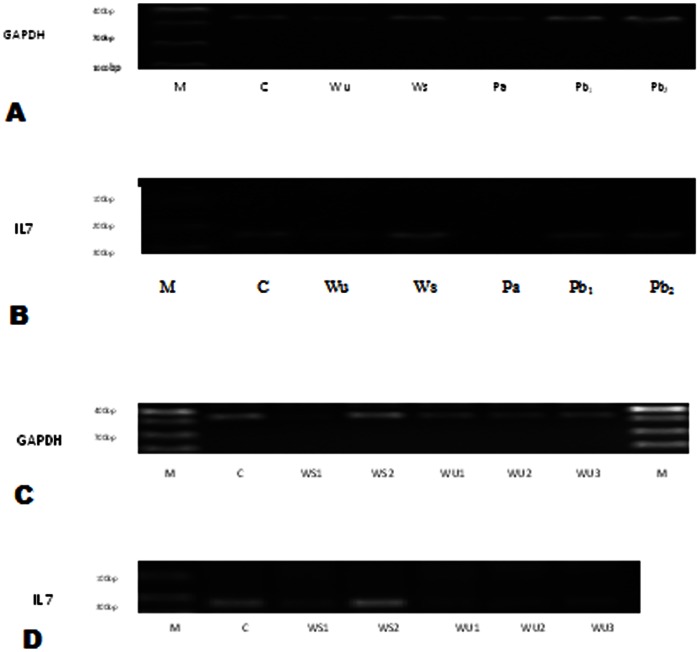
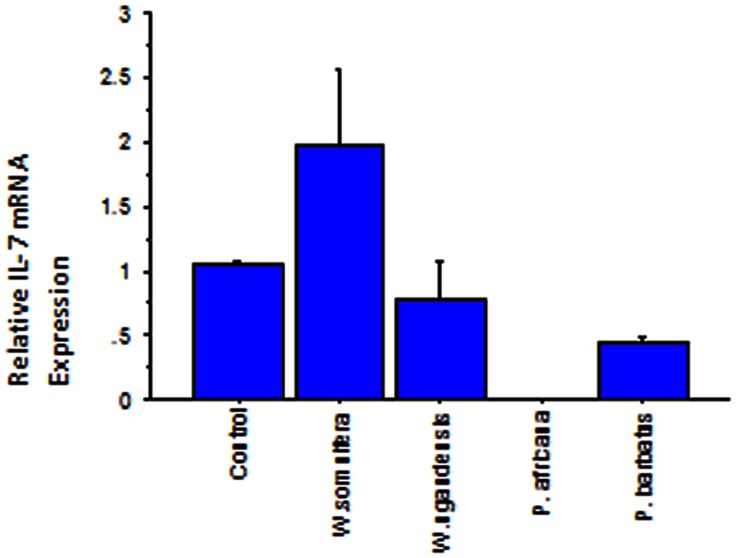
Withania somnifera, Warbugia ugandensis, Prunus africana and Plectrunthus barbatus are used traditionally in Kenya for treatment of microbial infections and cancer. Information on their use is available, but scientific data on their bioactivity, safety and mechanisms of action is still scanty. A study was conducted on the effect of organic extracts of these plants on both bacterial and fungal strains, and their mechanisms of action. Extracts were evaluated through the disc diffusion assay. Bacteria and yeast test strains were cultured on Mueller-Hinton agar and on Sabouraud dextrose agar for the filamentous fungi. A 0.5 McFarland standard suspension was prepared. Sterile paper discs 6 mm in diameter impregnated with 10 µl of the test extract (100 mg/ml) were aseptically placed onto the surface of the inoculated media. Chloramphenicol (30 µg) and fluconazole (25 µg) were used as standards. Discs impregnated with dissolution medium were used as controls. Activity of the extracts was expressed according to zone of inhibition diameter. MIC was determined at 0.78-100 mg/ml. Safety studies were carried using Cell Counting Kit 8 cell proliferation assay protocol. To evaluate extracts mechanisms of action, IEC-6 cells and RT-PCR technique was employed in vitro to evaluate Interleukin 7 cytokine. Investigated plants extracts have both bactericidal and fungicidal activity. W. ugandensis is cytotoxic at IC50<50 µg/ml with MIC values of less than 0.78 mg/ml. Prunus africana shuts down expression of IL 7 mRNA at 50 µg/ml. W. somnifera has the best antimicrobial (1.5625 mg/ml), immunopotentiation (2 times IL 7 mRNA expression) and safety level (IC50>200 µg/ml). Fractions from W. ugandensis and W. somnifera too demonstrated antimicrobial activity. Mechanisms of action can largely be attributed to cytotoxicity, Gene silencing and immunopotentiation. Use of medicinal plants in traditional medicine has been justified and possible mechanisms of action demonstrated. Studies to isolate and characterize the bioactive constituents continue.
睡茄、乌干达 Warbugia、非洲李和贯叶连翘在肯尼亚传统上用于治疗微生物感染和癌症。有关它们的用途的信息是可用的,但是关于它们的生物活性、安全性和作用机制的科学数据仍然很少。对这些植物的有机提取物对细菌和真菌菌株的影响及其作用机制进行了研究。通过圆盘扩散试验评估提取物。将细菌和酵母测试菌株在 Mueller-Hinton 琼脂和 Sabouraud 葡萄糖琼脂上培养用于丝状真菌。制备 0.5 McFarland 标准悬浮液。将直径为 6 毫米的无菌滤纸圆片用 10 µl 测试提取物(100 mg/ml)浸渍,然后无菌放置在接种培养基的表面上。氯霉素(30 µg)和氟康唑(25 µg)用作标准。用溶解介质浸渍的圆盘用作对照。根据抑菌环直径表示提取物的活性。MIC 为 0.78-100 mg/ml。使用细胞计数试剂盒 8 细胞增殖测定方案进行安全性研究。为了评估提取物的作用机制,采用 IEC-6 细胞和 RT-PCR 技术体外评估白细胞介素 7 细胞因子。研究的植物提取物具有杀菌和杀菌活性。W. ugandensis 在 IC50<50 µg/ml 时具有细胞毒性,MIC 值小于 0.78 mg/ml。Prunus africana 在 50 µg/ml 时关闭 IL 7 mRNA 的表达。W. somnifera 具有最佳的抗菌活性(1.5625 mg/ml)、免疫增强作用(2 倍 IL 7 mRNA 表达)和安全性水平(IC50>200 µg/ml)。W. ugandensis 和 W. somnifera 的馏分也表现出抗菌活性。作用机制主要归因于细胞毒性、基因沉默和免疫增强作用。在传统医学中使用药用植物是合理的,并证明了可能的作用机制。继续进行分离和鉴定生物活性成分的研究。