Sanchez-Covarrubias Lucy, Slosky Lauren M, Thompson Brandon J, Davis Thomas P, Ronaldson Patrick T
Department of Medical Pharmacology, College of Medicine, University of Arizona, 1501 North Campbell Avenue, P.O. Box 245050, Tucson, AZ, 85724-5050.
Curr Pharm Des. 2014;20(10):1422-49. doi: 10.2174/13816128113199990463.
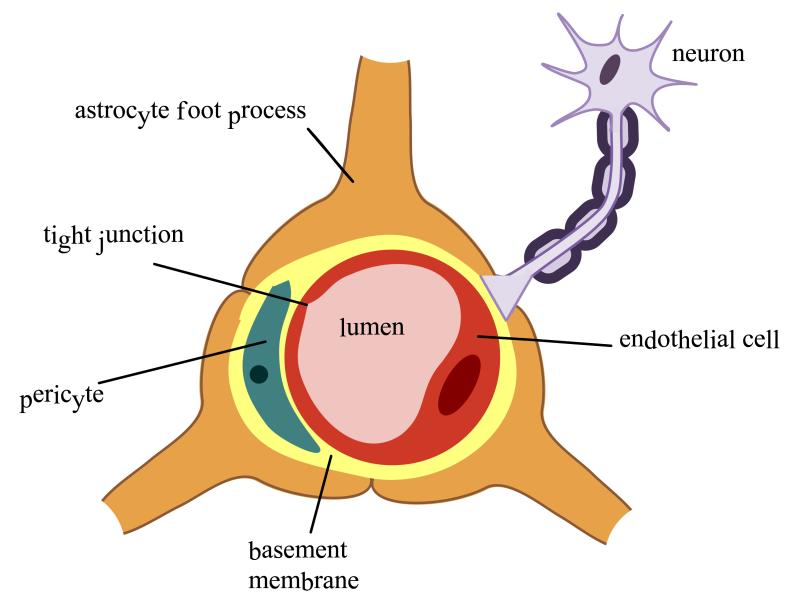
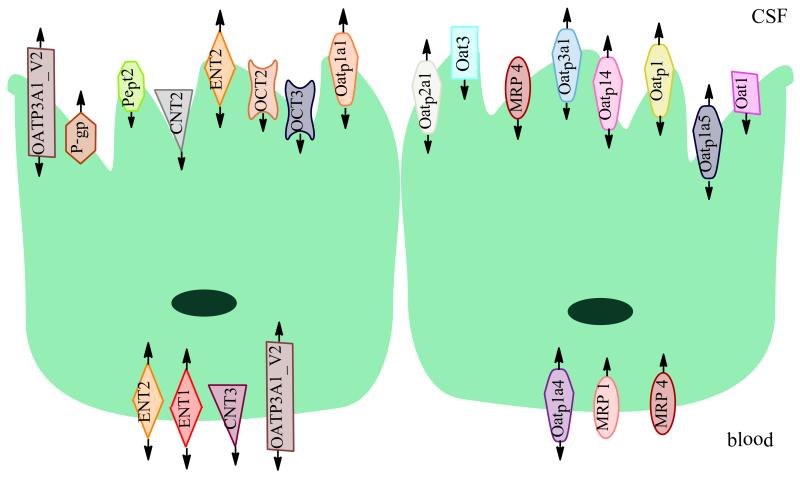
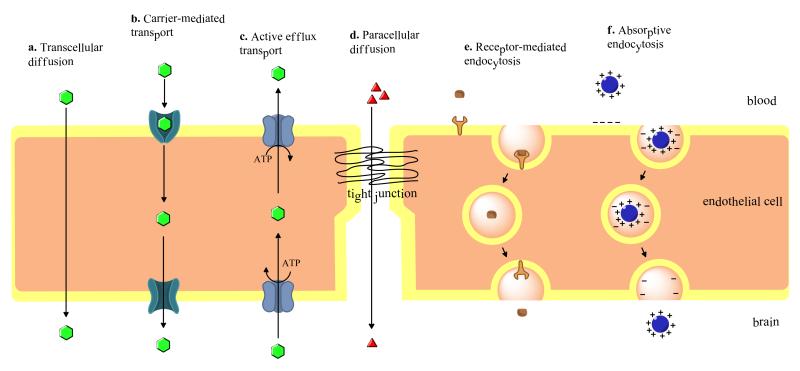
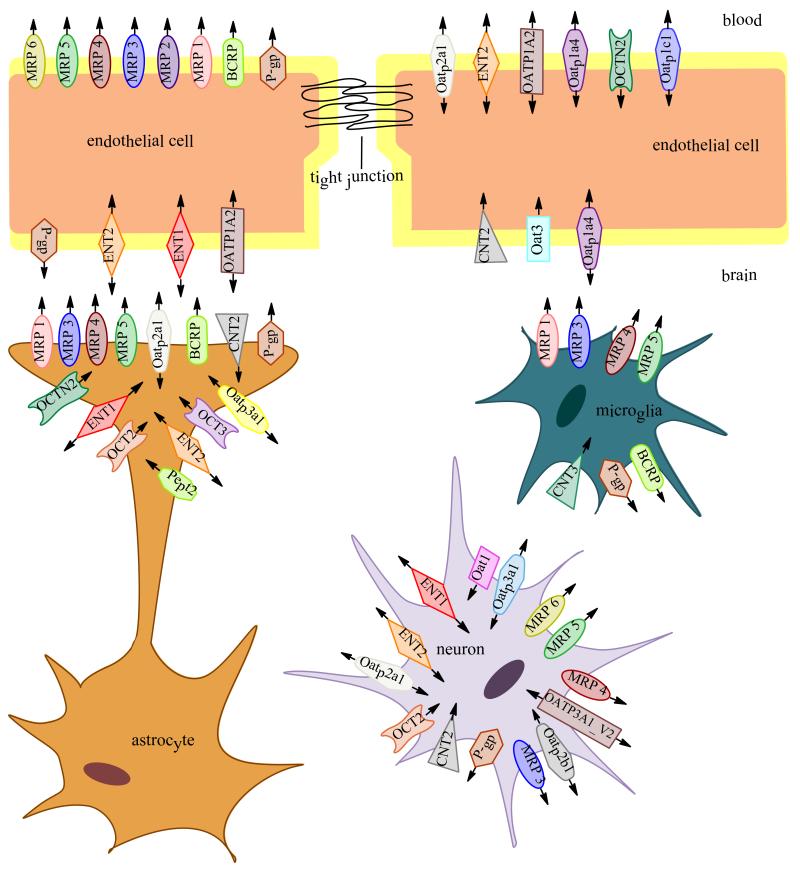
The blood-brain barrier (BBB) and blood-cerebrospinal fluid (BCSF) barriers are critical determinants of CNS homeostasis. Additionally, the BBB and BCSF barriers are formidable obstacles to effective CNS drug delivery. These brain barrier sites express putative influx and efflux transporters that precisely control permeation of circulating solutes including drugs. The study of transporters has enabled a shift away from "brute force" approaches to delivering drugs by physically circumventing brain barriers towards chemical approaches that can target specific compounds of the BBB and/or BCSF barrier. However, our understanding of transporters at the BBB and BCSF barriers has primarily focused on understanding efflux transporters that efficiently prevent drugs from attaining therapeutic concentrations in the CNS. Recently, through the characterization of multiple endogenously expressed uptake transporters, this paradigm has shifted to the study of brain transporter targets that can facilitate drug delivery (i.e., influx transporters). Additionally, signaling pathways and trafficking mechanisms have been identified for several endogenous BBB/BCSF transporters, thereby offering even more opportunities to understand how transporters can be exploited for optimization of CNS drug delivery. This review presents an overview of the BBB and BCSF barrier as well as the many families of transporters functionally expressed at these barrier sites. Furthermore, we present an overview of various strategies that have been designed and utilized to deliver therapeutic agents to the brain with a particular emphasis on those approaches that directly target endogenous BBB/BCSF barrier transporters.
血脑屏障(BBB)和血脑脊液屏障(BCSF)是中枢神经系统(CNS)内环境稳态的关键决定因素。此外,BBB和BCSF屏障是有效进行CNS药物递送的巨大障碍。这些脑屏障部位表达假定的流入和流出转运体,精确控制包括药物在内的循环溶质的渗透。对转运体的研究已使药物递送方式从通过物理手段绕过脑屏障的“强力”方法转向能够靶向BBB和/或BCSF屏障特定化合物的化学方法。然而,我们对BBB和BCSF屏障处转运体的理解主要集中在高效阻止药物在CNS中达到治疗浓度的流出转运体上。最近,通过对多种内源性表达的摄取转运体的表征,这一范式已转向对可促进药物递送的脑转运体靶点(即流入转运体)的研究。此外,已确定了几种内源性BBB/BCSF转运体的信号通路和转运机制,从而为理解如何利用转运体优化CNS药物递送提供了更多机会。本综述概述了BBB和BCSF屏障以及在这些屏障部位功能性表达的众多转运体家族。此外,我们概述了为将治疗剂递送至脑而设计和使用的各种策略,特别强调那些直接靶向内源性BBB/BCSF屏障转运体的方法。