Vijay Nisha, Morris Marilyn E
University at Buffalo, 352 Kapoor Hall, Buffalo, NY 14214-8033.
Curr Pharm Des. 2014;20(10):1487-98. doi: 10.2174/13816128113199990462.
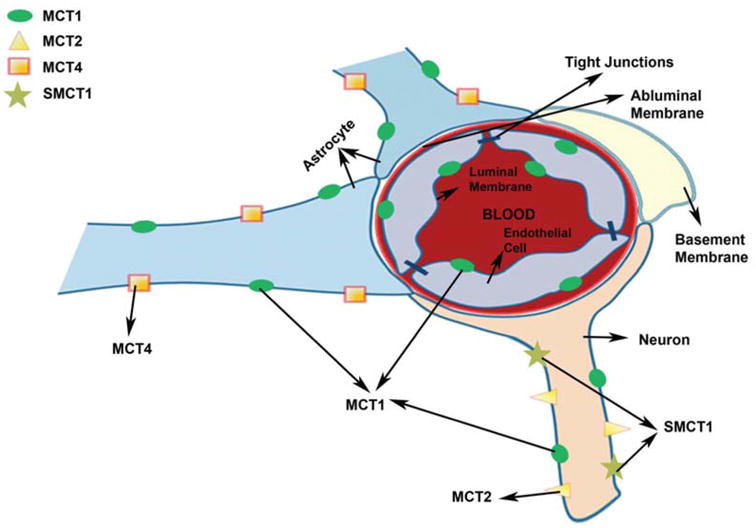
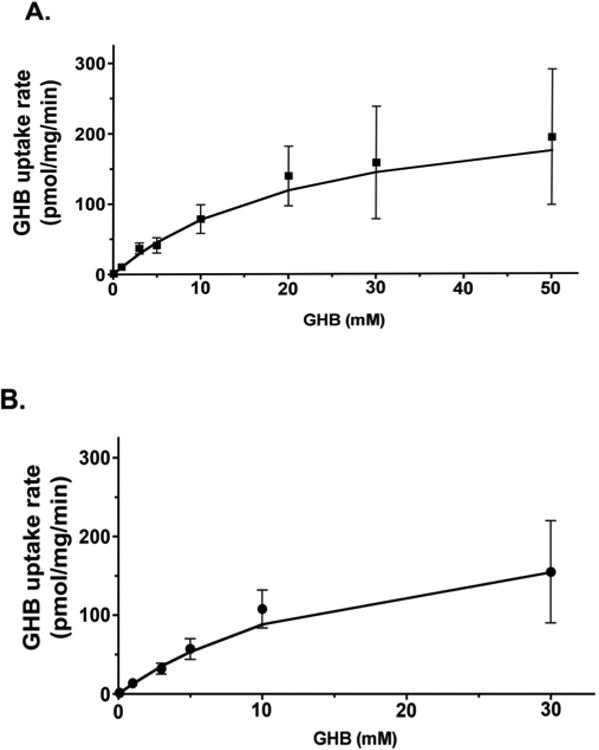
Monocarboxylate transporters (MCTs) are known to mediate the transport of short chain monocarboxylates such as lactate, pyruvate and butyrate. Currently, fourteen members of this transporter family have been identified by sequence homology, of which only the first four members (MCT1- MCT4) have been shown to mediate the proton-linked transport of monocarboxylates. Another transporter family involved in the transport of endogenous monocarboxylates is the sodium coupled MCTs (SMCTs). These act as a symporter and are dependent on a sodium gradient for their functional activity. MCT1 is the predominant transporter among the MCT isoforms and is present in almost all tissues including kidney, intestine, liver, heart, skeletal muscle and brain. The various isoforms differ in terms of their substrate specificity and tissue localization. Due to the expression of these transporters in the kidney, intestine, and brain, they may play an important role in influencing drug disposition. Apart from endogenous short chain monocarboxylates, they also mediate the transport of exogenous drugs such as salicylic acid, valproic acid, and simvastatin acid. The influence of MCTs on drug pharmacokinetics has been extensively studied for γ-hydroxybutyrate (GHB) including distribution of this drug of abuse into the brain and the results will be summarized in this review. The physiological role of these transporters in the brain and their specific cellular localization within the brain will also be discussed. This review will also focus on utilization of MCTs as potential targets for drug delivery into the brain including their role in the treatment of malignant brain tumors.
已知单羧酸转运体(MCTs)介导乳酸、丙酮酸和丁酸等短链单羧酸的转运。目前,通过序列同源性已鉴定出该转运体家族的14个成员,其中只有前四个成员(MCT1 - MCT4)被证明介导单羧酸的质子偶联转运。另一个参与内源性单羧酸转运的转运体家族是钠偶联MCTs(SMCTs)。这些转运体作为同向转运体,其功能活性依赖于钠梯度。MCT1是MCT同工型中的主要转运体,几乎存在于所有组织中,包括肾脏、肠道、肝脏、心脏、骨骼肌和大脑。各种同工型在底物特异性和组织定位方面存在差异。由于这些转运体在肾脏、肠道和大脑中的表达,它们可能在影响药物处置方面发挥重要作用。除了内源性短链单羧酸外,它们还介导水杨酸、丙戊酸和辛伐他汀酸等外源性药物的转运。MCTs对药物药代动力学的影响已针对γ-羟基丁酸(GHB)进行了广泛研究,包括这种滥用药物在大脑中的分布情况,相关结果将在本综述中进行总结。还将讨论这些转运体在大脑中的生理作用及其在大脑中的特定细胞定位。本综述还将重点关注利用MCTs作为将药物递送至大脑的潜在靶点,包括它们在治疗恶性脑肿瘤中的作用。