Medical Department III, University Hospital Aachen, Aachen, Germany.
PLoS One. 2013 Jun 17;8(6):e66106. doi: 10.1371/journal.pone.0066106. Print 2013.
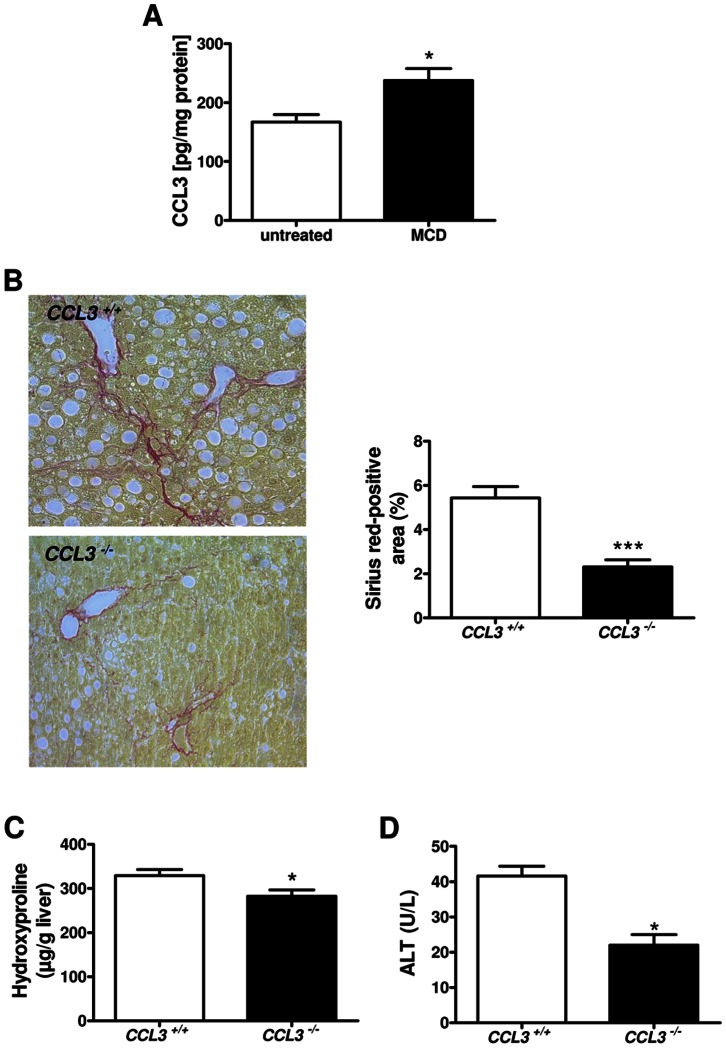
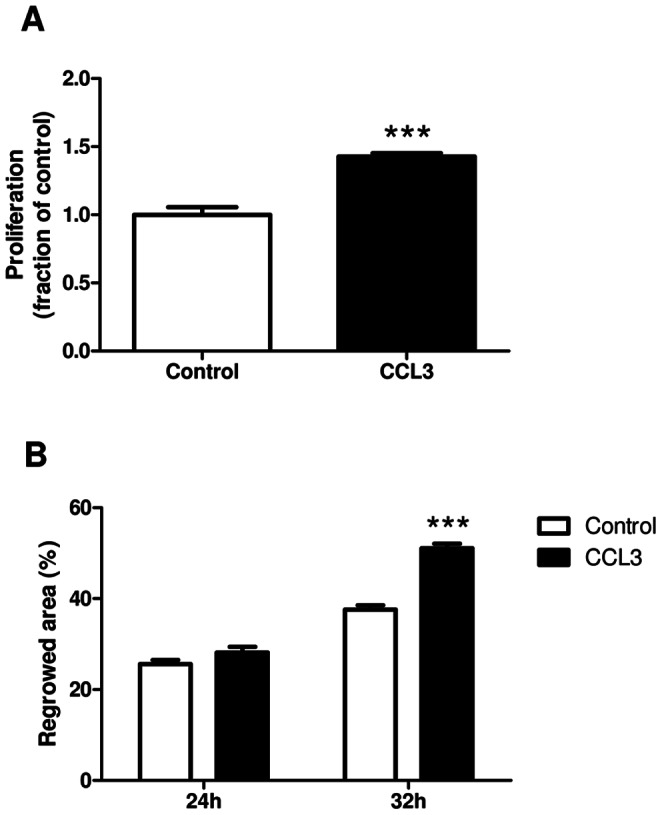
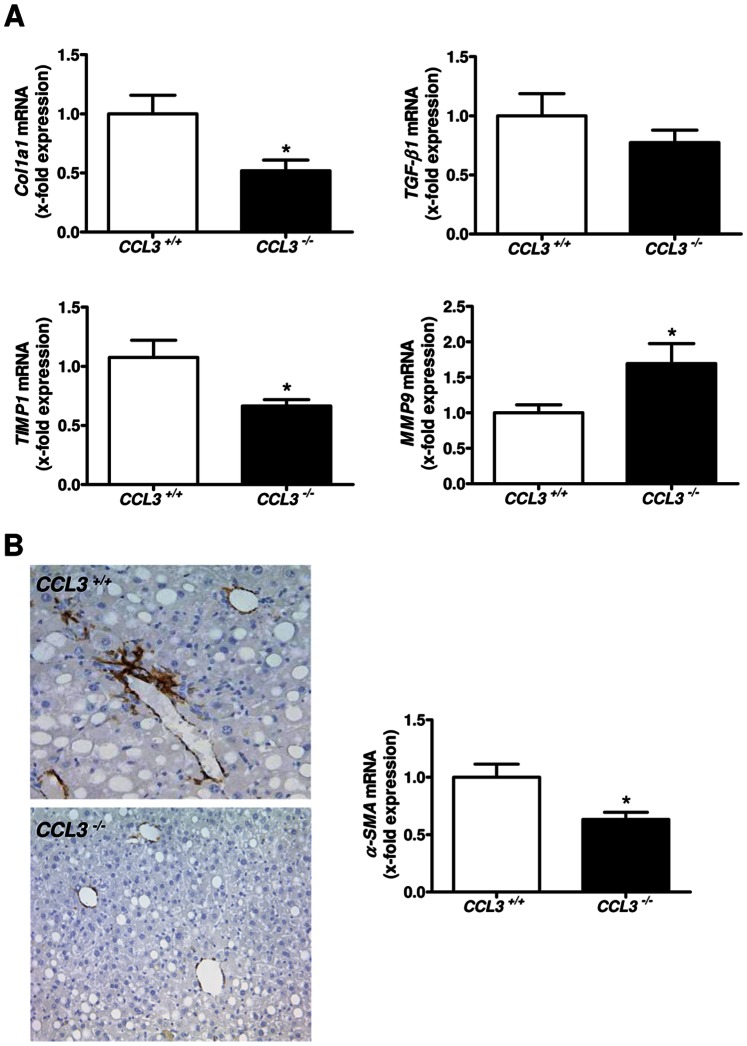
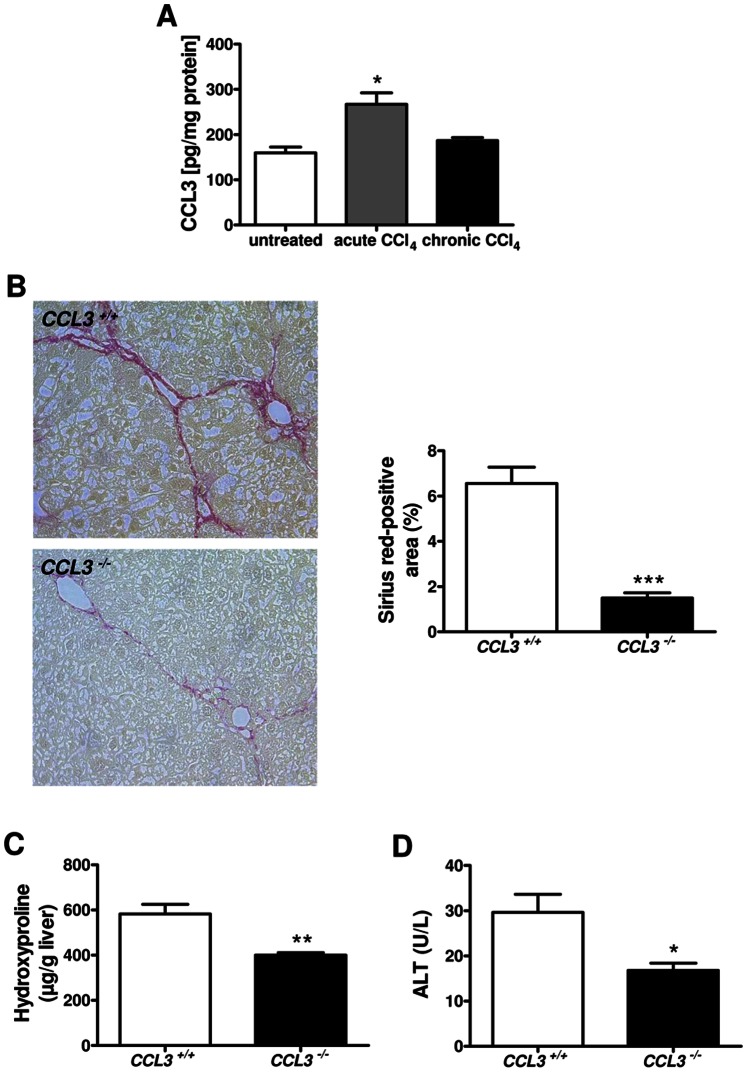
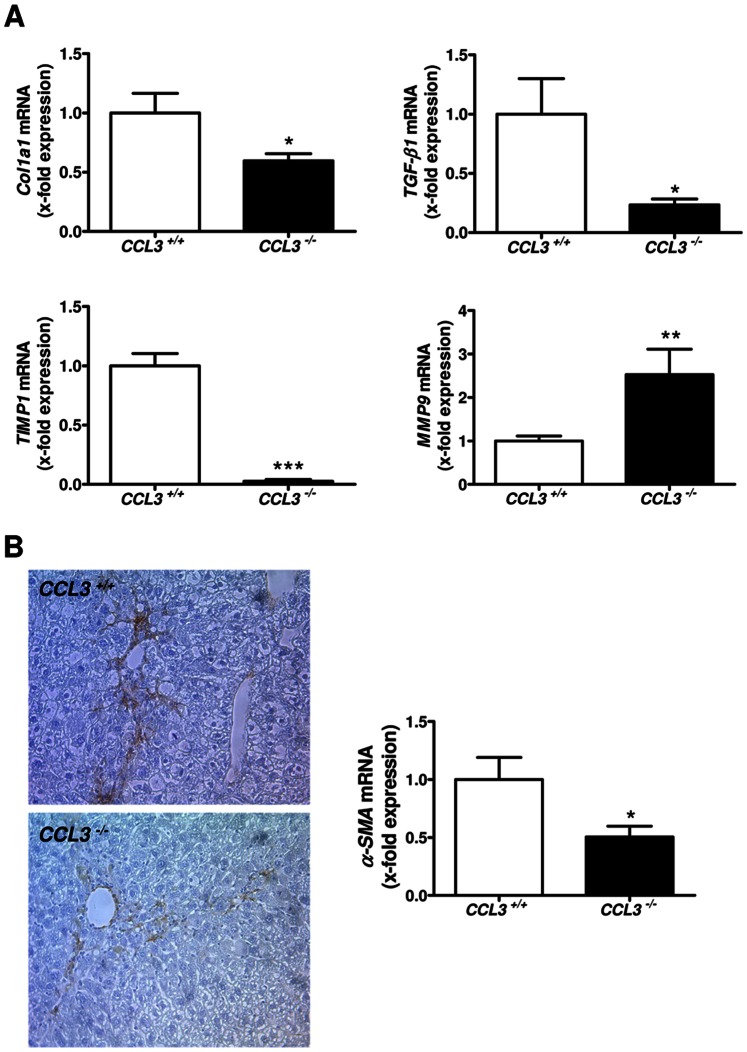
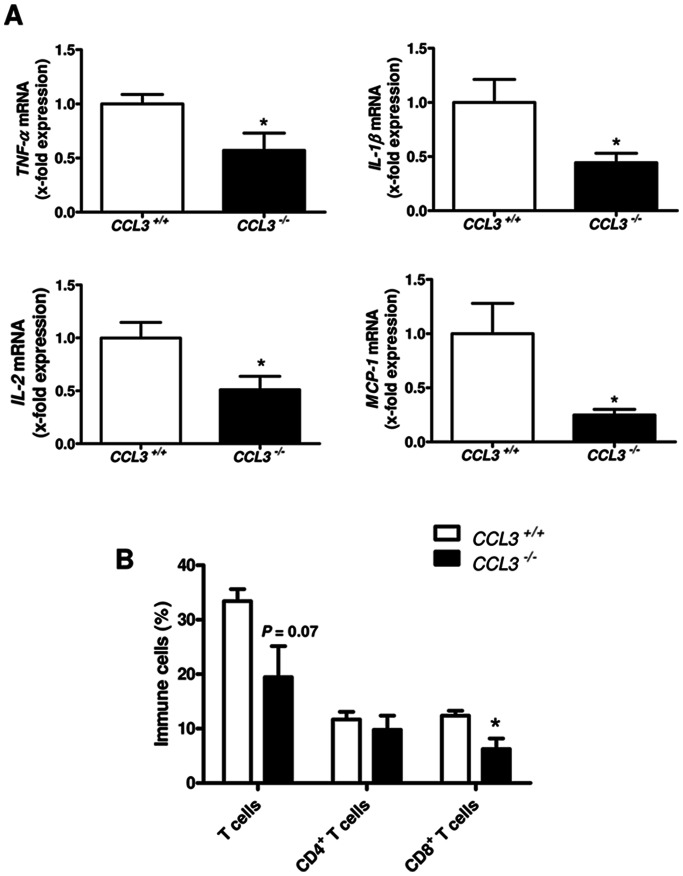
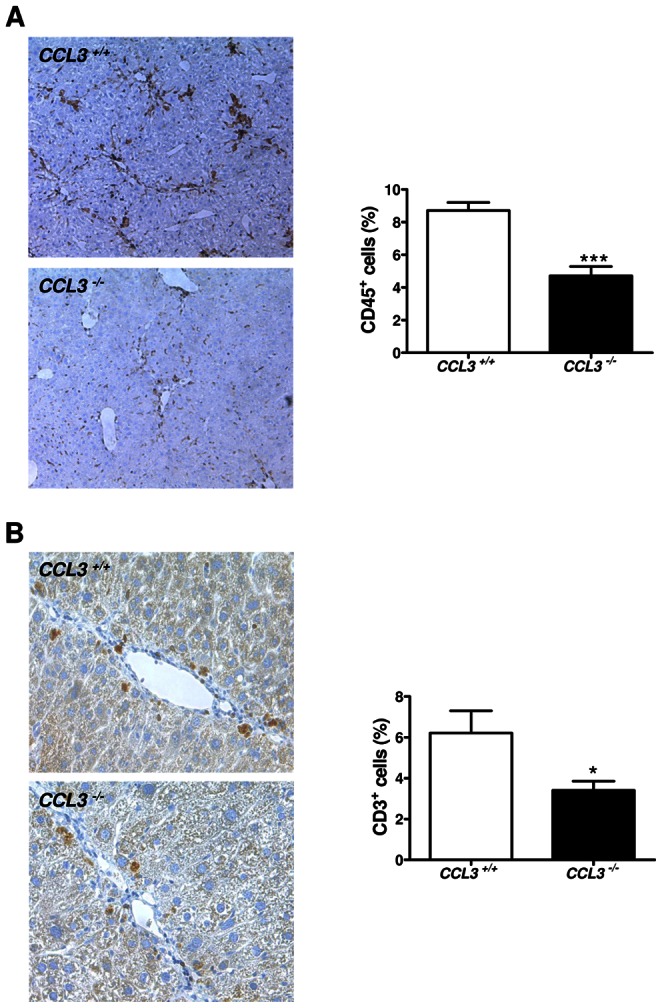
Liver fibrosis is associated with infiltrating immune cells and activation of hepatic stellate cells. We here aimed to investigate the effects of the CC chemokine CCL3, also known as macrophage inflammatory protein-1α, in two different fibrosis models. To this end, we treated mice either with carbon tetrachloride or with a methionine- and choline-deficient diet to induce fibrosis in CCL3 deficient and wild-type mice. The results show that the protein expression of CCL3 is increased in wild-type mice after chronic liver injury. Deletion of CCL3 exhibited reduced liver fibrosis compared to their wild-type counterparts. We could validate these results by treating the two mouse groups with either carbon tetrachloride or by feeding a methionine- and choline-deficient diet. In these models, lack of CCL3 is functionally associated with reduced stellate cell activation and liver immune cell infiltration. In vitro, we show that CCL3 leads to increased proliferation and migration of hepatic stellate cells. In conclusion, our results define the chemokine CCL3 as a mediator of experimental liver fibrosis. Thus, therapeutic modulation of CCL3 might be a promising target for chronic liver diseases.
肝纤维化与浸润的免疫细胞和肝星状细胞的激活有关。我们旨在研究 CC 趋化因子 CCL3(也称为巨噬细胞炎症蛋白-1α)在两种不同纤维化模型中的作用。为此,我们用四氯化碳或蛋氨酸和胆碱缺乏饮食处理 CCL3 缺陷型和野生型小鼠,以诱导 CCL3 缺陷型和野生型小鼠的纤维化。结果表明,慢性肝损伤后野生型小鼠 CCL3 的蛋白表达增加。与野生型相比,CCL3 缺失显示出肝纤维化减少。我们可以通过用四氯化碳处理两组小鼠或用蛋氨酸和胆碱缺乏饮食喂养来验证这些结果。在这些模型中,缺乏 CCL3 与肝星状细胞激活和肝免疫细胞浸润减少有关。在体外,我们表明 CCL3 导致肝星状细胞增殖和迁移增加。总之,我们的结果将趋化因子 CCL3 定义为实验性肝纤维化的介质。因此,CCL3 的治疗性调节可能是慢性肝病的一个有希望的靶点。