Institute of Pathology, University of Cologne, Cologne, Germany.
PLoS One. 2013 Jun 17;8(6):e66558. doi: 10.1371/journal.pone.0066558. Print 2013.
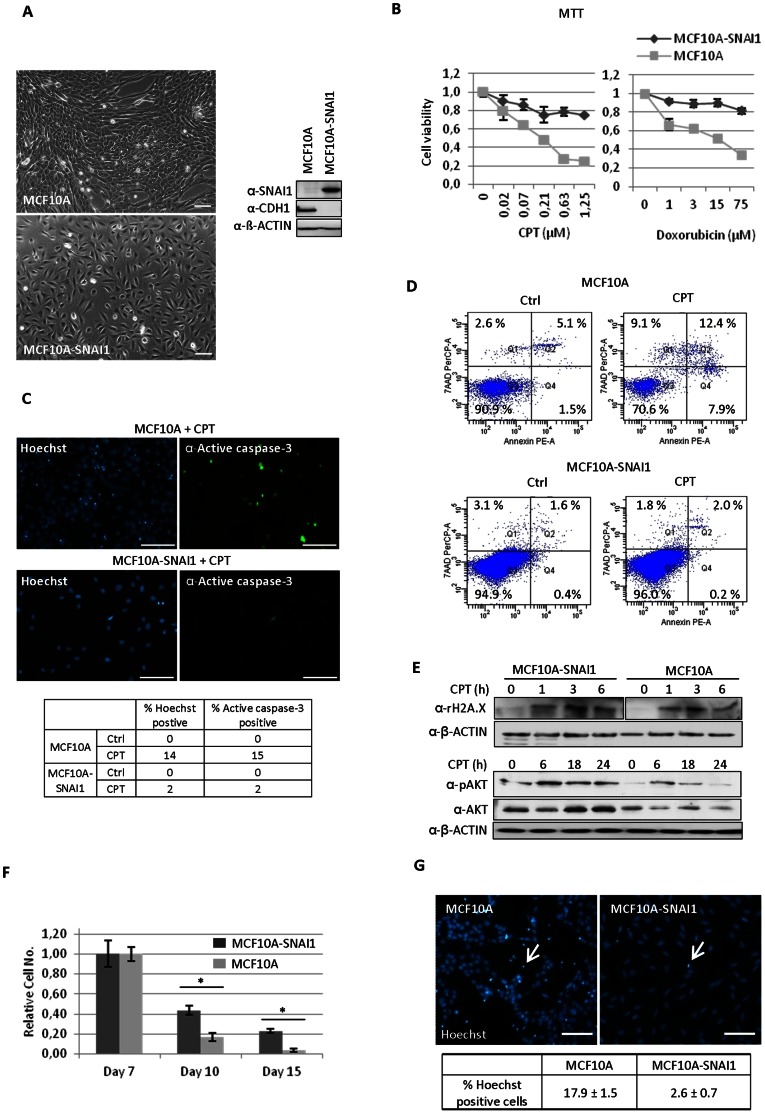
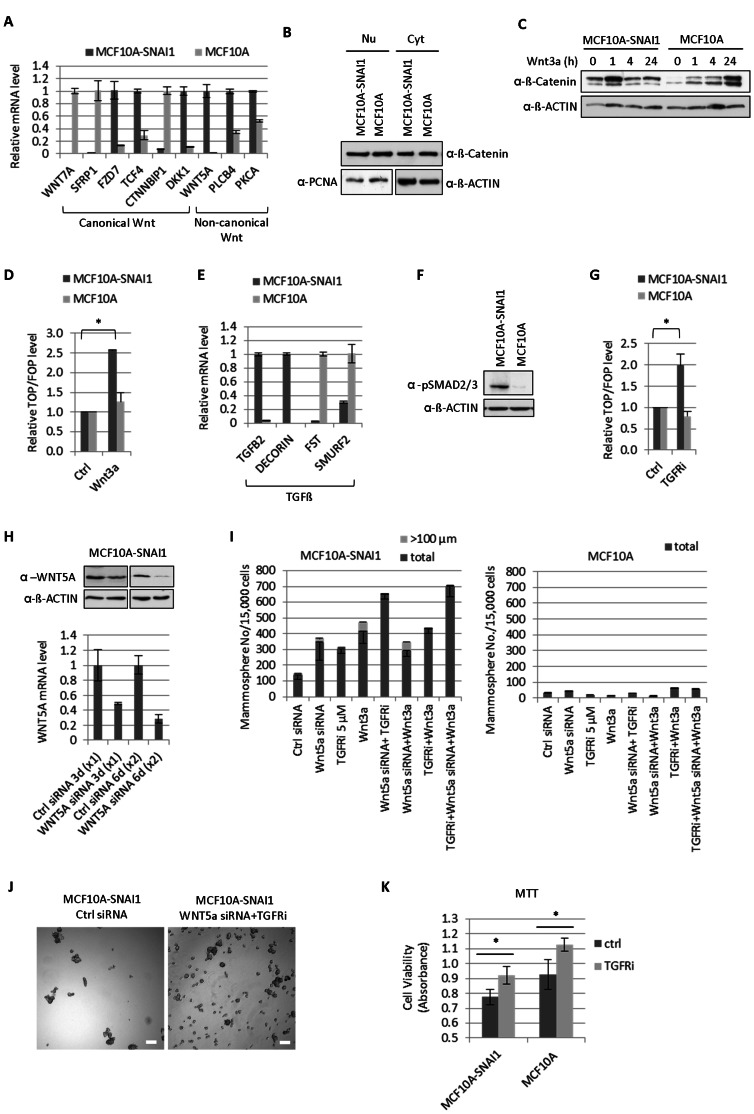
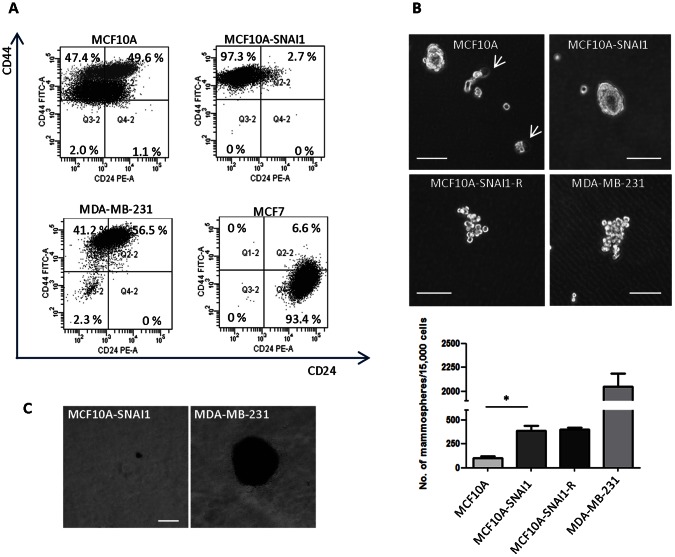
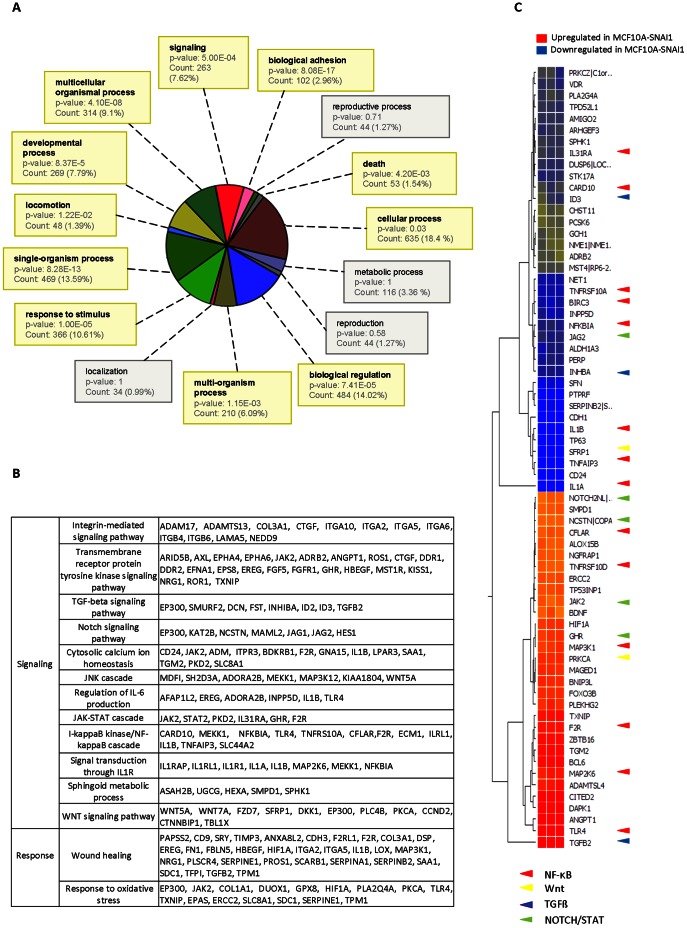
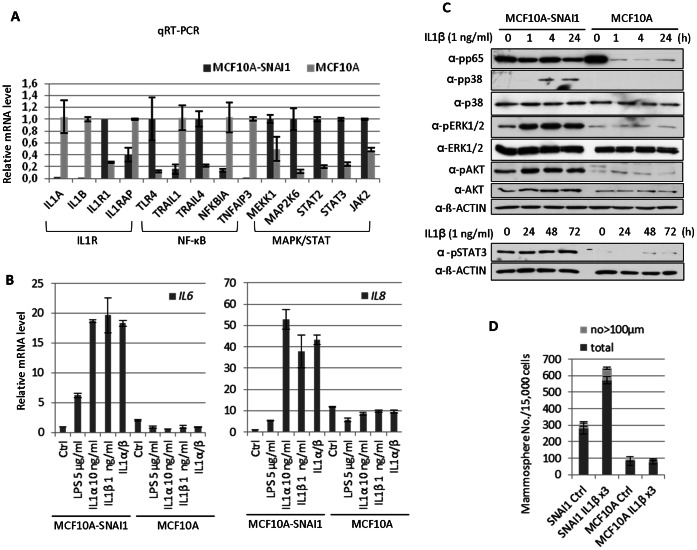
Tumor cells at the tumor margin lose epithelial properties and acquire features of mesenchymal cells, a process called epithelial-to-mesenchymal transition (EMT). Recently, features of EMT were shown to be linked to cells with tumor-founding capability, so-called cancer stem cells (CSCs). Inducers of the EMT include several transcription factors, such as Snail (SNAI1) and Slug (SNAI2), as well as the secreted transforming growth factor (TGFß). In the present study, we found that EMT induction in MCF10A cells by stably expressing SNAI1 contributed to drug resistance and acquisition of stem/progenitor-like character as shown by increased cell population for surface marker CD44(+)/CD24(-) and mammosphere forming capacity. Using a microarray approach, we demonstrate that SNAI1 overexpression results in a dramatic change in signaling pathways involved in the regulation of cell death and stem cell maintenance. We showed that NF-κB/MAPK signaling pathways are highly activated in MCF10A-SNAI1 cells by IL1ß stimulation, leading to the robust induction in IL6 and IL8. Furthermore, MCF10A-SNAI1 cells showed enhanced TCF/ß-catenin activity responding to the exogenous Wnt3a treatment. However, EMT-induced stem/progenitor cell activation process is tightly regulated in non-transformed MCF10A cells, as WNT5A and TGFB2 are strongly upregulated in MCF10A-SNAI1 cells antagonizing canonical Wnt pathway. In summary, our data provide new molecular findings how EMT contributes to the enhanced chemoresistance and the acquisition of stem/progenitor-like character by regulating signaling pathways.
肿瘤边缘的肿瘤细胞失去上皮特性,获得间充质细胞的特征,这一过程称为上皮-间充质转化(EMT)。最近,EMT 的特征被证明与具有肿瘤起始能力的细胞,即所谓的癌症干细胞(CSC)有关。 EMT 的诱导物包括几个转录因子,如 Snail(SNAI1)和 Slug(SNAI2),以及分泌的转化生长因子(TGFβ)。在本研究中,我们发现 MCF10A 细胞中稳定表达 SNAI1 诱导的 EMT 有助于耐药性的产生,并获得干细胞/祖细胞样特征,表现为表面标记物 CD44(+)/CD24(-)的细胞群体增加和形成乳腺球体的能力增强。通过微阵列方法,我们证明 SNAI1 的过表达导致参与细胞死亡和干细胞维持调节的信号通路发生显著变化。我们表明,NF-κB/MAPK 信号通路在 MCF10A-SNAI1 细胞中被 IL1ß 刺激高度激活,导致 IL6 和 IL8 的强烈诱导。此外,MCF10A-SNAI1 细胞表现出增强的 TCF/β-连环蛋白活性,对外源性 Wnt3a 处理有反应。然而,EMT 诱导的干细胞/祖细胞激活过程在非转化的 MCF10A 细胞中受到严格调控,因为 MCF10A-SNAI1 细胞中 WNT5A 和 TGFB2 的强烈上调拮抗了经典的 Wnt 通路。总之,我们的数据提供了新的分子发现,即 EMT 通过调节信号通路如何有助于增强化学耐药性和获得干细胞/祖细胞样特征。