Sharry John, Davidson Ruth, McLoughlin Orla, Doherty Gavin
Mater Misericordiae University Hospital, Dublin, Ireland.
J Med Internet Res. 2013 Jun 27;15(6):e121. doi: 10.2196/jmir.2248.
Evidence suggests that Internet-delivered cognitive behavioral therapy (CBT) may be as effective as face-to-face delivery for depression, but attrition and engagement rates remain a challenge.
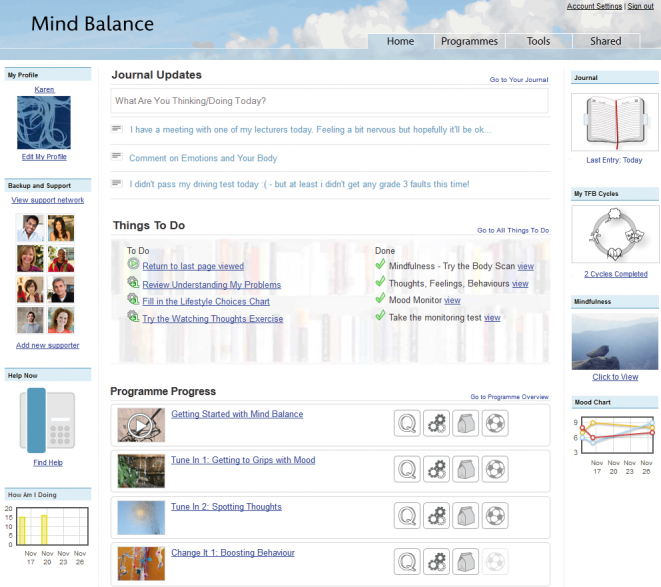
This service-based study aimed to evaluate an online, therapist-supported, CBT-based program for depression. The program was specifically designed to address engagement issues, most notably by integrating online therapist support and communication within the platform.
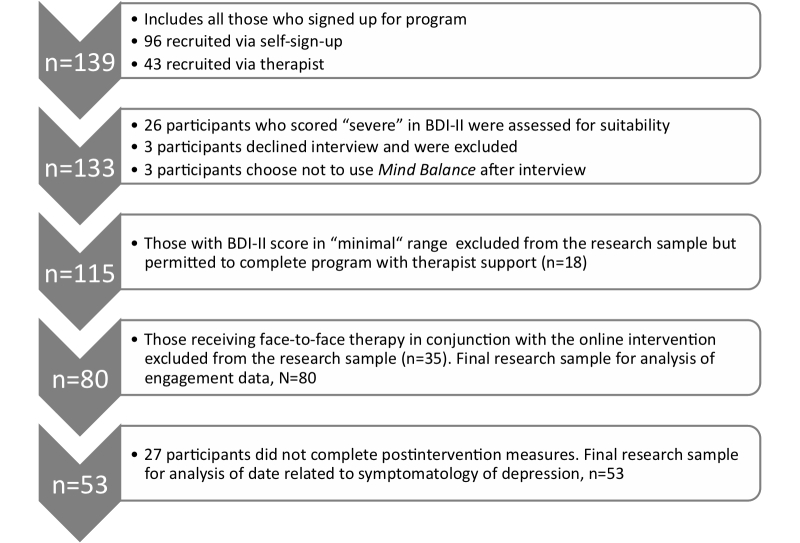
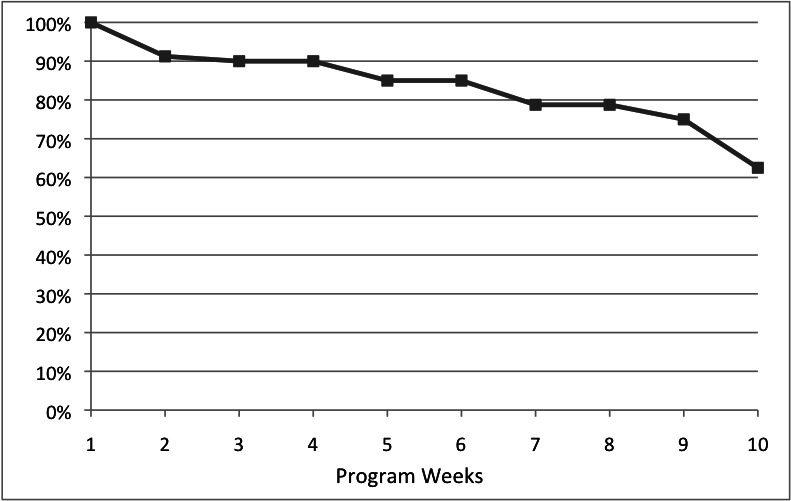
Participants were 80 adults who were registered university students. Participants used the modular online program over 8 weeks, supported by a therapist. Engagement information was gathered automatically by the online system, and analyzed for all participants. Severity of participants' self-reported symptoms of depression were assessed preintervention and postintervention using the Beck Depression Inventory-II (BDI-II). Postintervention measures were completed by 53 participants.
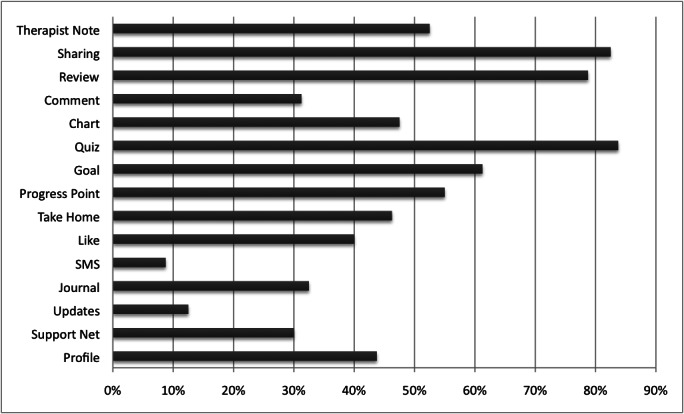
A high level of engagement was observed compared to a previous study within the same service, along with extensive use of a range of program features. A statistically significant (P<.001) decrease in self-reported depressive symptomatology from preintervention (mean BDI-II 25.47) to postintervention (mean BDI-II 15.53) with a large effect size (d=1.17) was also observed.
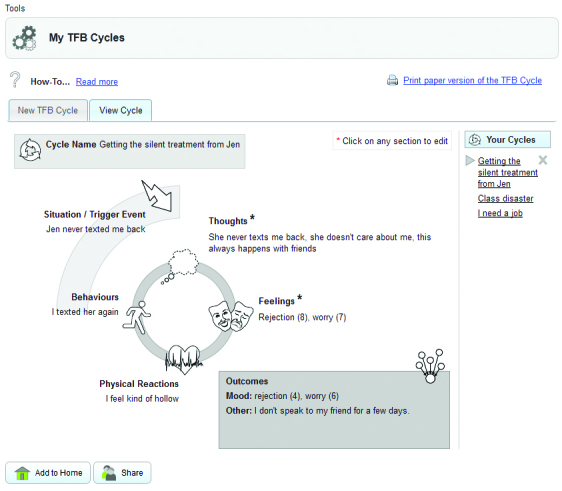
The results indicate the potential of unintrusive and easily provided online support to enhance engagement with online interventions. The system described in the paper also illustrates how such online support can be tightly integrated with interactive online programs by using a range of design strategies intended to improve the user experience.
有证据表明,互联网提供的认知行为疗法(CBT)在治疗抑郁症方面可能与面对面治疗同样有效,但脱落率和参与率仍然是一个挑战。
这项基于服务的研究旨在评估一个在线的、由治疗师支持的、基于CBT的抑郁症治疗项目。该项目专门设计用于解决参与问题,最显著的是通过在平台内整合在线治疗师支持和沟通。
参与者为80名注册大学生。参与者在8周内使用模块化在线项目,并由一名治疗师提供支持。参与信息由在线系统自动收集,并对所有参与者进行分析。使用贝克抑郁量表第二版(BDI-II)在干预前和干预后评估参与者自我报告的抑郁症状严重程度。53名参与者完成了干预后测量。
与同一服务机构之前的一项研究相比,观察到较高的参与度,同时一系列项目功能也得到了广泛使用。还观察到自我报告的抑郁症状从干预前(平均BDI-II 25.47)到干预后(平均BDI-II 15.53)有统计学显著下降(P<.001),效应量较大(d=1.17)。
结果表明,非侵入性且易于提供的在线支持有潜力提高对在线干预的参与度。本文描述的系统还说明了如何通过使用一系列旨在改善用户体验的设计策略,将这种在线支持与交互式在线项目紧密整合。