Hudson Joanna L, Moss-Morris Rona, Game David, Carroll Amy, McCrone Paul, Hotopf Matthew, Yardley Lucy, Chilcot Joseph
Health Psychology Section, Psychology Department, Institute of Psychiatry, Psychology and Neuroscience, King's College London, London, UK.
Guy's and St Thomas' NHS Trust, London, UK.
BMJ Open. 2016 Apr 12;6(4):e011286. doi: 10.1136/bmjopen-2016-011286.
Psychological distress is common in end-stage kidney disease (ESKD) and is associated with poorer health outcomes. Cognitive behavioural therapy (CBT) is recommended in UK clinical guidelines for the management of depression in people with long-term conditions. Access to skilled therapists competent in managing the competing mental and physical health demands of ESKD is limited. Online CBT treatments tailored to the needs of the ESKD population offers a pragmatic solution for under-resourced services. This study examines the feasibility and acceptability of implementing a two-arm parallel randomised controlled trial of online CBT with (intervention arm) and without (control arm) therapist support to improve psychological distress in patients undergoing haemodialysis.
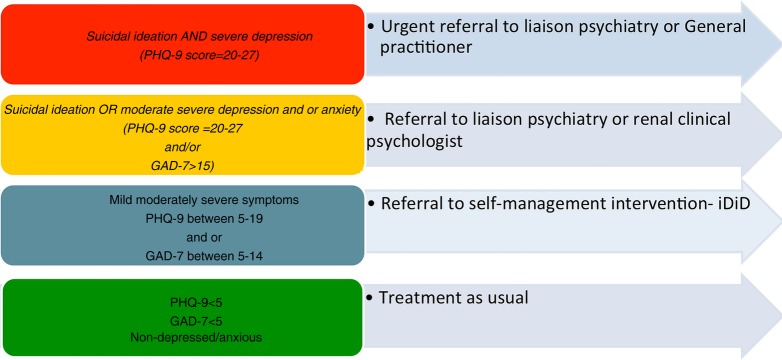
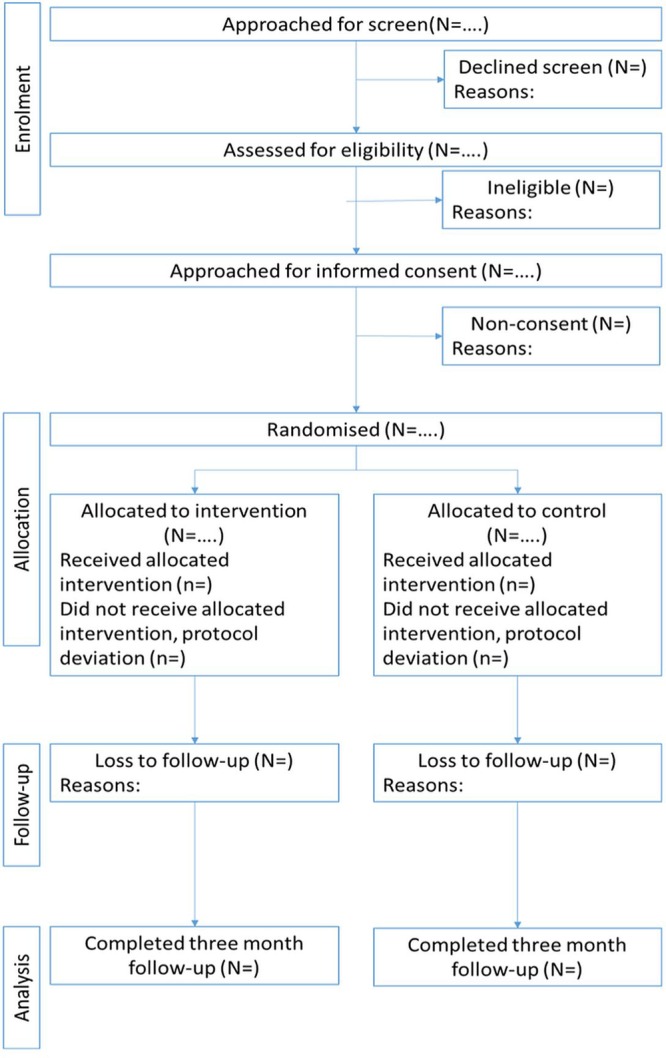
Patients will be screened for depression and anxiety while attending for their haemodialysis treatments. We aim to recruit 60 adult patients undergoing haemodialysis who meet criteria for mild to moderately severe symptoms of depression and/or anxiety. Patients will be randomised individually (using a 1:1 computerised sequence ratio) to either online CBT with therapist telephone support (intervention arm), or online CBT with no therapist (control arm). Outcomes include feasibility and acceptability descriptive data on rates of recruitment, randomisation, retention and treatment adherence. Self-report outcomes include measures of depression (Patient Health Questionnaire-9), anxiety (Generalised Anxiety Disorder-7), quality of life (Euro-QoL), service use (client service receipt inventory) and illness cognitions (brief illness perception questionnaire). A qualitative process evaluation will also be conducted. The statistician will be blinded to treatment allocation.
A National Health Service (NHS) research ethics committee approved the study. Data from this study will provide essential information for the design and testing of further interventions to ameliorate distress in patients undergoing dialysis. Any amendments to the protocol will be submitted to the NHS committee and study sponsor.
NCT023528702; Pre-results.
心理困扰在终末期肾病(ESKD)患者中很常见,且与较差的健康结局相关。英国临床指南推荐认知行为疗法(CBT)用于管理患有长期疾病患者的抑郁症。能够胜任处理ESKD患者心理和身体健康需求的专业治疗师数量有限。针对ESKD患者需求量身定制的在线CBT治疗为资源不足的服务提供了一个切实可行的解决方案。本研究旨在探讨开展一项双臂平行随机对照试验的可行性和可接受性,该试验将对比有治疗师支持(干预组)和无治疗师支持(对照组)的在线CBT对改善血液透析患者心理困扰的效果。
患者在接受血液透析治疗时将接受抑郁和焦虑筛查。我们的目标是招募60名符合轻度至中度严重抑郁和/或焦虑症状标准的成年血液透析患者。患者将被单独随机分组(使用1:1的计算机化序列比例),分为接受治疗师电话支持的在线CBT组(干预组)或无治疗师的在线CBT组(对照组)。结局包括关于招募率、随机分组率、留存率和治疗依从性的可行性和可接受性描述性数据。自我报告结局包括抑郁测量(患者健康问卷-9)、焦虑测量(广泛性焦虑障碍-7)、生活质量(欧洲生活质量量表)、服务使用情况(客户服务接受清单)和疾病认知(简短疾病感知问卷)。还将进行定性过程评估。统计人员将对治疗分配情况保持盲态。
一项国家医疗服务体系(NHS)研究伦理委员会批准了该研究。本研究的数据将为设计和测试进一步改善透析患者困扰的干预措施提供重要信息。方案的任何修订都将提交给NHS委员会和研究资助者。
NCT023528702;预结果。