Hampe Christiane S
Department of Medicine, University of Washington, SLU-276, 850 Republican, Seattle, WA 98109, USA.
Scientifica (Cairo). 2012;2012. doi: 10.6064/2012/215308.
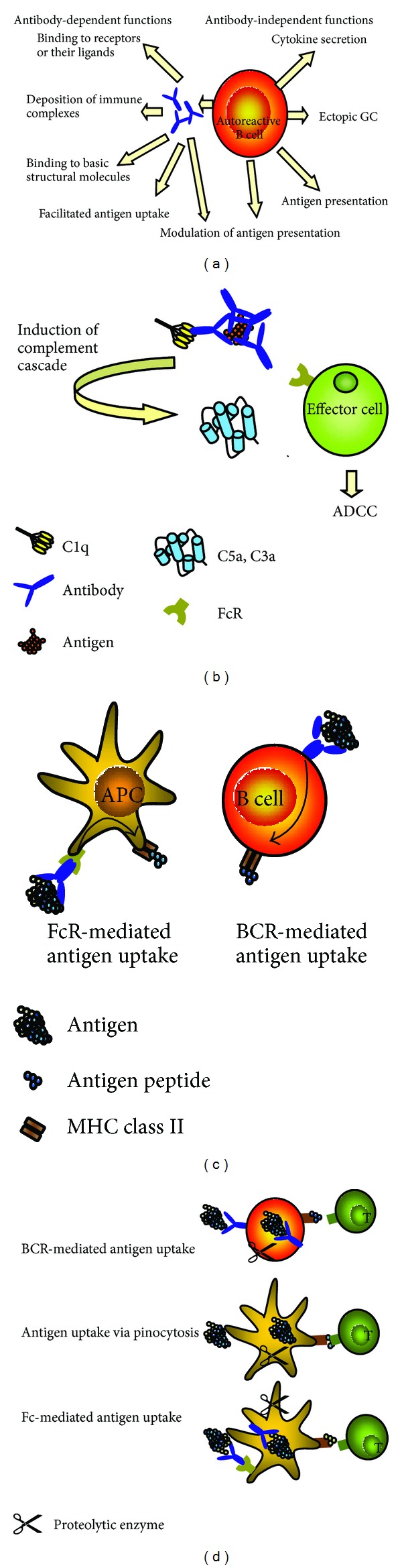
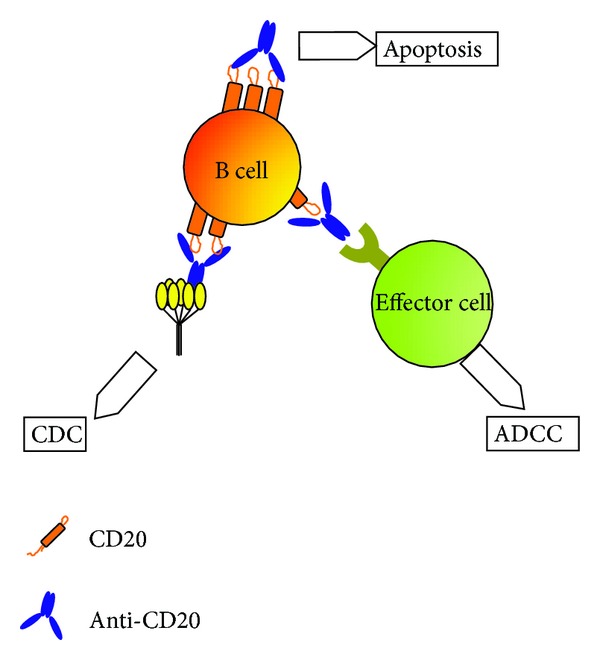
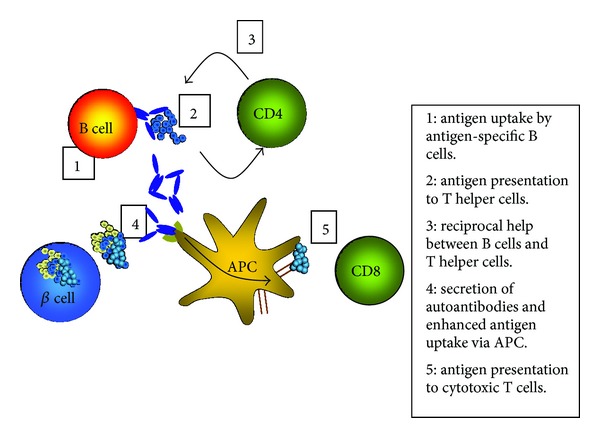
The role of B cells in autoimmune diseases involves different cellular functions, including the well-established secretion of autoantibodies, autoantigen presentation and ensuing reciprocal interactions with T cells, secretion of inflammatory cytokines, and the generation of ectopic germinal centers. Through these mechanisms B cells are involved both in autoimmune diseases that are traditionally viewed as antibody mediated and also in autoimmune diseases that are commonly classified as T cell mediated. This new understanding of the role of B cells opened up novel therapeutic options for the treatment of autoimmune diseases. This paper includes an overview of the different functions of B cells in autoimmunity; the involvement of B cells in systemic lupus erythematosus, rheumatoid arthritis, and type 1 diabetes; and current B-cell-based therapeutic treatments. We conclude with a discussion of novel therapies aimed at the selective targeting of pathogenic B cells.
B细胞在自身免疫性疾病中的作用涉及不同的细胞功能,包括已明确的自身抗体分泌、自身抗原呈递以及随后与T细胞的相互作用、炎性细胞因子的分泌,以及异位生发中心的形成。通过这些机制,B细胞既参与传统上被视为抗体介导的自身免疫性疾病,也参与通常归类为T细胞介导的自身免疫性疾病。对B细胞作用的这一新认识为自身免疫性疾病的治疗开辟了新的治疗选择。本文概述了B细胞在自身免疫中的不同功能;B细胞在系统性红斑狼疮、类风湿性关节炎和1型糖尿病中的作用;以及当前基于B细胞的治疗方法。我们最后讨论了旨在选择性靶向致病性B细胞的新型疗法。