Institute of Cell Signalling, School of Biomedical Sciences, Medical School, University of Nottingham, Nottingham NG7 2UH, UK.
EMBO Rep. 2013 Aug;14(8):726-32. doi: 10.1038/embor.2013.89. Epub 2013 Jul 2.
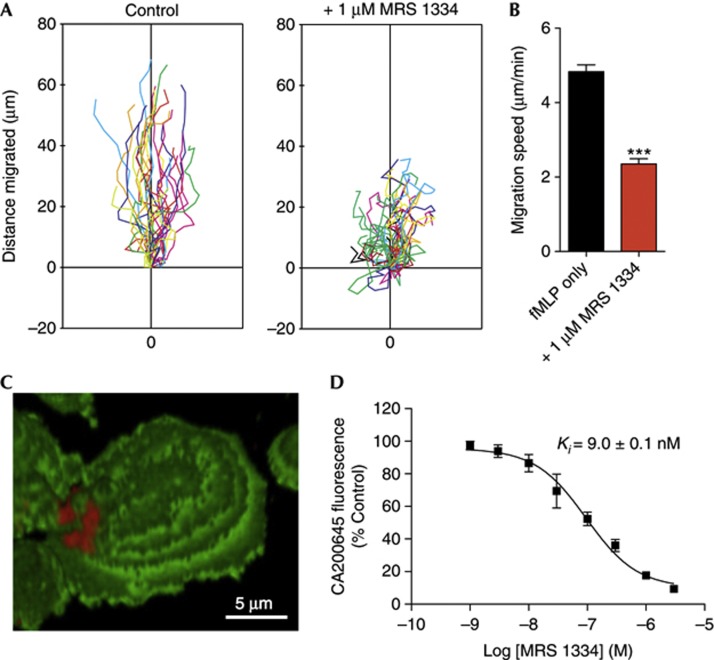
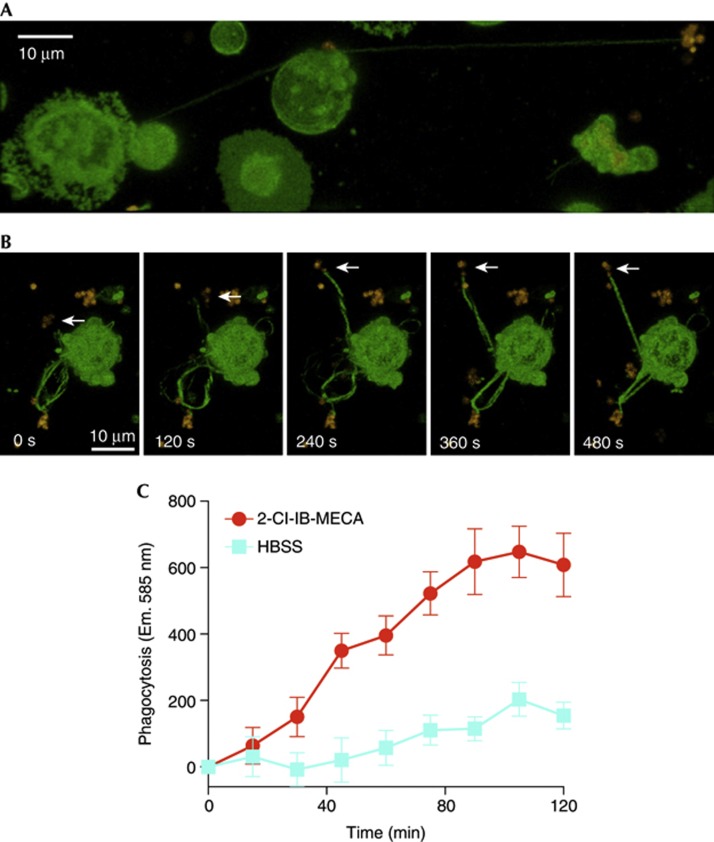
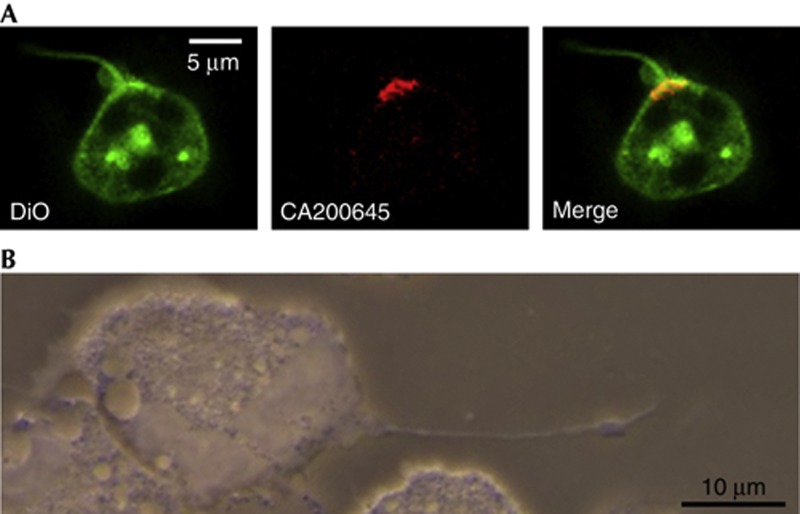
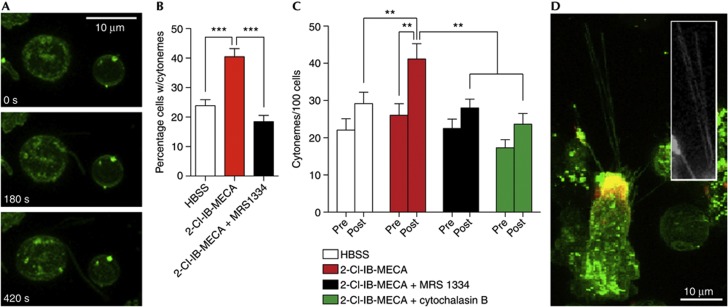
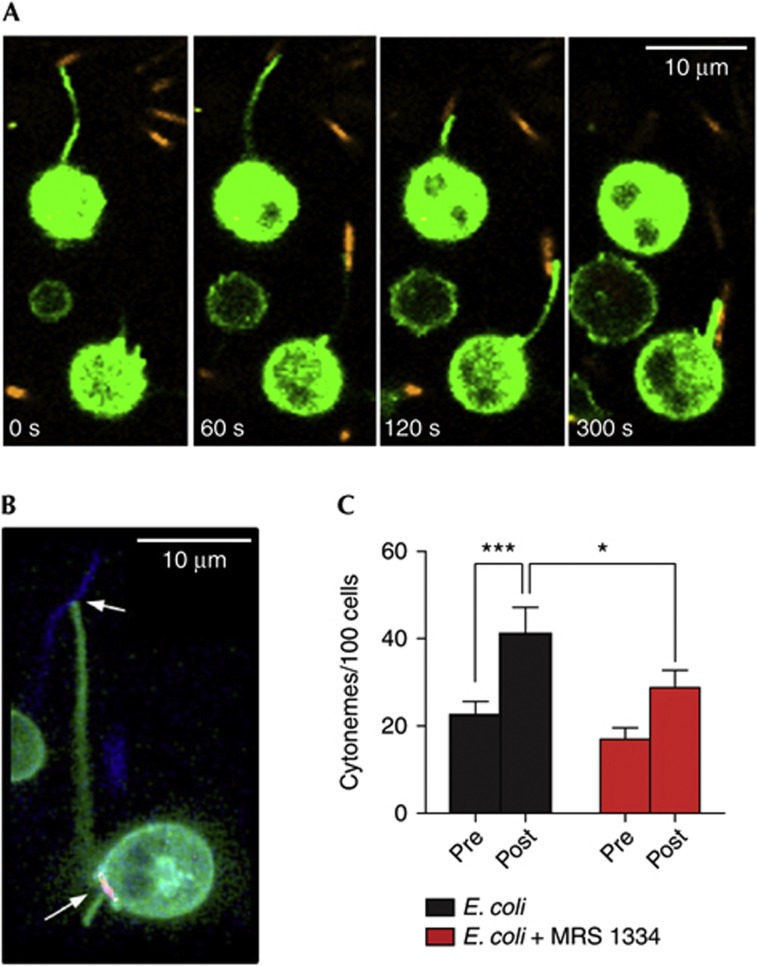
The A3-adenosine receptor (A3AR) has recently emerged as a key regulator of neutrophil behaviour. Using a fluorescent A3AR ligand, we show that A3ARs aggregate in highly polarized immunomodulatory microdomains on human neutrophil membranes. In addition to regulating chemotaxis, A3ARs promote the formation of filipodia-like projections (cytonemes) that can extend up to 100 μm to tether and 'reel in' pathogens. Exposure to bacteria or an A3AR agonist stimulates the formation of these projections and bacterial phagocytosis, whereas an A3AR-selective antagonist inhibits cytoneme formation. Our results shed new light on the behaviour of neutrophils and identify the A3AR as a potential target for modulating their function.
A3-腺苷受体(A3AR)最近被发现是调节中性粒细胞行为的关键调控因子。我们使用荧光 A3AR 配体表明,A3AR 在人中性粒细胞膜上聚集形成高度极化的免疫调节微域。除了调节趋化性外,A3AR 还促进形成类似于丝状伪足(纤毛)的突起,这些突起可以延伸长达 100μm,以固定和“拉回”病原体。暴露于细菌或 A3AR 激动剂会刺激这些突起的形成和细菌吞噬作用,而 A3AR 选择性拮抗剂则抑制纤毛形成。我们的结果为中性粒细胞的行为提供了新的认识,并确定 A3AR 是调节其功能的潜在靶点。