Department of Genetics, Yale University School of Medicine, New Haven, CT 06520, USA.
Cell. 2013 Jul 3;154(1):185-96. doi: 10.1016/j.cell.2013.05.056.
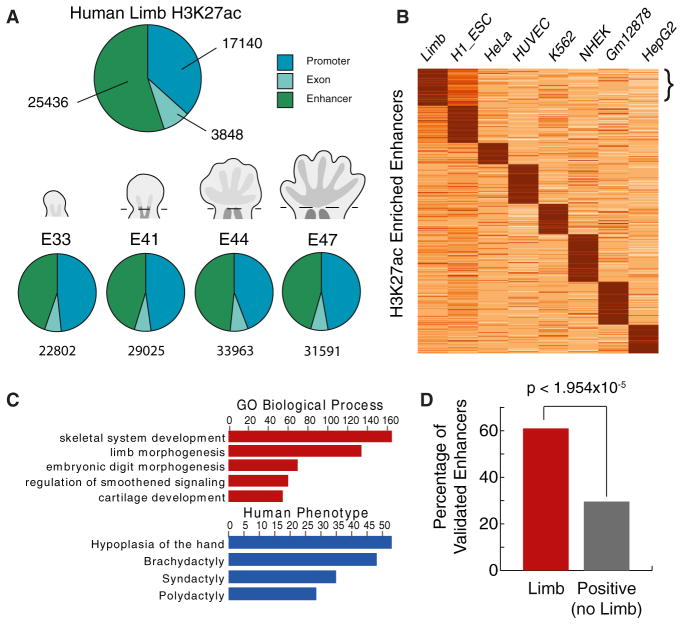
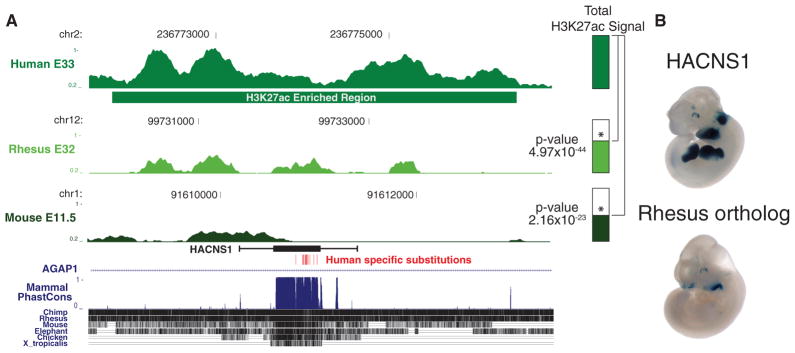
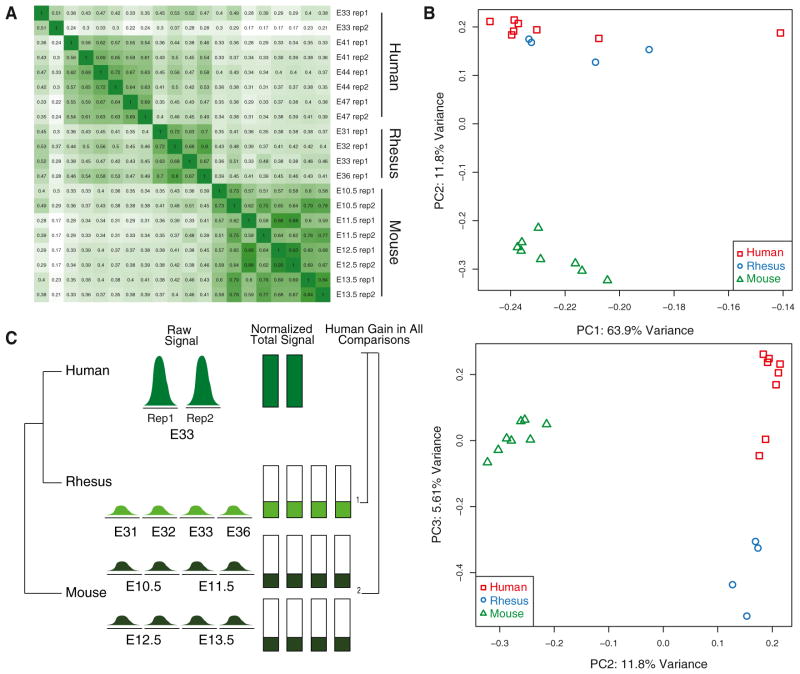
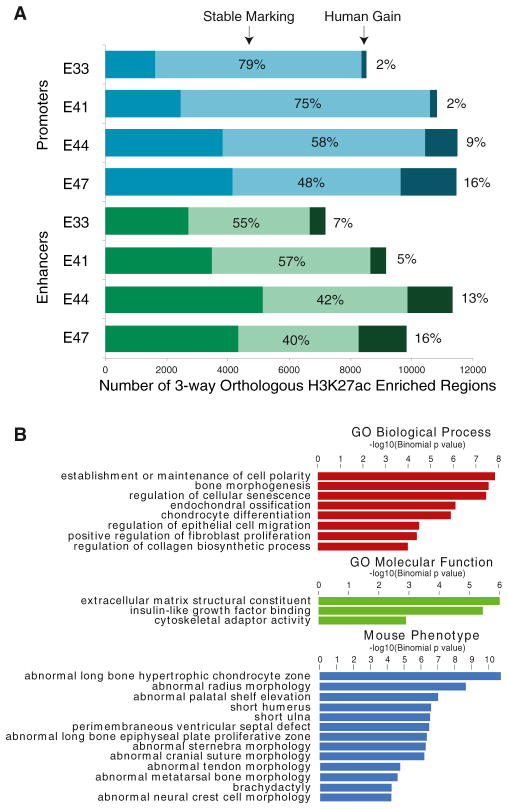
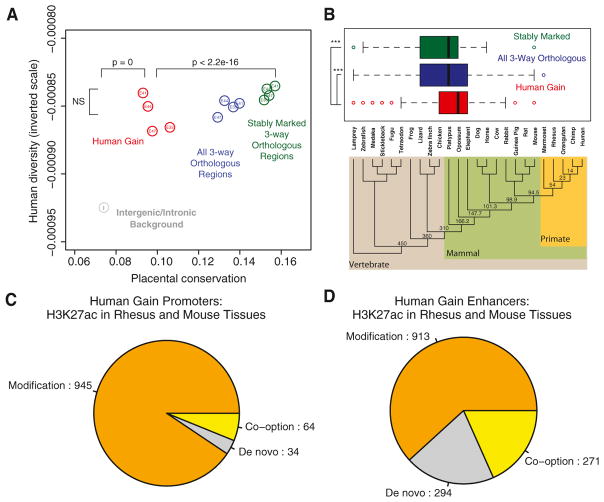
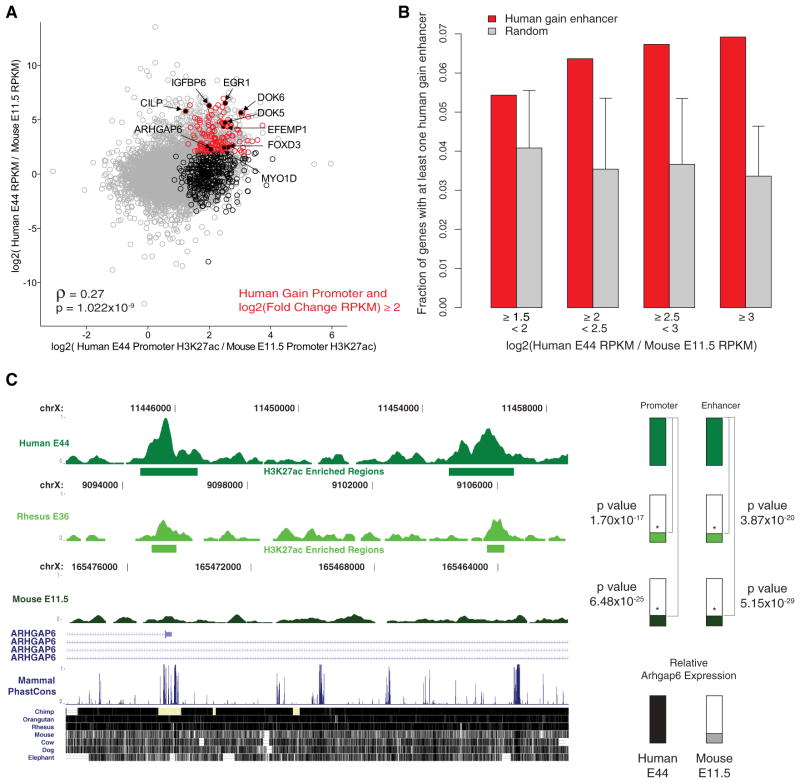
The evolution of human anatomical features likely involved changes in gene regulation during development. However, the nature and extent of human-specific developmental regulatory functions remain unknown. We obtained a genome-wide view of cis-regulatory evolution in human embryonic tissues by comparing the histone modification H3K27ac, which provides a quantitative readout of promoter and enhancer activity, during human, rhesus, and mouse limb development. Based on increased H3K27ac, we find that 13% of promoters and 11% of enhancers have gained activity on the human lineage since the human-rhesus divergence. These gains largely arose by modification of ancestral regulatory activities in the limb or potential co-option from other tissues and are likely to have heterogeneous genetic causes. Most enhancers that exhibit gain of activity in humans originated in mammals. Gains at promoters and enhancers in the human limb are associated with increased gene expression, suggesting they include molecular drivers of human morphological evolution.
人类解剖特征的进化可能涉及发育过程中基因调控的变化。然而,人类特异性发育调控功能的性质和程度仍然未知。我们通过比较 H3K27ac 组蛋白修饰,在人类、恒河猴和小鼠肢体发育过程中提供了启动子和增强子活性的定量读数,获得了人类胚胎组织中顺式调控进化的全基因组视图。基于 H3K27ac 的增加,我们发现自人类与恒河猴分化以来,有 13%的启动子和 11%的增强子在人类谱系中获得了活性。这些获得主要是通过在肢体中修饰祖先的调节活性或从其他组织中潜在的共同作用而产生的,并且可能具有异质的遗传原因。在人类中表现出活性增加的大多数增强子起源于哺乳动物。在人类肢体中,启动子和增强子的获得与基因表达的增加有关,这表明它们包括人类形态进化的分子驱动因素。