School of Clinical Medicine, Cambridge University Teaching Hospitals NHS Foundation Trust, Cambridge, UK.
BMJ Open. 2013 Jul 6;3(7). doi: 10.1136/bmjopen-2013-002793. Print 2013.
To investigate the efficacy of a single cyclodiode laser photocoagulation treatment for refractory glaucoma and its effect on visual outcome in patients with good visual potential as well as to evaluate possible predictive factors in establishing optimal treatment parameters.
Retrospective observational study.
Tertiary referral centre.
The notes of 87 patients with refractory glaucoma who underwent cyclodiode photocoagulation as a first surgical intervention over a 7-year period.
Maintenance of intraocular pressure (IOP) reduction, number of medications and visual acuity outcomes post-treatment.
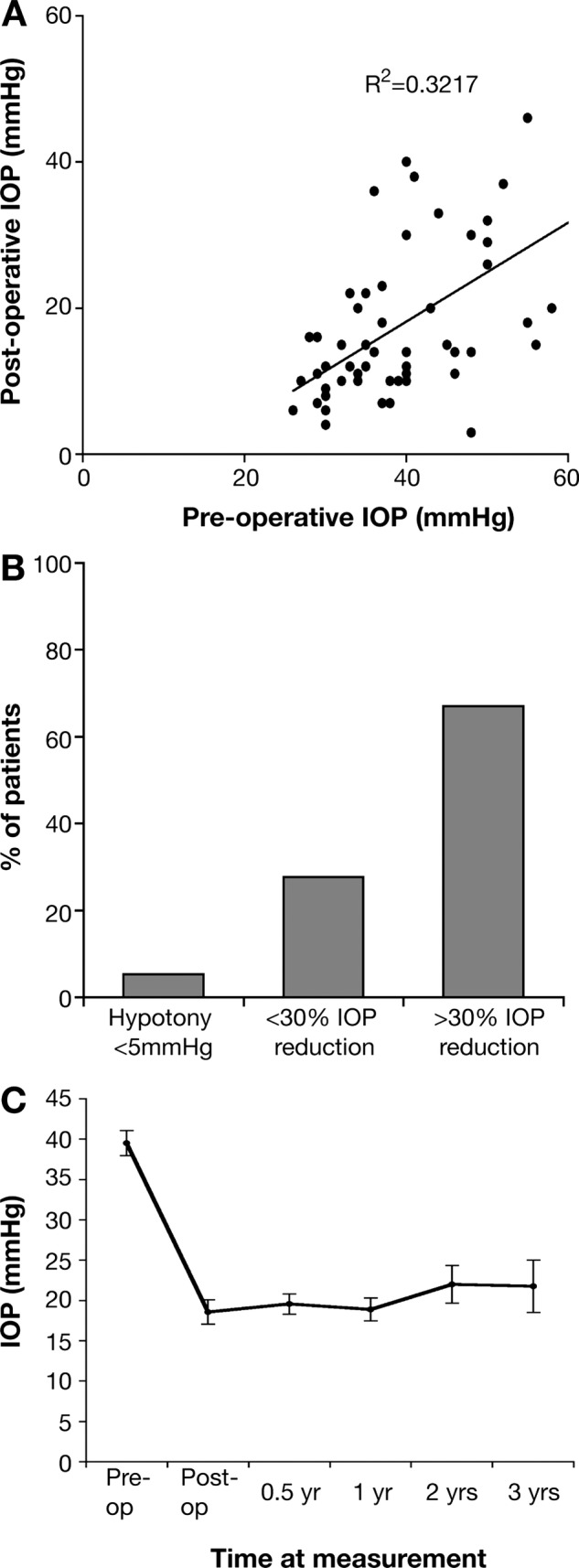
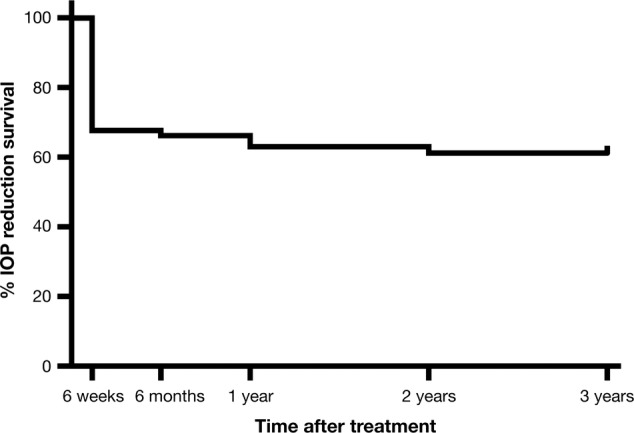
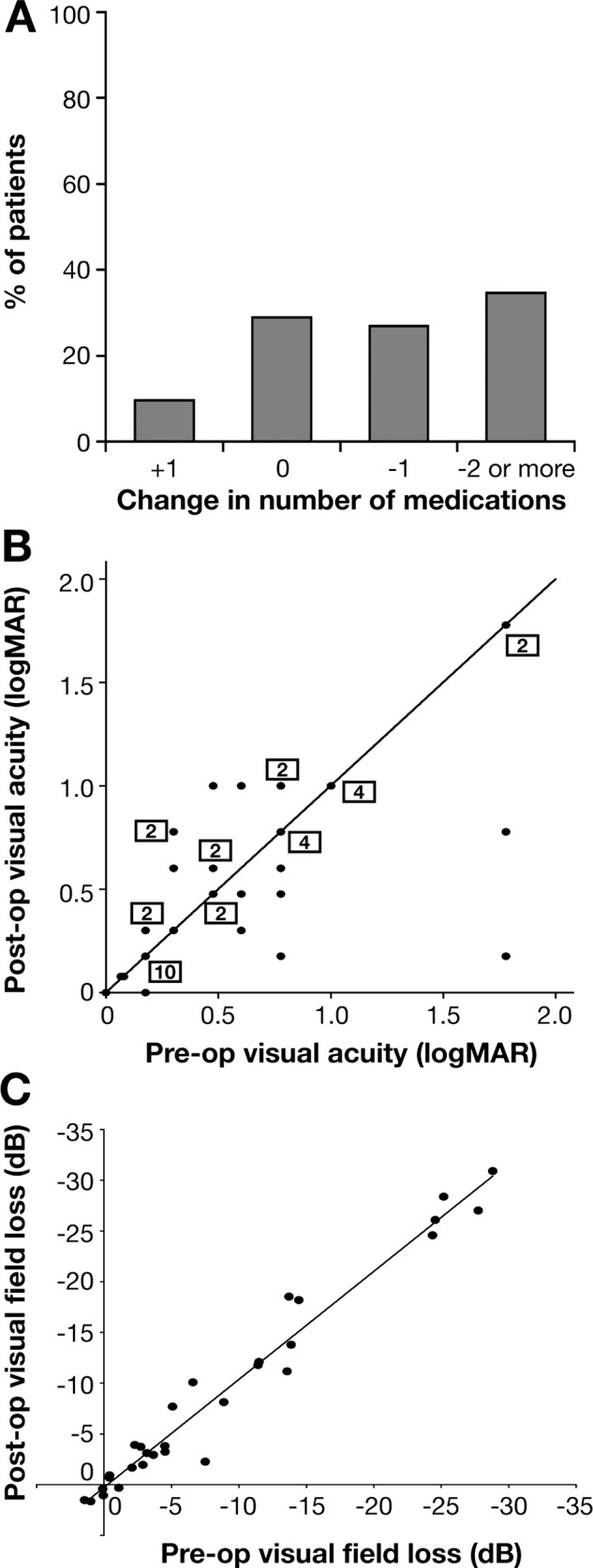
The mean IOP after a single treatment decreased from 39.5±1.3 to 17.8±1.5 mm Hg after a 6-week follow-up period (p<0.0001). This reduction in IOP was maintained over a 3-year period. Here, 61.5% of patients were able to reduce the number of medications used, with mean reduction from 2.6 to 1.5 medications (p<0.05). The mean initial visual field loss prior to treatment was 8.74 dB and at 6 months post-treatment was measured at 9.06 dB (p>0.05), suggesting no significant overall change. Visual acuity remained unchanged or improved for 83.6% of patients (p>0.05) with relatively good visual potential (average vision preoperatively was 0.57 logMAR). Hypotony occurred in 5.3% of patients. No patients required enucleation or evisceration.
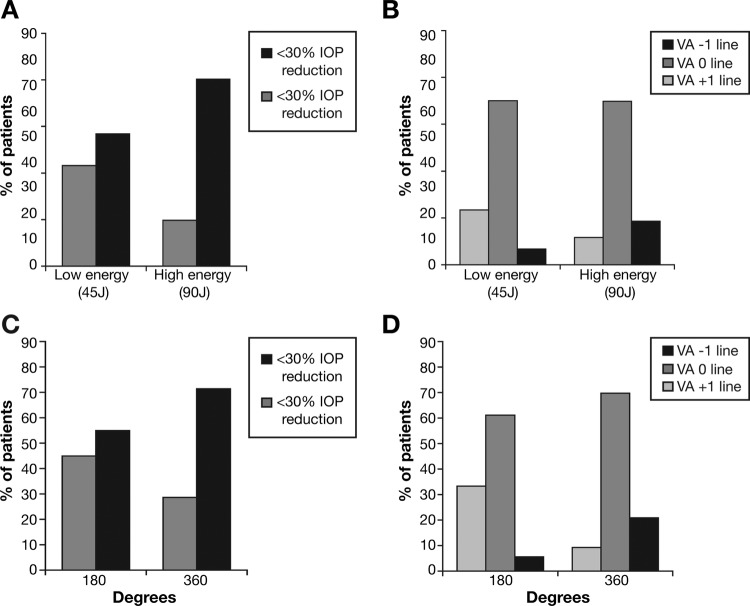
A single session of cyclodiode laser therapy was associated with significant IOP reduction in a majority of patients with refractory glaucoma. The majority were able to maintain the IOP reduction over a 3-year period without the need for a further surgical intervention. Additionally, over 80% of the patients in our study were able to maintain their baseline visual acuity. These results support the view that a single cyclodiode treatment can be sufficient in achieving long-term IOP control and may be considered in eyes with relatively good visual potential.
研究单次半导体激光睫状体光凝治疗难治性青光眼的疗效及其对视功能良好的患者的视力预后的影响,并评估确定最佳治疗参数的可能预测因素。
回顾性观察性研究。
三级转诊中心。
7 年内接受半导体激光睫状体光凝作为首次手术干预的 87 例难治性青光眼患者的病历。
治疗后眼压(IOP)降低、药物使用数量和视力结果。
单次治疗后平均眼压从 39.5±1.3mmHg 降至 6 周随访时的 17.8±1.5mmHg(p<0.0001)。IOP 的这种降低在 3 年内得到维持。在此期间,61.5%的患者能够减少使用的药物数量,平均从 2.6 种减少至 1.5 种(p<0.05)。治疗前平均初始视野损失为 8.74dB,治疗后 6 个月时为 9.06dB(p>0.05),表明总体无显著变化。视力保持不变或改善的患者占 83.6%(p>0.05),这些患者具有相对较好的视力潜力(术前平均视力为 0.57logMAR)。5.3%的患者发生低眼压。无患者需要眼球摘除或眼内容剜除。
单次半导体激光睫状体光凝治疗与大多数难治性青光眼患者的眼压显著降低相关。大多数患者能够在 3 年内维持眼压降低,无需进一步手术干预。此外,我们研究中的 80%以上的患者能够维持其基线视力。这些结果支持单次睫状体光凝治疗可以实现长期眼压控制的观点,对于视力潜力相对较好的眼睛可以考虑采用这种治疗方法。