van Rijen Miranda M L, Kluytmans-van den Bergh Marjolein F Q, Verkade Erwin J M, Ten Ham Peter B G, Feingold Beth J, Kluytmans Jan A J W
Laboratory for Microbiology and Infection Control, Amphia Hospital, Breda, The Netherlands.
PLoS One. 2013 Jun 19;8(6):e65594. doi: 10.1371/journal.pone.0065594. Print 2013.
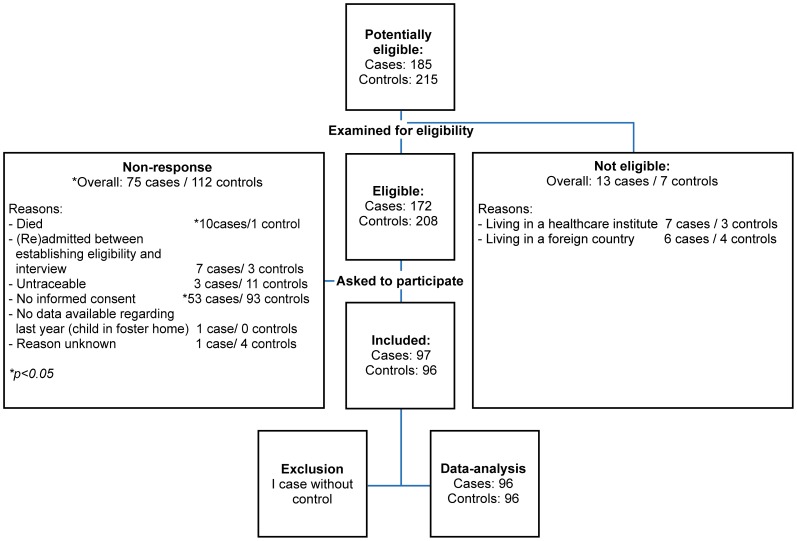
Community-acquired MRSA (CA-MRSA) is rapidly increasing. Currently, it is unknown which reservoirs are involved. An exploratory hospital-based case-control study was performed in sixteen Dutch hospitals to identify risk factors for CA-MRSA carriage in patients not belonging to established risk groups.
Cases were in- or outpatients from sixteen Dutch hospitals, colonised or infected with MRSA without healthcare- or livestock-associated risk factors for MRSA carriage. Control subjects were patients not carrying MRSA, and hospitalised on the same ward or visited the same outpatients' clinic as the case. The presence of potential risk factors for CA-MRSA carriage was determined using a standardised questionnaire.
Regular consumption of poultry (OR 2⋅40; 95% CI 1⋅08-5⋅33), cattle density per municipality (OR 1⋅30; 95% CI 1⋅00-1⋅70), and sharing of scuba diving equipment (OR 2⋅93 95% CI 1⋅19-7⋅21) were found to be independently associated with CA-MRSA carriage. CA-MRSA carriage was not related to being of foreign origin.
The observed association between the consumption of poultry and CA-MRSA carriage suggests that MRSA in the food chain may be a source for MRSA carriage in humans. Although sharing of scuba diving equipment was found to be associated with CA-MRSA carriage, the role played by skin abrasions in divers, the lack of decontamination of diving materials, or the favourable high salt content of sea water is currently unclear. The risk for MRSA MC398 carriage in areas with a high cattle density may be due to environmental contamination with MRSA MC398 or human-to-human transmission. Further studies are warranted to confirm our findings and to determine the absolute risks of MRSA acquisition associated with the factors identified.
社区获得性耐甲氧西林金黄色葡萄球菌(CA-MRSA)正在迅速增加。目前,尚不清楚涉及哪些储存宿主。在荷兰的16家医院进行了一项基于医院的探索性病例对照研究,以确定不属于既定风险组的患者中CA-MRSA携带的危险因素。
病例为来自荷兰16家医院的住院或门诊患者,感染或定植有MRSA,且无与医疗保健或家畜相关的MRSA携带危险因素。对照对象为未携带MRSA的患者,与病例在同一病房住院或在同一门诊就诊。使用标准化问卷确定CA-MRSA携带的潜在危险因素。
经常食用家禽(比值比2.40;95%置信区间1.08-5.33)、每个市镇的牛密度(比值比1.30;95%置信区间1.00-1.70)以及共用潜水设备(比值比2.93,95%置信区间1.19-7.21)被发现与CA-MRSA携带独立相关。CA-MRSA携带与外国血统无关。
观察到的食用家禽与CA-MRSA携带之间的关联表明,食物链中的MRSA可能是人类MRSA携带的一个来源。虽然发现共用潜水设备与CA-MRSA携带有关,但目前尚不清楚潜水者皮肤擦伤、潜水材料缺乏去污或海水含盐量高的有利作用。牛密度高的地区MRSA MC398携带风险可能是由于MRSA MC398环境污染或人传人。有必要进一步研究以证实我们的发现,并确定与所确定因素相关的获得MRSA的绝对风险。