Zhang Lihai, Smith David W, Gardiner Bruce S, Grodzinsky Alan J
Department of Infrastructure Engineering, The University of Melbourne, Victoria, Australia.
PLoS One. 2013 Jun 26;8(6):e66870. doi: 10.1371/journal.pone.0066870. Print 2013.
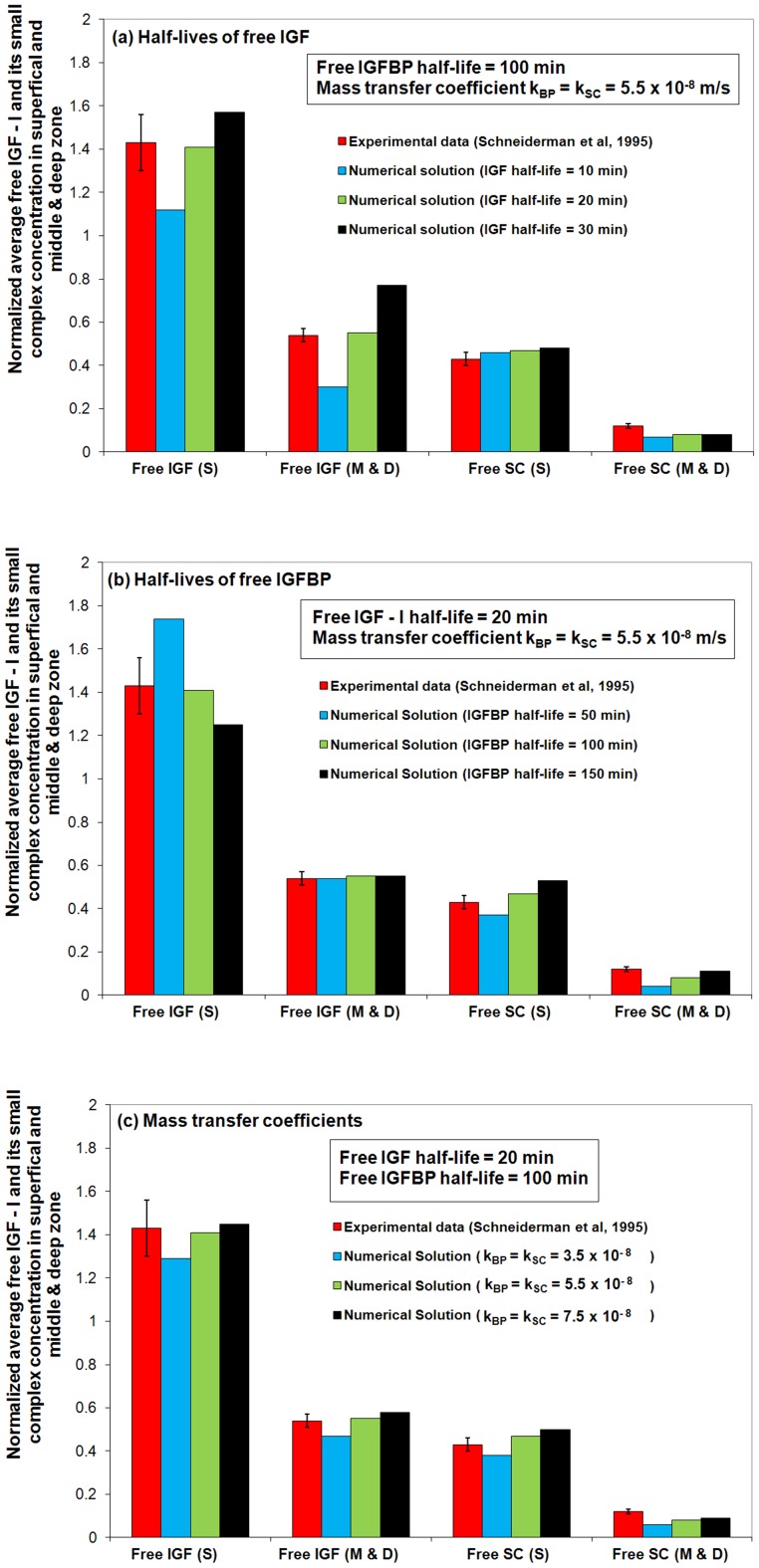
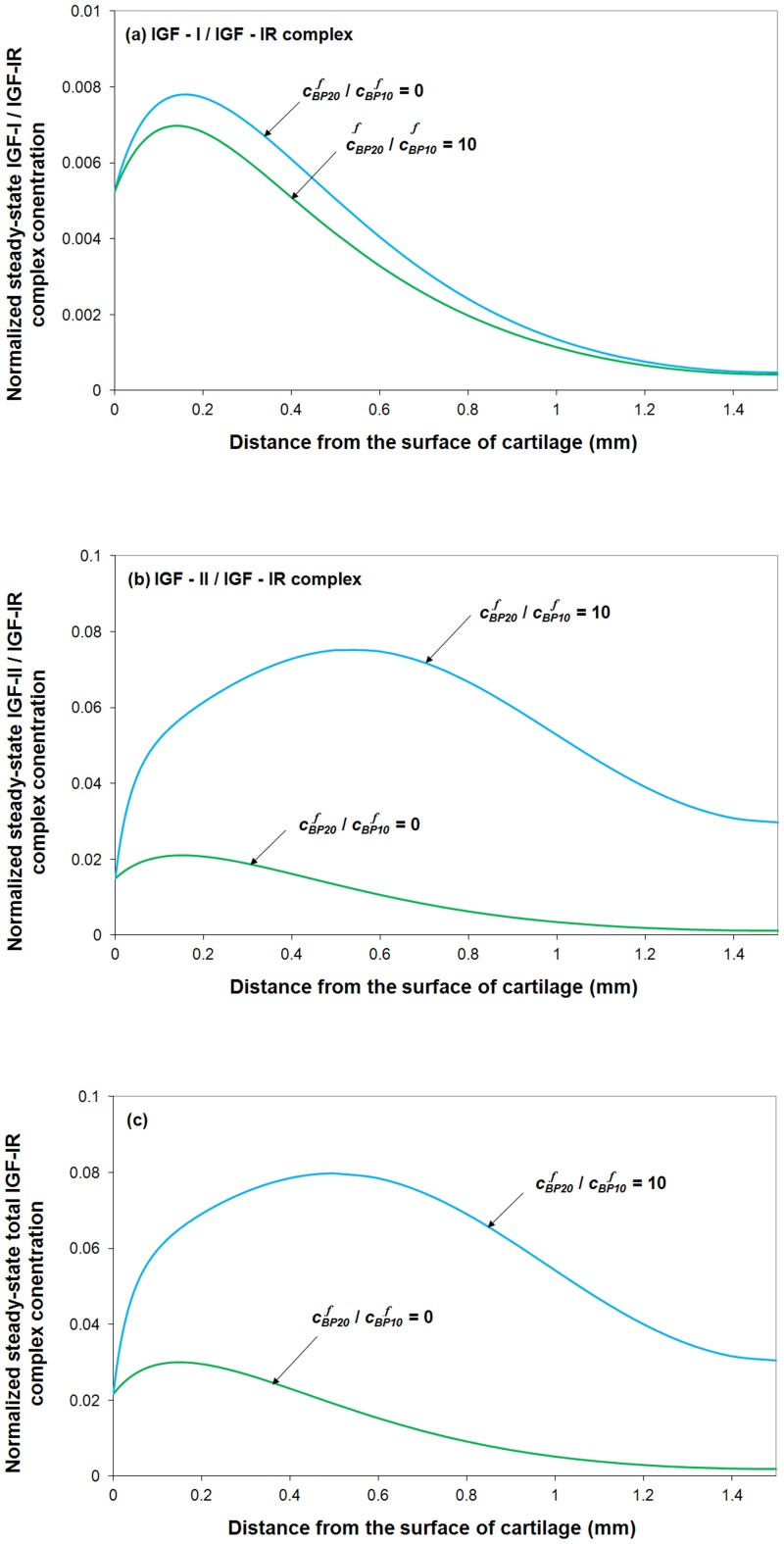
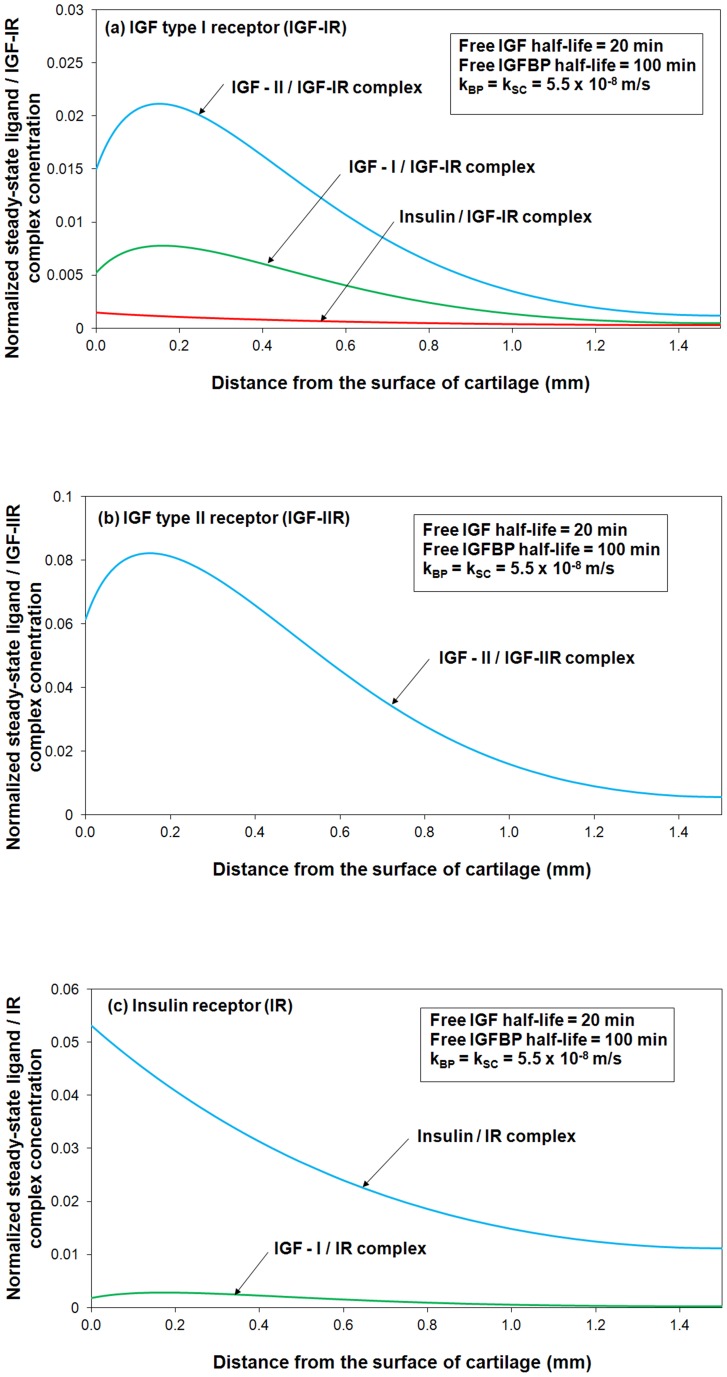
IGF signaling is involved in cell proliferation, differentiation and apoptosis in a wide range of tissues, both normal and diseased, and so IGF-IR has been the focus of intense interest as a promising drug target. In this computational study on cartilage, we focus on two questions: (i) what are the key factors influencing IGF-IR complex formation, and (ii) how might cells regulate IGF-IR complex formation? We develop a reaction-diffusion computational model of the IGF system involving twenty three parameters. A series of parametric and sensitivity studies are used to identify the key factors influencing IGF signaling. From the model we predict the free IGF and IGF-IR complex concentrations throughout the tissue. We estimate the degradation half-lives of free IGF-I and IGFBPs in normal cartilage to be 20 and 100 mins respectively, and conclude that regulation of the IGF half-life, either directly or indirectly via extracellular matrix IGF-BP protease concentrations, are two critical factors governing the IGF-IR complex formation in the cartilage. Further we find that cellular regulation of IGF-II production, the IGF-IIR concentration and its clearance rate, all significantly influence IGF signaling. It is likely that negative feedback processes via regulation of these factors tune IGF signaling within a tissue, which may help explain the recent failures of single target drug therapies aimed at modifying IGF signaling.
胰岛素样生长因子(IGF)信号传导参与多种正常和患病组织中的细胞增殖、分化和凋亡,因此胰岛素样生长因子1受体(IGF-IR)作为一个有前景的药物靶点备受关注。在这项关于软骨的计算研究中,我们关注两个问题:(i)影响IGF-IR复合物形成的关键因素是什么,以及(ii)细胞如何调节IGF-IR复合物的形成?我们开发了一个涉及23个参数的IGF系统反应扩散计算模型。通过一系列参数和敏感性研究来确定影响IGF信号传导的关键因素。从模型中,我们预测了整个组织中游离IGF和IGF-IR复合物的浓度。我们估计正常软骨中游离IGF-I和胰岛素样生长因子结合蛋白(IGFBPs)的降解半衰期分别为20分钟和100分钟,并得出结论,直接或通过细胞外基质IGF-BP蛋白酶浓度间接调节IGF半衰期是控制软骨中IGF-IR复合物形成的两个关键因素。此外,我们发现细胞对IGF-II产生、IGF-II受体(IGF-IIR)浓度及其清除率的调节,均显著影响IGF信号传导。很可能通过对这些因素的调节产生的负反馈过程调节组织内的IGF信号传导,这可能有助于解释近期旨在改变IGF信号传导的单靶点药物治疗失败的原因。