Departamento de Nutrición, Bromatología y Tecnología de los Alimentos, Universidad Complutense de Madrid, Madrid, Spain.
PLoS One. 2013 Jun 28;8(6):e66986. doi: 10.1371/journal.pone.0066986. Print 2013.
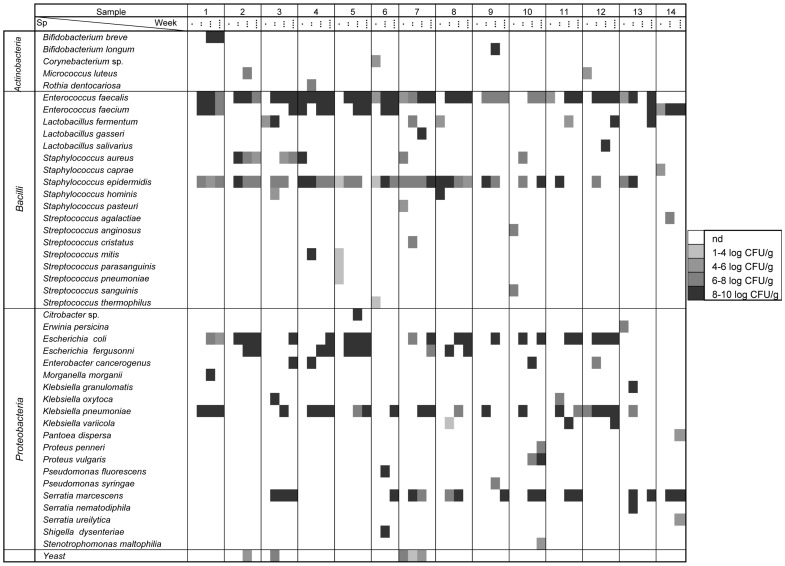
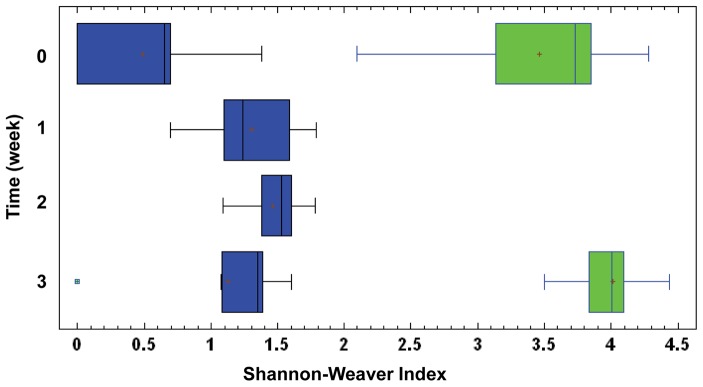
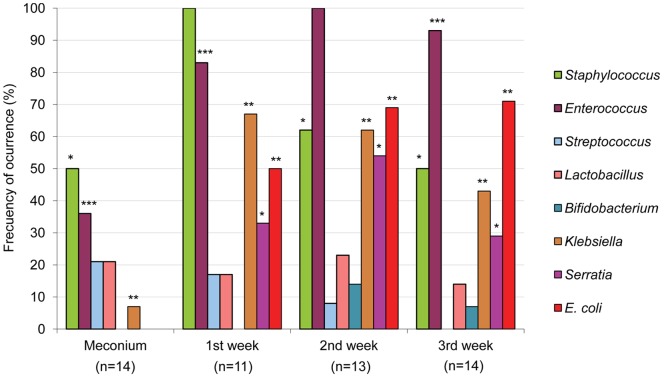
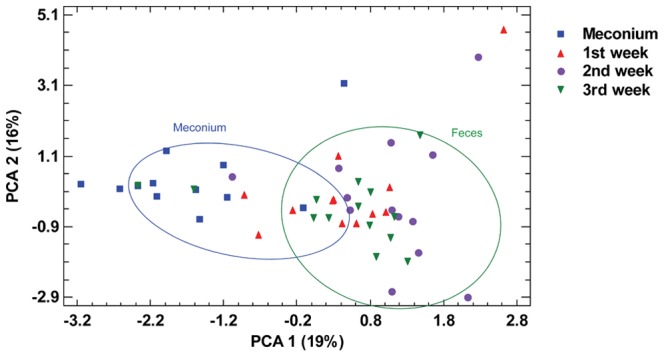
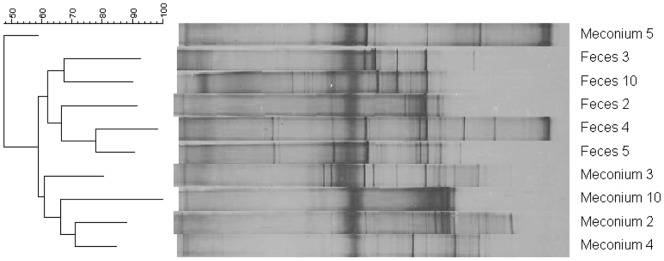
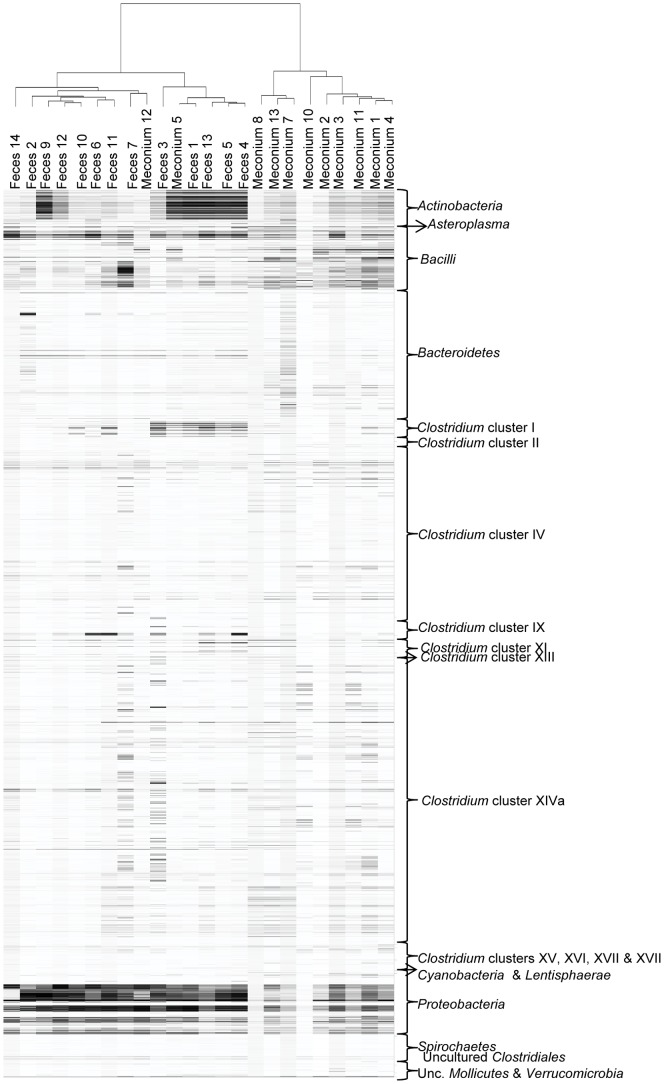
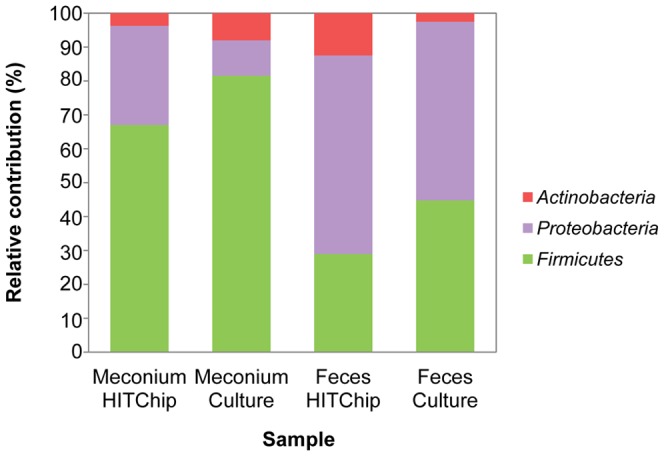
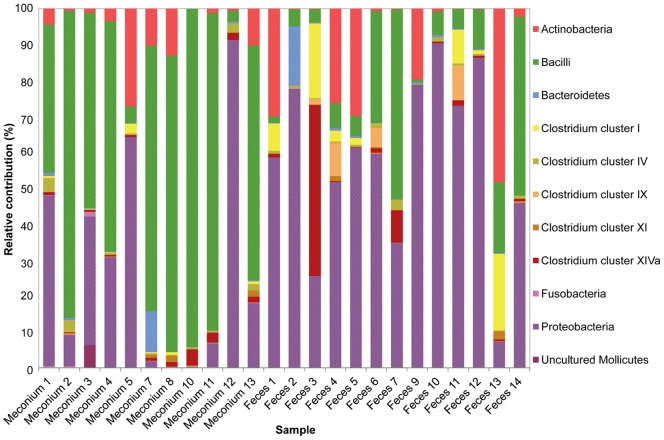
The establishment and succession of bacterial communities in infants may have a profound impact in their health, but information about the composition of meconium microbiota and its evolution in hospitalized preterm infants is scarce. In this context, the objective of this work was to characterize the microbiota of meconium and fecal samples obtained during the first 3 weeks of life from 14 donors using culture and molecular techniques, including DGGE and the Human Intestinal Tract Chip (HITChip) analysis of 16S rRNA amplicons. Culture techniques offer a quantification of cultivable bacteria and allow further study of the isolate, while molecular techniques provide deeper information on bacterial diversity. Culture and HITChip results were very similar but the former showed lower sensitivity. Inter-individual differences were detected in the microbiota profiles although the meconium microbiota was peculiar and distinct from that of fecal samples. Bacilli and other Firmicutes were the main bacteria groups detected in meconium while Proteobacteria dominated in the fecal samples. Culture technique showed that Staphylococcus predominated in meconium and that Enterococcus, together with Gram-negative bacteria such as Escherichia coli, Escherichia fergusonii, Klebsiella pneumoniae and Serratia marcescens, was more abundant in fecal samples. In addition, HITChip results showed the prevalence of bacteria related to Lactobacillus plantarum and Streptococcus mitis in meconium samples whereas those related to Enterococcus, Escherichia coli, Klebsiella pneumoniae and Yersinia predominated in the 3(rd) week feces. This study highlights that spontaneously-released meconium of preterm neonates contains a specific microbiota that differs from that of feces obtained after the first week of life. Our findings indicate that the presence of Serratia was strongly associated with a higher degree of immaturity and other hospital-related parameters, including antibiotherapy and mechanical ventilation.
婴儿肠道菌群的建立和延续可能对其健康产生深远影响,但关于胎粪微生物群组成及其在住院早产儿中的演变的信息却很少。在这种情况下,本研究的目的是使用培养和分子技术(包括 DGGE 和 16S rRNA 扩增子的人类肠道芯片(HITChip)分析)来描述 14 名供体在生命的前 3 周内获得的胎粪和粪便样本中的微生物群。培养技术可定量培养可培养细菌,并允许对分离株进行进一步研究,而分子技术可提供有关细菌多样性的更深入信息。培养和 HITChip 的结果非常相似,但前者的灵敏度较低。尽管胎粪微生物群与粪便样本不同,但在微生物群谱中检测到个体间的差异。在胎粪中检测到的主要细菌群是芽孢杆菌和其他厚壁菌门,而在粪便样本中则以变形菌门为主。培养技术显示,金黄色葡萄球菌在胎粪中占优势,肠球菌与革兰氏阴性菌(如大肠杆菌、弗格森埃希氏菌、肺炎克雷伯菌和粘质沙雷氏菌)一起在粪便样本中更为丰富。此外,HITChip 结果表明,与植物乳杆菌和链球菌相关的细菌在胎粪样本中普遍存在,而与肠球菌、大肠杆菌、肺炎克雷伯菌和耶尔森氏菌相关的细菌在第 3 周粪便中占优势。本研究强调,早产儿自然排出的胎粪含有特定的微生物群,与生命第一周后获得的粪便微生物群不同。我们的研究结果表明,沙雷氏菌的存在与更高的不成熟程度以及其他与医院相关的参数(包括抗生素治疗和机械通气)密切相关。