Nutrition and Metabolism, Faculdade de Ciências Médicas|NOVA Medical Schoo|, Universidade NOVA de Lisboa , Lisboa, Portugal.
CINTESIS, Center for Health Technology Services Research , Porto, Portugal.
Gut Microbes. 2020 Nov 9;12(1):1785804. doi: 10.1080/19490976.2020.1785804. Epub 2020 Jul 13.
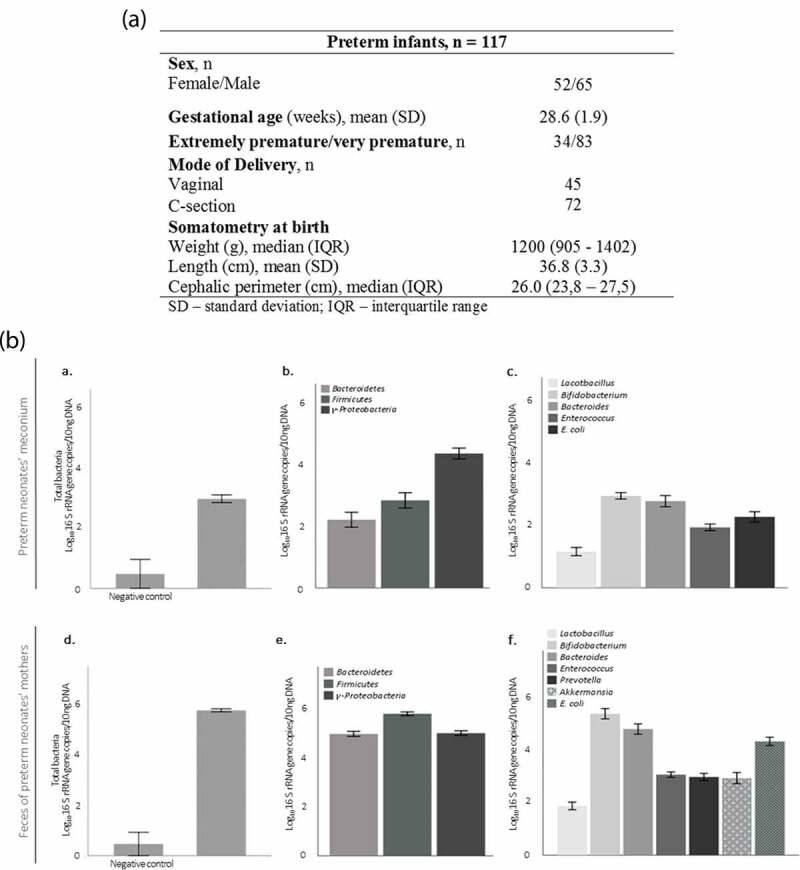
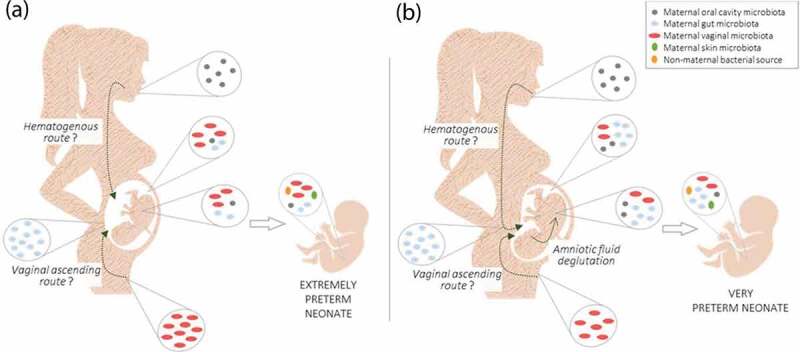
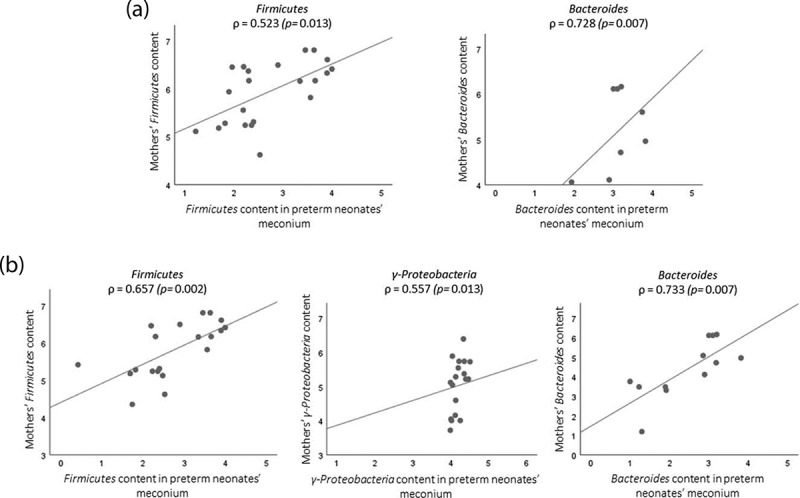
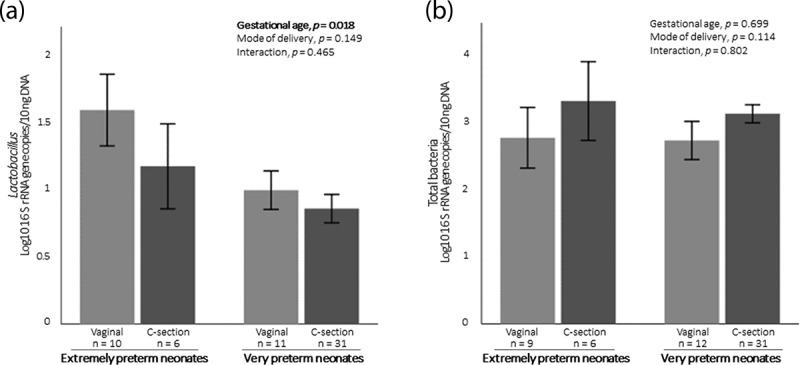
Growing evidence suggests that maternal microbiota can influence the neonates' gut colonization. However, the mechanisms of vertical bacterial transmission remain poorly defined. We believed that the first colonizers of the newborn come from the mother's gut and vagina during pregnancy and that this is independent of the mode of delivery. We conducted an observational longitudinal study to evaluate the link between the maternal gut microbiota and the meconium's microbiota in extremely and very preterm neonates. Bacterial DNA was extracted from samples and specific bacterial groups were quantified by RT-PCR. In this cohort of 117 preterm neonates, we detected bacterial DNA in 88% of meconium samples. Meconium microbiota of neonates born after 28 gestational weeks (very preterm neonates) showed stronger correlations with their mothers' fecal microbiota. However, neonates born before 28 gestational weeks (extremely preterm neonates) had more - genus that dominated the vaginal microbiota - than very preterm neonates, regardless of the mode of delivery. Collectively, these data support the hypothesis that maternal bacteria from the gut and vagina can play a role in shaping neonates' gut microbiota and that mother-to-infant bacterial transmission is a controlled and time-specific process. ClinicalTrials.gov Identifier: NCT03663556.
越来越多的证据表明,母体微生物群可以影响新生儿的肠道定植。然而,垂直细菌传播的机制仍未明确界定。我们认为新生儿的第一批定植者来自母亲的肠道和阴道,而这与分娩方式无关。我们进行了一项观察性纵向研究,以评估极早产儿和非常早产儿的母体肠道微生物群与胎粪微生物群之间的联系。从样本中提取细菌 DNA,并通过 RT-PCR 定量特定的细菌群。在这 117 名早产儿队列中,我们在 88%的胎粪样本中检测到了细菌 DNA。胎粪微生物群与孕 28 周(极早产儿)后出生的新生儿的母亲粪便微生物群相关性更强。然而,孕 28 周前(非常早产儿)出生的新生儿无论分娩方式如何,都比极早产儿有更多的-属,这些菌属主导着阴道微生物群。总的来说,这些数据支持了母体肠道和阴道细菌可以在塑造新生儿肠道微生物群方面发挥作用的假设,并且母婴细菌传播是一个受控和特定时间的过程。临床试验标识符:NCT03663556。