Department of Food Science, Henan Institute of Science and Technology, Xinxiang, Henan 453003, China.
Oxid Med Cell Longev. 2013;2013:743938. doi: 10.1155/2013/743938. Epub 2013 Jun 3.
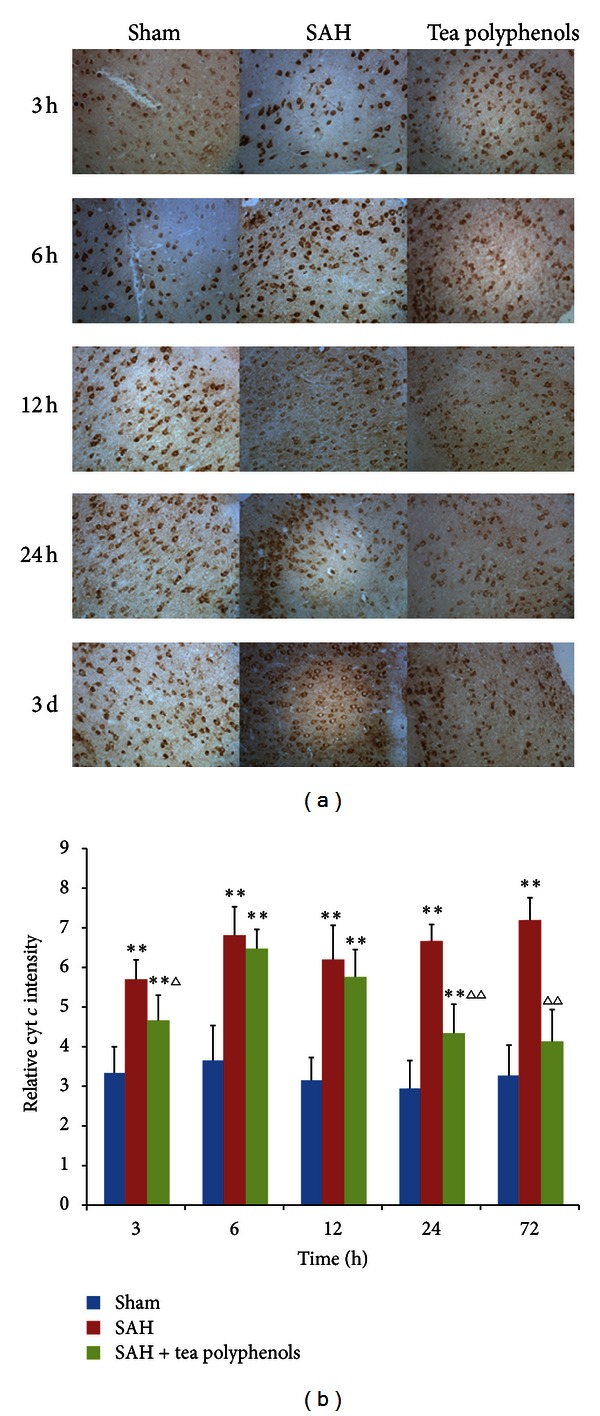
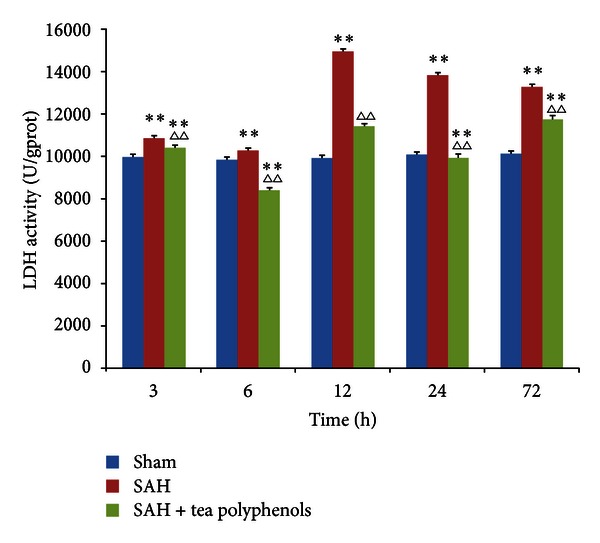
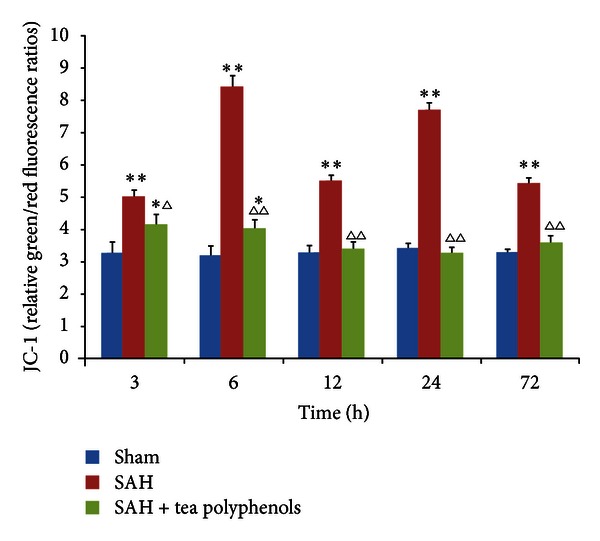
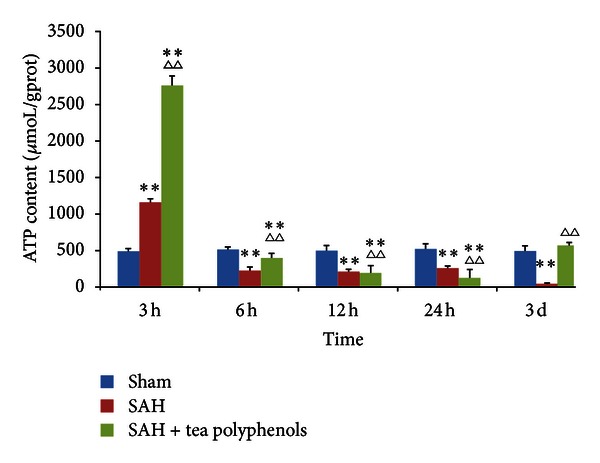
Tea polyphenols are of great benefit to the treatment of several neurodegenerative diseases. In order to explore the neuroprotective effects of tea polyphenols and their potential mechanisms, an established in vivo subarachnoid hemorrhage (SAH) model was used and alterations of mitochondrial function, ATP content, and cytochrome c (cyt c) in cerebral cortex were detected. This study showed that the alteration of mitochondrial membrane potential was an early event in SAH progression. The trend of ATP production was similar to that of mitochondrial membrane potential, indicating that the lower the mitochondrial membrane potential, lesser the ATP produced. Due to mitochondrial dysfunction, more cyt c was released in the SAH group. Interestingly, the preadministration of tea polyphenols significantly rescued the mitochondrial membrane potential to basal level, as well as the ATP content and the cyt c level in the brain cortex 12 h after SAH. After pretreatment with tea polyphenols, the neurological outcome was also improved. The results provide strong evidence that tea polyphenols enhance neuroprotective effects by inhibiting polarization of mitochondrial membrane potential, increasing ATP content, and blocking cyt c release.
茶多酚对治疗几种神经退行性疾病有很大益处。为了探索茶多酚的神经保护作用及其潜在机制,本研究采用了已建立的蛛网膜下腔出血(SAH)动物模型,检测了大脑皮质中线粒体功能、ATP 含量和细胞色素 c(cyt c)的变化。本研究表明,线粒体膜电位的改变是 SAH 进展的早期事件。ATP 生成趋势与线粒体膜电位相似,表明线粒体膜电位越低,产生的 ATP 越少。由于线粒体功能障碍,SAH 组释放的 cyt c 更多。有趣的是,茶多酚的预先给药可显著将线粒体膜电位恢复到基础水平,同时也可提高 SAH 后 12 小时大脑皮质中的 ATP 含量和 cyt c 水平。经过茶多酚预处理后,神经功能预后也得到改善。这些结果为茶多酚通过抑制线粒体膜电位极化、增加 ATP 含量和阻止 cyt c 释放来增强神经保护作用提供了有力证据。