Department of Molecular and Cellular Medicine, College of Medicine, Texas A&M Health Science Center, College Station, TX 77843, USA.
Curr Biol. 2013 Aug 5;23(15):1466-71. doi: 10.1016/j.cub.2013.06.028. Epub 2013 Jul 11.
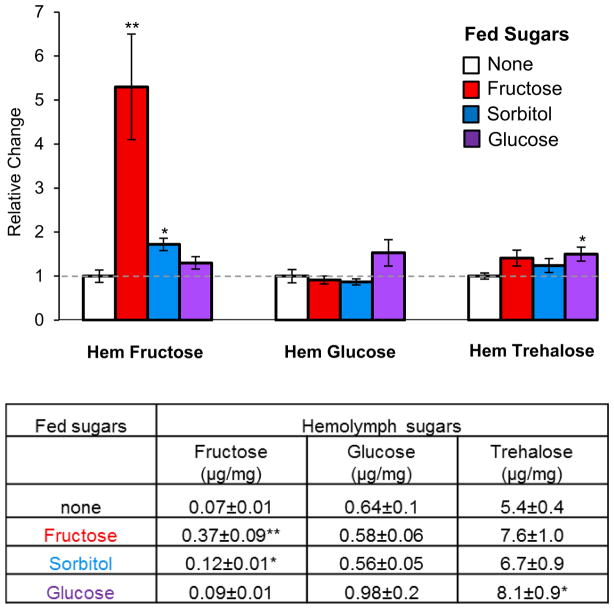
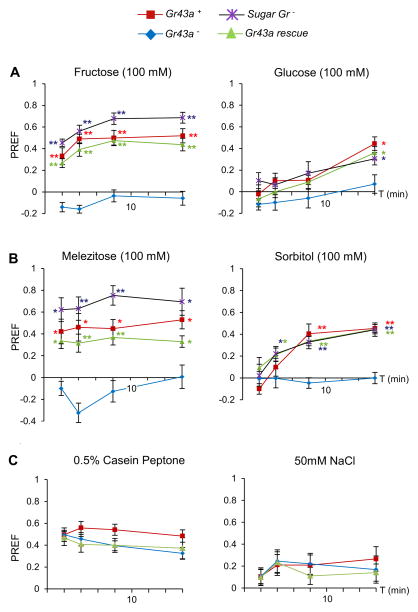
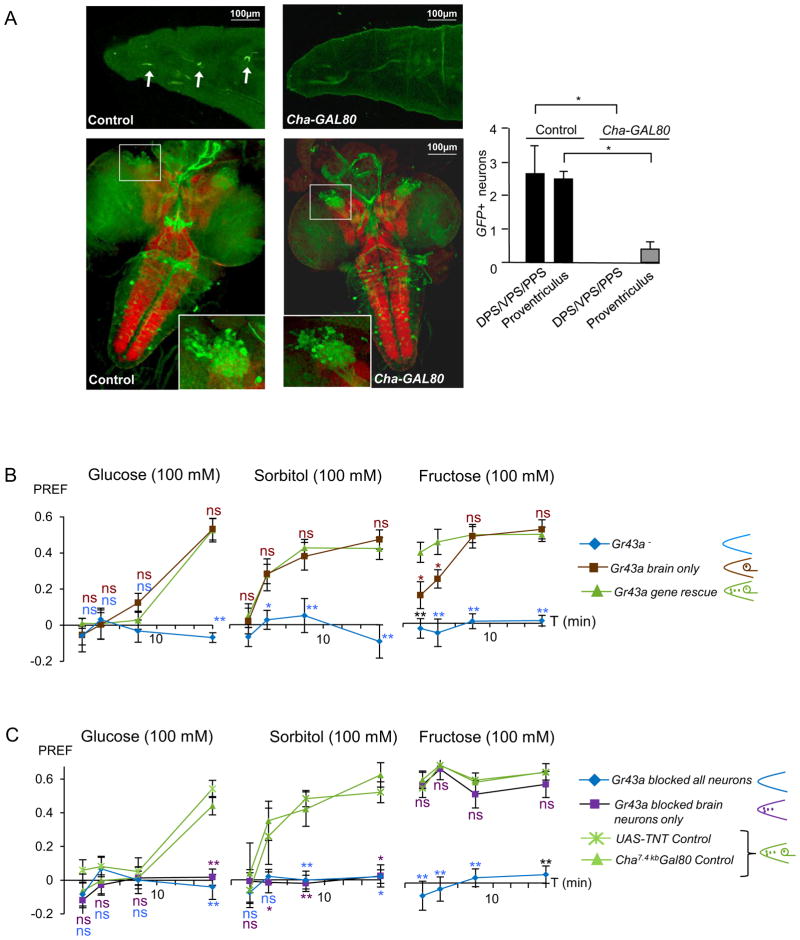
Evaluation of food chemicals is essential to make appropriate feeding decisions. The molecular genetic analysis of Gustatory receptor (Gr) genes and the characterization of the neural circuits that they engage has led to a broad understanding of taste perception in adult Drosophila [1, 2]. For example, eight relatively highly conserved members of the Gr gene family (Gr5a, Gr61a, and Gr64a-f), referred to as sugar Gr genes, are thought to be involved in sugar taste in adult flies [3-8], while the majority of the remaining Gr genes are likely to encode bitter taste receptors [9-11], albeit some function as pheromone [12-14] and carbon dioxide [15, 16] receptors. In contrast to the adult fly, relatively little is known about the cellular and molecular basis of taste perception in larvae. Here, we identify Gr43a, which was recently shown to function as a hemolymph fructose sensor in adult flies [17], as the major larval sugar receptor. We show that it is expressed in taste neurons, proventricular neurons, as well as sensory neurons of the brain. Larvae lacking Gr43a fail to sense sugars, while larvae mutant for all eight sugar Gr genes exhibit no obvious defect. Finally, we show that brain neurons are necessary and sufficient for sensing all main dietary sugars, which probably involves a postingestive mechanism of converting carbohydrates into fructose.
评估食品化学物质对于做出适当的喂养决策至关重要。味觉受体(Gr)基因的分子遗传分析以及它们所涉及的神经回路的特征描述,使人们对成年果蝇的味觉感知有了广泛的了解[1,2]。例如,Gr 基因家族中相对高度保守的 8 个成员(Gr5a、Gr61a 和 Gr64a-f),被称为糖 Gr 基因,被认为参与成年果蝇的糖味觉[3-8],而其余大多数 Gr 基因可能编码苦味受体[9-11],尽管有些基因作为信息素[12-14]和二氧化碳[15,16]受体发挥作用。与成年果蝇相比,幼虫味觉感知的细胞和分子基础相对知之甚少。在这里,我们确定了 Gr43a,它最近被证明在成年果蝇中作为血淋巴果糖传感器发挥作用[17],是主要的幼虫糖受体。我们表明它在味觉神经元、前肠神经元以及大脑的感觉神经元中表达。缺乏 Gr43a 的幼虫无法感知糖,而缺失所有 8 个糖 Gr 基因的幼虫则没有明显缺陷。最后,我们表明大脑神经元是感知所有主要膳食糖所必需和充分的,这可能涉及一种将碳水化合物转化为果糖的餐后机制。