École Centrale de Nantes, IRCCyN UMR CNRS 6597, 44321, Nantes, France.
Bioinformatics. 2013 Sep 15;29(18):2320-6. doi: 10.1093/bioinformatics/btt393. Epub 2013 Jul 12.
Logic modeling is a useful tool to study signal transduction across multiple pathways. Logic models can be generated by training a network containing the prior knowledge to phospho-proteomics data. The training can be performed using stochastic optimization procedures, but these are unable to guarantee a global optima or to report the complete family of feasible models. This, however, is essential to provide precise insight in the mechanisms underlaying signal transduction and generate reliable predictions.
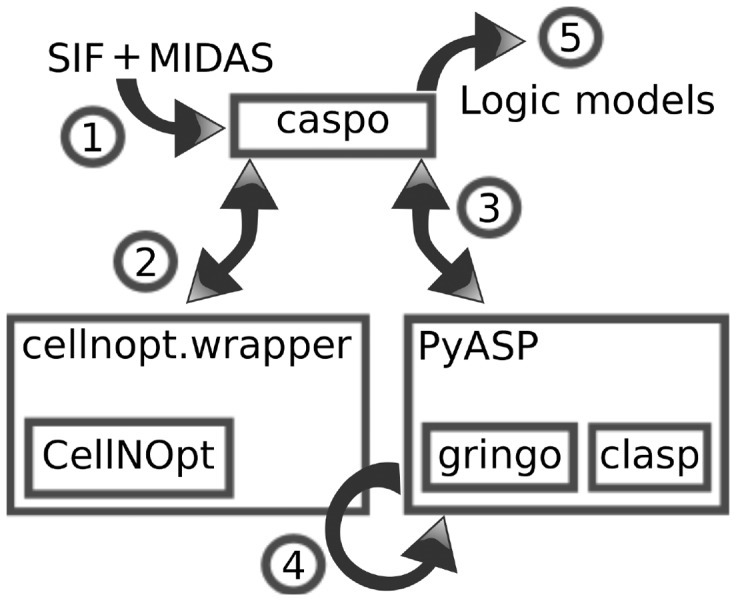
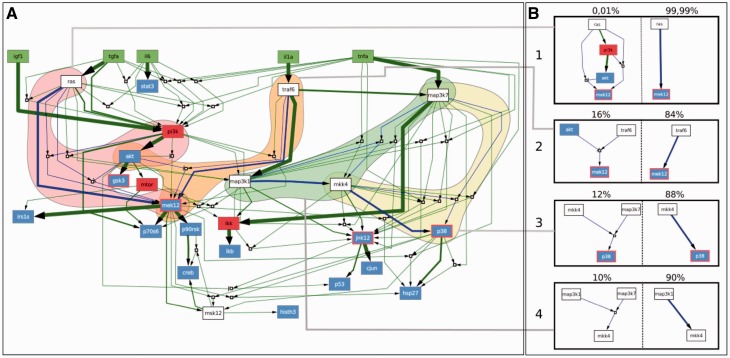
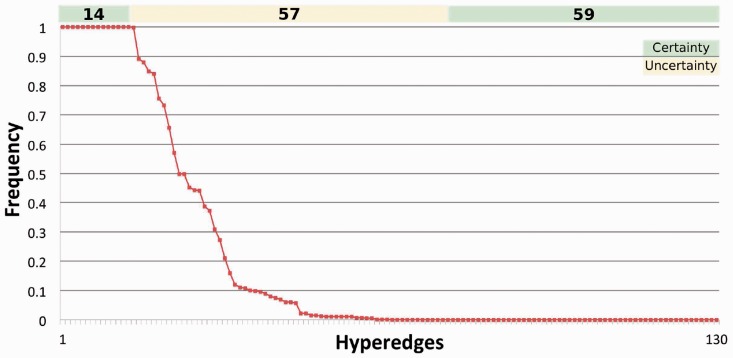
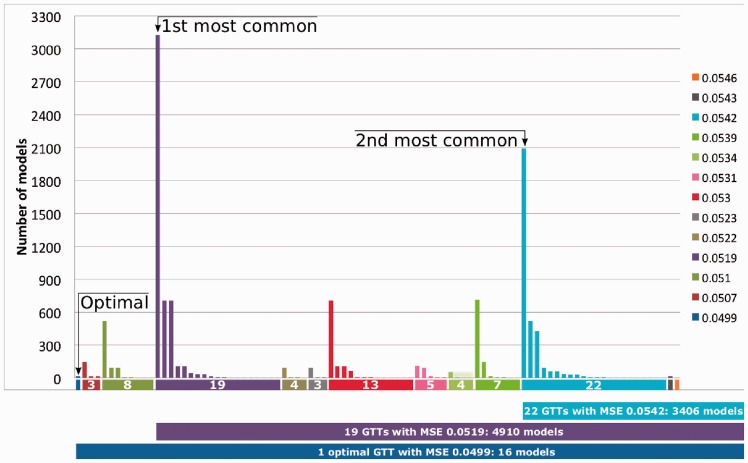
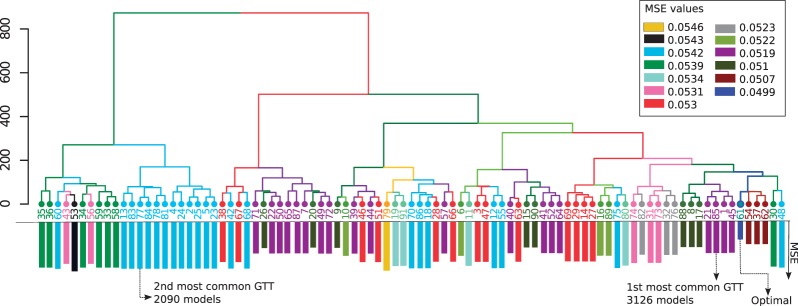
We propose the use of Answer Set Programming to explore exhaustively the space of feasible logic models. Toward this end, we have developed caspo, an open-source Python package that provides a powerful platform to learn and characterize logic models by leveraging the rich modeling language and solving technologies of Answer Set Programming. We illustrate the usefulness of caspo by revisiting a model of pro-growth and inflammatory pathways in liver cells. We show that, if experimental error is taken into account, there are thousands (11 700) of models compatible with the data. Despite the large number, we can extract structural features from the models, such as links that are always (or never) present or modules that appear in a mutual exclusive fashion. To further characterize this family of models, we investigate the input-output behavior of the models. We find 91 behaviors across the 11 700 models and we suggest new experiments to discriminate among them. Our results underscore the importance of characterizing in a global and exhaustive manner the family of feasible models, with important implications for experimental design.
caspo is freely available for download (license GPLv3) and as a web service at http://caspo.genouest.org/.
Supplementary materials are available at Bioinformatics online.
逻辑建模是研究多条信号通路中信号转导的有用工具。可以通过训练包含磷酸化蛋白质组学数据先验知识的网络来生成逻辑模型。训练可以使用随机优化程序进行,但这些程序无法保证全局最优或报告完整的可行模型族。然而,这对于提供对信号转导背后机制的精确洞察并生成可靠的预测至关重要。
我们建议使用答案集编程来详尽地探索可行逻辑模型的空间。为此,我们开发了 caspo,这是一个开源的 Python 包,通过利用 Answer Set Programming 的丰富建模语言和求解技术,为学习和刻画逻辑模型提供了强大的平台。我们通过重新审视肝细胞中促生长和炎症途径的模型来展示 caspo 的有用性。我们表明,如果考虑实验误差,有数千个(11700 个)与数据兼容的模型。尽管数量庞大,但我们可以从模型中提取结构特征,例如始终存在(或从不存在)的链接或以互斥方式出现的模块。为了进一步描述这个模型族,我们研究了模型的输入输出行为。我们在 11700 个模型中发现了 91 种行为,并提出了新的实验来区分它们。我们的结果强调了以全局和详尽的方式对可行模型族进行特征刻画的重要性,这对实验设计具有重要意义。
caspo 可免费下载(许可证为 GPLv3),也可作为网络服务在 http://caspo.genouest.org/ 使用。
补充材料可在 Bioinformatics 在线获取。