Université François Rabelais, Inserm U966, Tours, France.
PLoS Pathog. 2013;9(7):e1003477. doi: 10.1371/journal.ppat.1003477. Epub 2013 Jul 4.
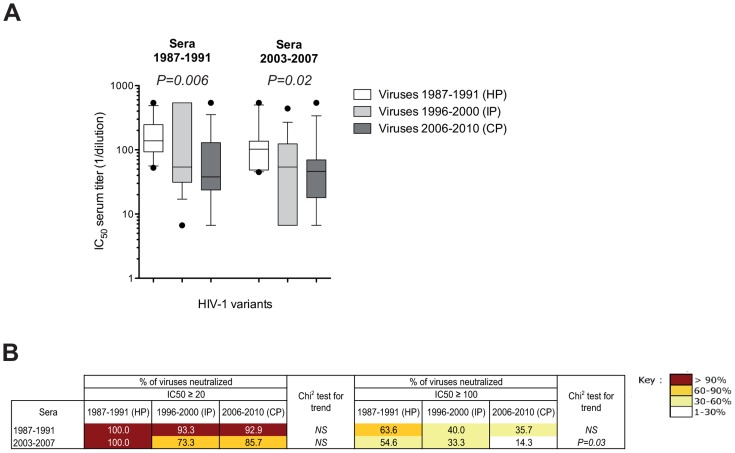
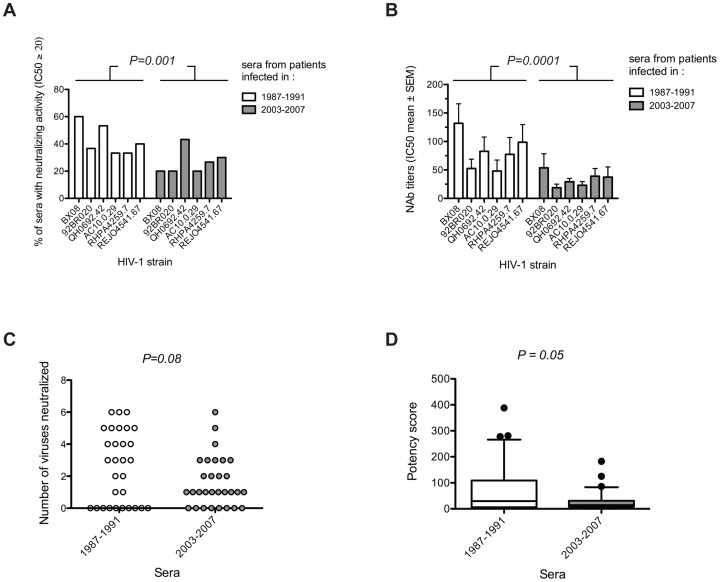
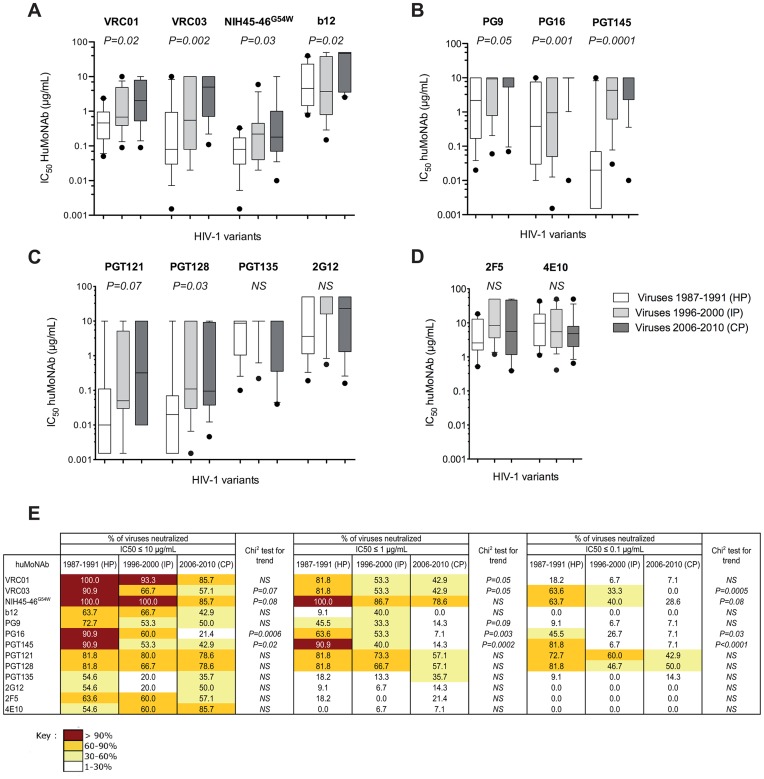
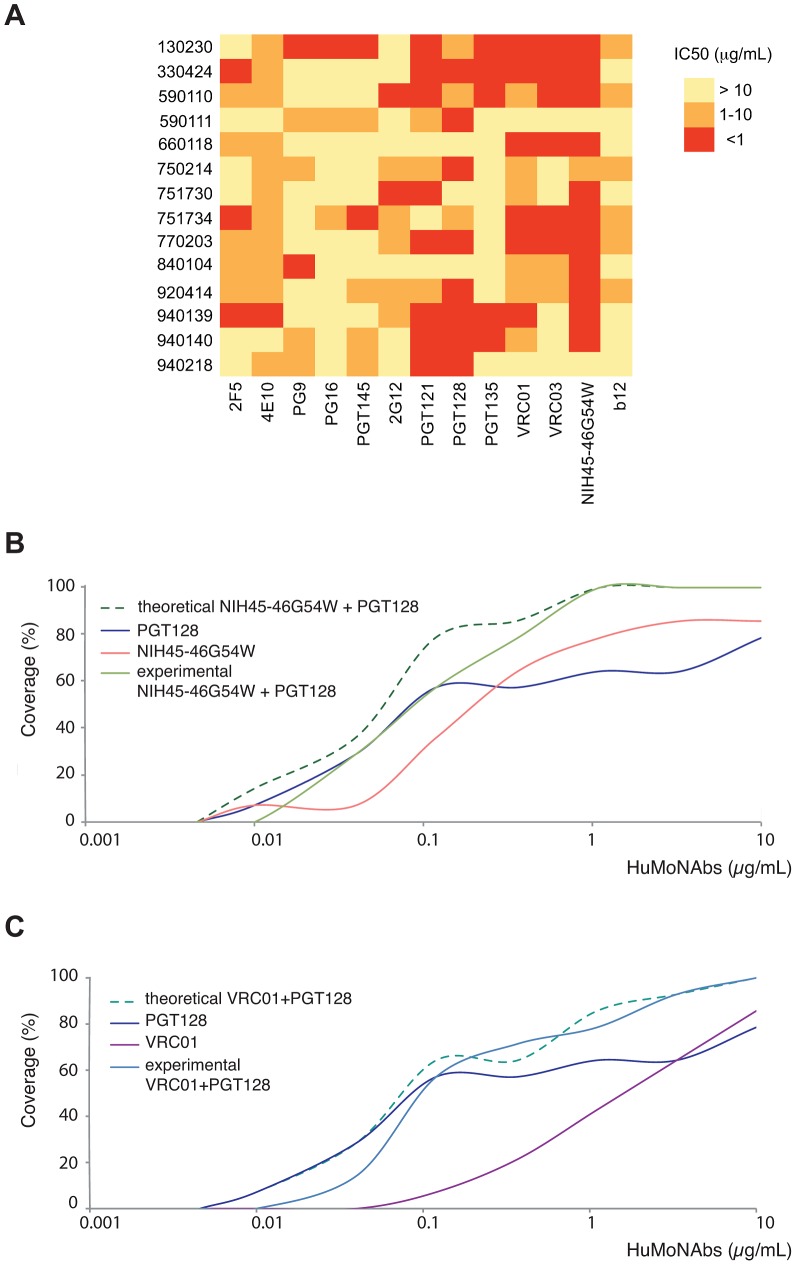
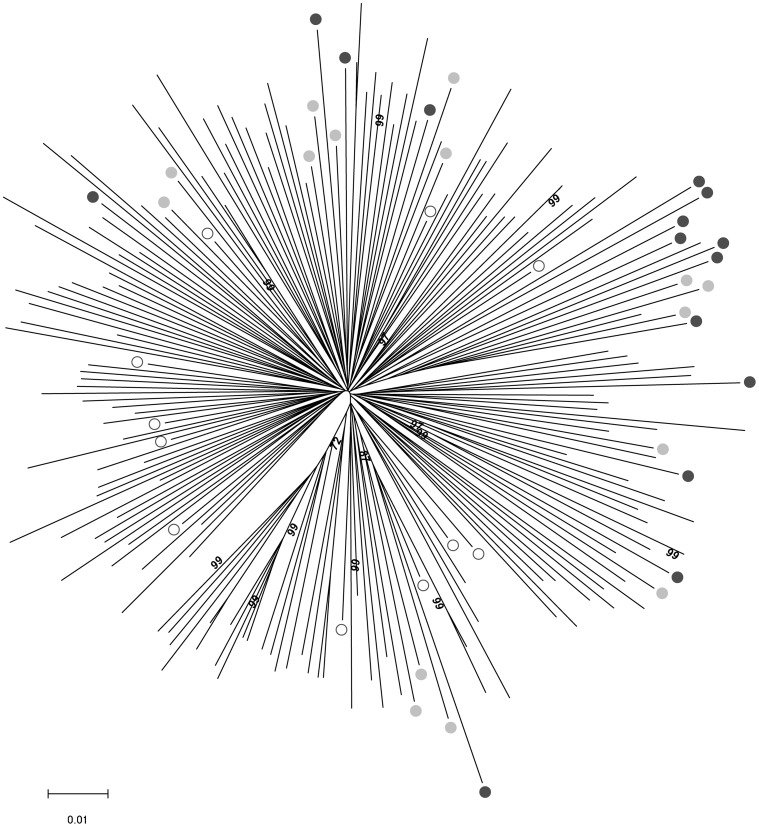
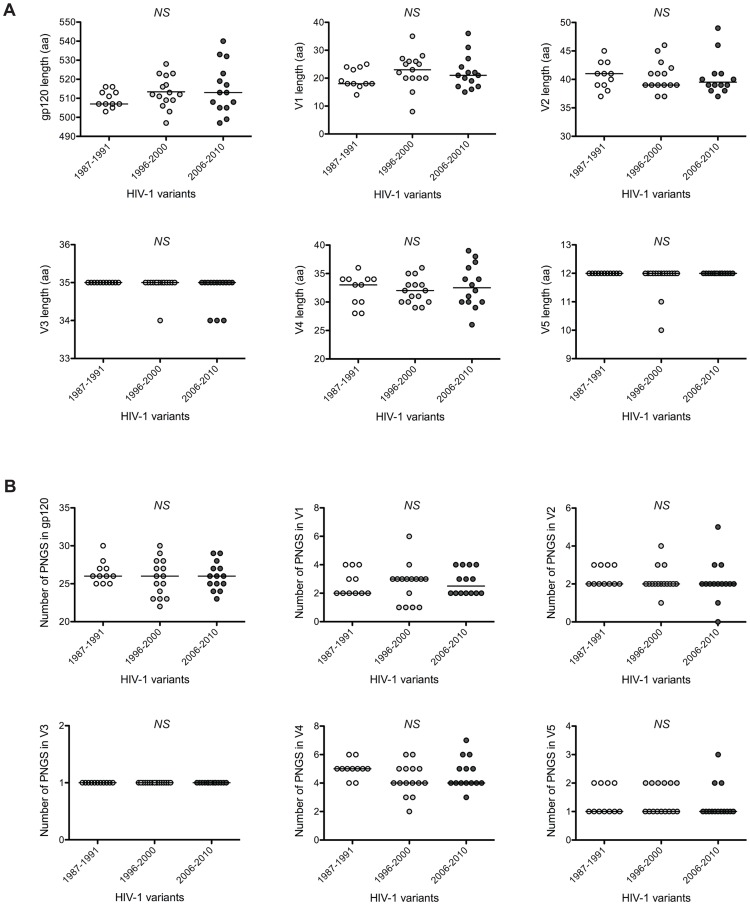
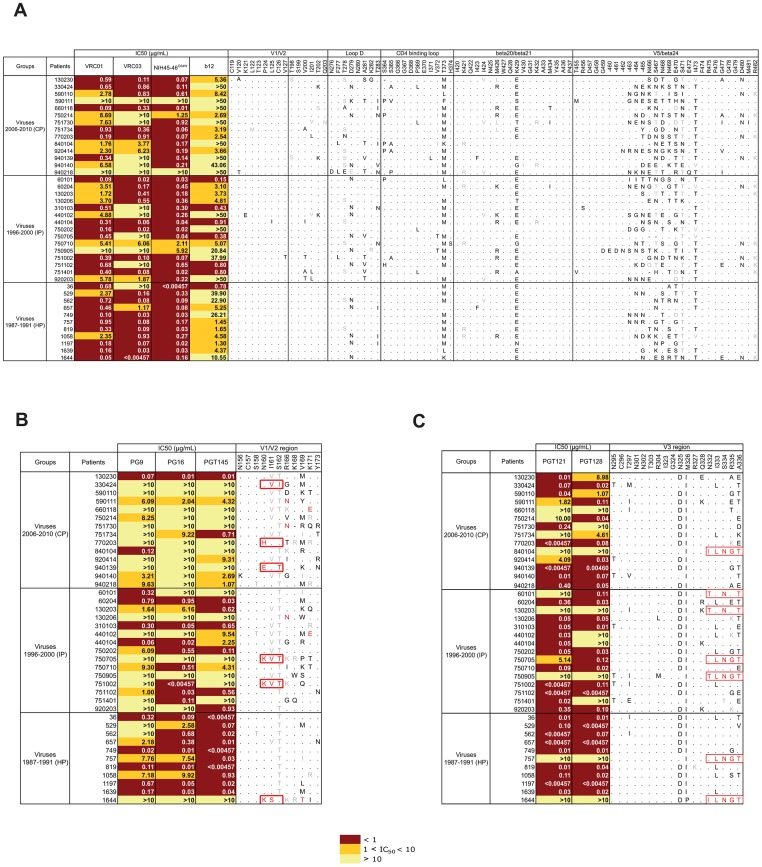
We compared the neutralization sensitivity of early/transmitted HIV-1 variants from patients infected by subtype B viruses at 3 periods of the epidemic (1987-1991, 1996-2000, 2006-2010). Infectious pseudotyped viruses expressing envelope glycoproteins representative of the viral quasi-species infecting each patient were tested for sensitivity to neutralization by pools of sera from HIV-1 chronically infected patients and by an updated panel of 13 human monoclonal neutralizing antibodies (HuMoNAbs). A progressive significantly enhanced resistance to neutralization was observed over calendar time, by both human sera and most of the HuMoNAbs tested (b12, VRC01, VRC03, NIH45-46(G54W), PG9, PG16, PGT121, PGT128, PGT145). Despite this evolution, a combination of two HuMoNAbs (NIH45-46(G54W) and PGT128) still would efficiently neutralize the most contemporary transmitted variants. In addition, we observed a significant reduction of the heterologous neutralizing activity of sera from individuals infected most recently (2003-2007) compared to patients infected earlier (1987-1991), suggesting that the increasing resistance of the HIV species to neutralization over time coincided with a decreased immunogenicity. These data provide evidence for an ongoing adaptation of the HIV-1 species to the humoral immunity of the human population, which may add an additional obstacle to the design of an efficient HIV-1 vaccine.
我们比较了感染 B 亚型病毒的患者在流行的三个时期(1987-1991 年、1996-2000 年、2006-2010 年)早期/传播的 HIV-1 变异体的中和敏感性。表达代表每个患者感染的病毒准种包膜糖蛋白的感染性假型病毒,用于检测对慢性感染 HIV-1 患者血清池和更新的 13 个人源单克隆中和抗体(HuMoNAbs)的中和敏感性。通过人类血清和大多数测试的 HuMoNAbs(b12、VRC01、VRC03、NIH45-46(G54W)、PG9、PG16、PGT121、PGT128、PGT145),随着时间的推移,观察到中和敏感性呈显著增强的趋势。尽管发生了这种进化,但两种 HuMoNAbs(NIH45-46(G54W)和 PGT128)的组合仍能有效地中和最现代的传播变异体。此外,我们观察到最近感染(2003-2007 年)的个体血清的异源中和活性显著降低,与早期感染(1987-1991 年)的患者相比,这表明 HIV 物种对中和的抗性随着时间的推移而增加,同时免疫原性降低。这些数据为 HIV-1 物种对人群体液免疫的持续适应提供了证据,这可能为设计有效的 HIV-1 疫苗增加了另一个障碍。