Faculty of Dentistry, Department of Oral Biology, University of Oslo, Oslo, Norway.
J Oral Microbiol. 2013 Jul 9;5. doi: 10.3402/jom.v5i0.20939. Print 2013.
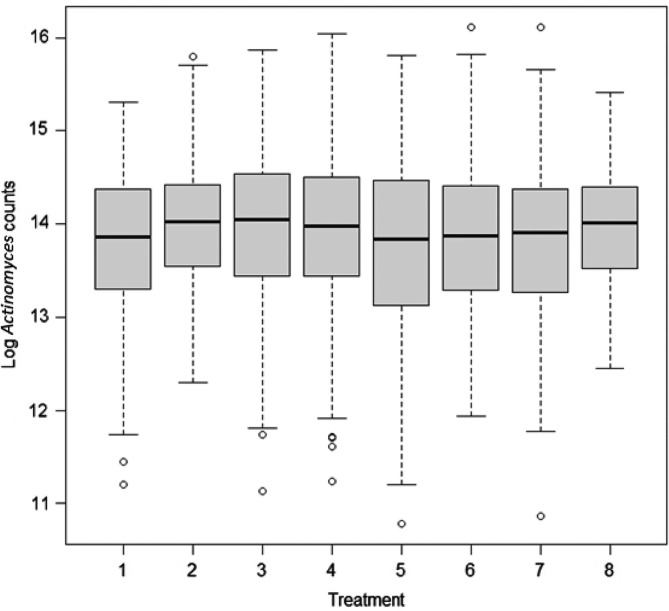
To follow changes (over 2 years) in subgingival bacterial counts of five microbial complexes including health-related Actinomyces spp. in deeper pockets (≥5 mm) after periodontal treatments.
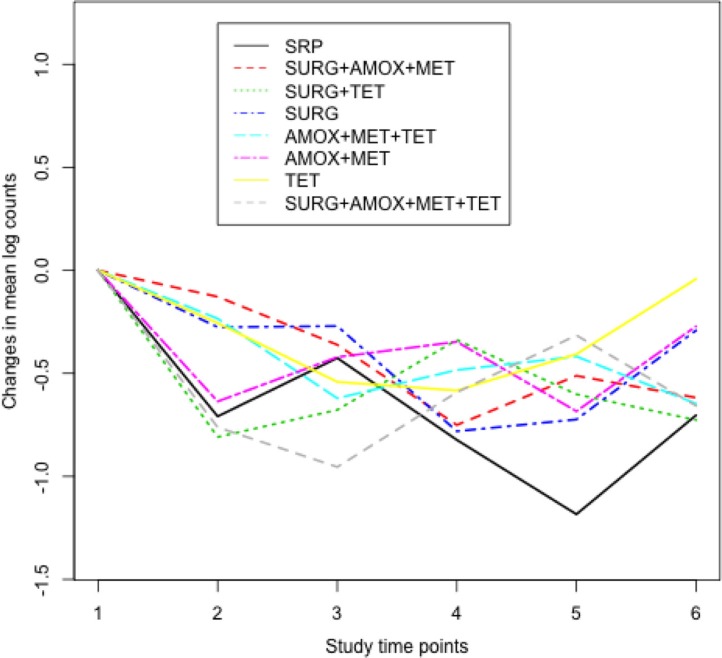
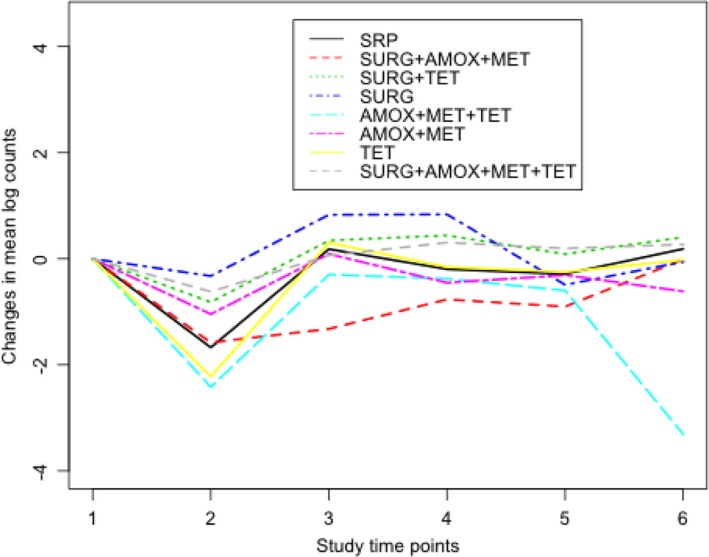
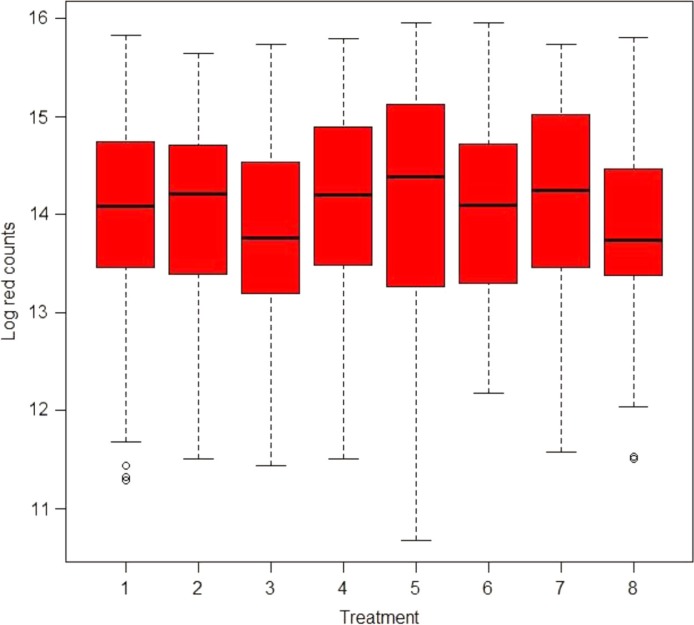
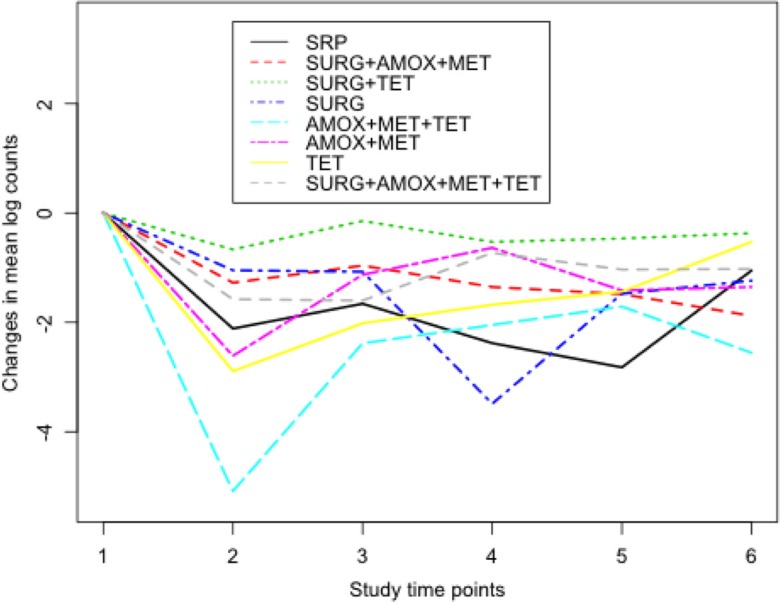
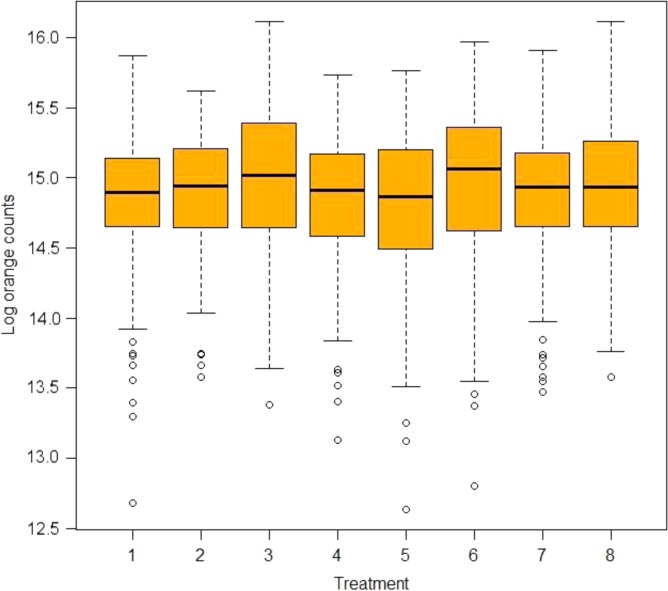
EIGHT DIFFERENT TREATMENTS WERE STUDIED: (1) scaling+root planing (SRP); (2) periodontal surgery (SURG)+systemic amoxicillin (AMOX)+systemic metronidazole (MET); (3) SURG+locally delivered tetracycline (TET); (4) SURG; (5) AMOX+MET+TET; (6) AMOX+MET; (7) TET; and (8) SURG+AMOX+MET+TET. Antibiotics were given immediately following SRP. Subgingival plaque was collected mesiobuccally from each tooth, except third molars, from 176 subjects, completing the study, at baseline, 3, 6, 12, 18, and 24 months post-treatment and analysed for 40 different bacteria using checkerboard hybridization. A negative binomial (NB) generalized estimating equation (NB GEE) model was used to analyze count data and a logistic GEE was used for proportions.
We observed short-term beneficial changes in the composition of the red complex of up to 3 months by treating subjects with AMOX+MET+TET. Similar short-term improvements with the same treatment were observed for Tannerella forsythia and Treponema denticola of the red complex. SURG had also short-term beneficial effect on Porphyromonas gingivalis. No periodontal treatments applied to severely affected sites promoted the growth of Actinomyces. Smoking elevated counts of both the red and orange complex while bleeding on probing (BOP) and gingival redness were also predictors of more red complex counts. Comparatively similar findings were obtained by analyzing counts and by analyzing proportions.
Although short-term reductions in the counts of the red complex were observed in sites that were treated with AMOX+MET+TET, long-term significant effects were not observed with any of the eight treatments. Poor oral hygiene in patients with severe chronic periodontitis diminished the beneficial effects of treatment.
观察牙周治疗后深牙周袋(≥5mm)内与健康相关的放线菌属等 5 种微生物复合体的龈下细菌计数(2 年以上)变化。
研究了 8 种不同的治疗方法:(1)龈下刮治和根面平整术(SRP);(2)牙周手术(SURG)+全身阿莫西林(AMOX)+全身甲硝唑(MET);(3)SURG+局部给予四环素(TET);(4)SURG;(5)AMOX+MET+TET;(6)AMOX+MET;(7)TET;(8)SURG+AMOX+MET+TET。SRP 后立即给予抗生素。从 176 名完成研究的受试者的每颗牙齿(除第三磨牙外)的近中颊侧收集龈下菌斑,使用斑点杂交分析 40 种不同的细菌。使用负二项广义估计方程(NB GEE)模型分析计数数据,使用逻辑 GEE 分析比例。
我们观察到,在接受 AMOX+MET+TET 治疗的患者中,红复合体组成在 3 个月内发生了短期有益变化。红复合体中的 Tannerella forsythia 和 Treponema denticola 也观察到了类似的短期改善。SURG 对 Porphyromonas gingivalis 也有短期的有益作用。在严重受影响的部位应用任何牙周治疗都不会促进放线菌的生长。吸烟增加了红色和橙色复合体的数量,而探诊出血(BOP)和牙龈红肿也是红色复合体数量增加的预测因素。通过分析计数和比例,得到了类似的结果。
虽然在接受 AMOX+MET+TET 治疗的部位观察到红复合体数量的短期减少,但在 8 种治疗方法中,没有一种方法观察到长期的显著效果。严重慢性牙周炎患者口腔卫生差,降低了治疗的有益效果。