Institute of Infection, Immunity and Inflammation, University of Glasgow, Glasgow, United Kingdom.
PLoS One. 2013 Jul 4;8(7):e68386. doi: 10.1371/journal.pone.0068386. Print 2013.
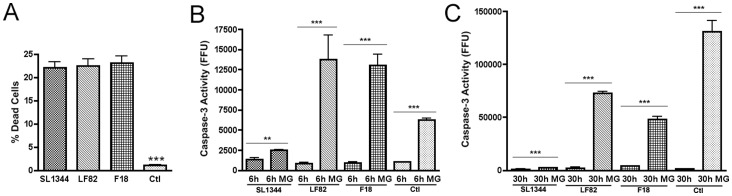
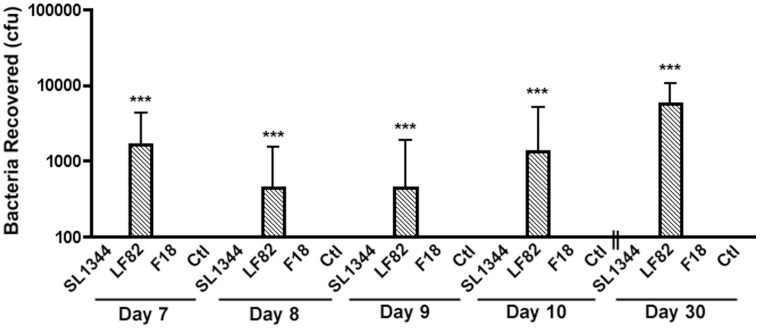
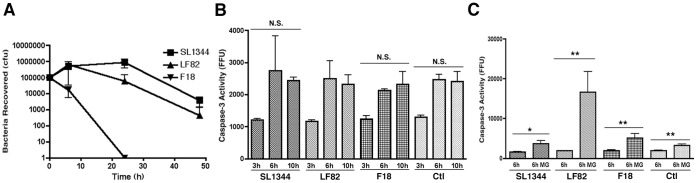
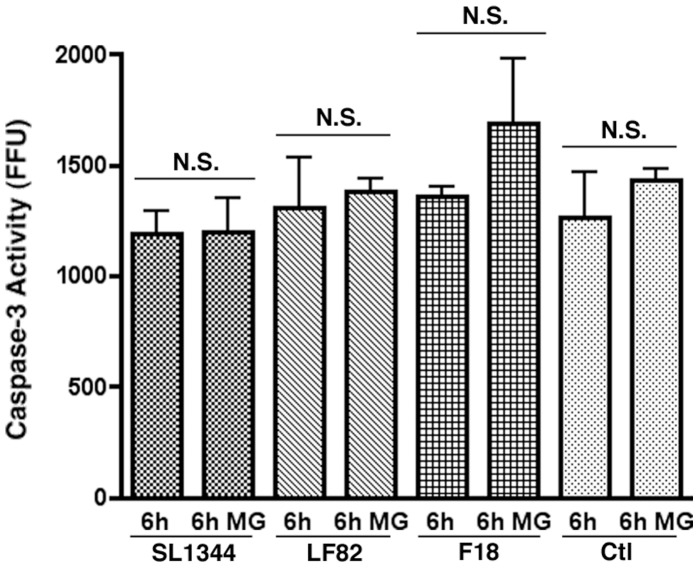
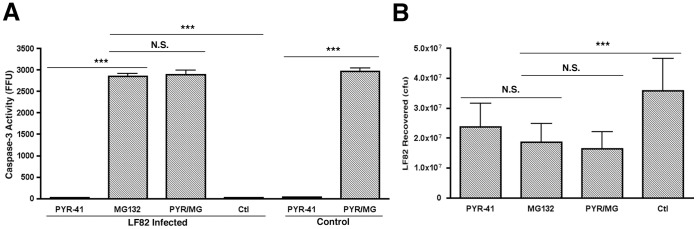
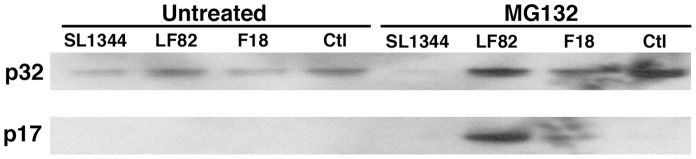
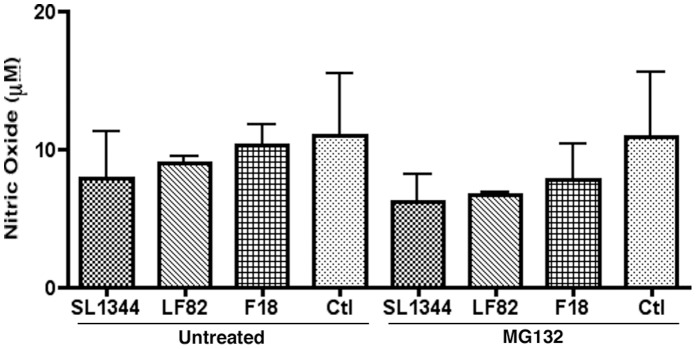
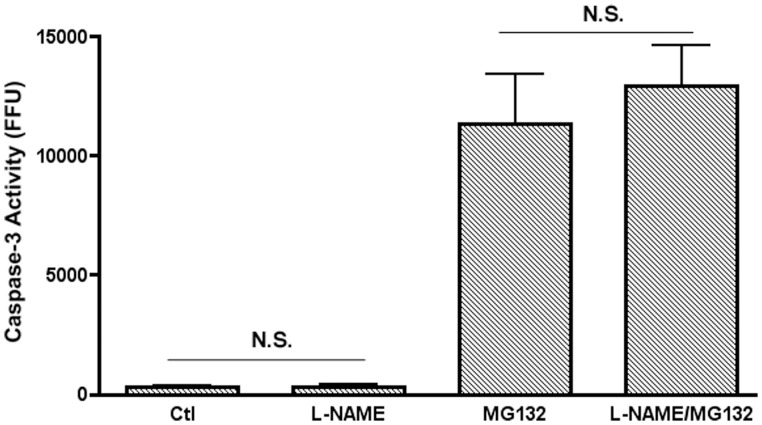
Adherent invasive Escherichia coli (AIEC) have been implicated as a causative agent of Crohn's disease (CD) due to their isolation from the intestines of CD sufferers and their ability to persist in macrophages inducing granulomas. The rapid intracellular multiplication of AIEC sets it apart from other enteric pathogens such as Salmonella Typhimurium which after limited replication induce programmed cell death (PCD). Understanding the response of infected cells to the increased AIEC bacterial load and associated metabolic stress may offer insights into AIEC pathogenesis and its association with CD. Here we show that AIEC persistence within macrophages and dendritic cells is facilitated by increased proteasomal degradation of caspase-3. In addition S-nitrosylation of pro- and active forms of caspase-3, which can inhibit the enzymes activity, is increased in AIEC infected macrophages. This S-nitrosylated caspase-3 was seen to accumulate upon inhibition of the proteasome indicating an additional role for S-nitrosylation in inducing caspase-3 degradation in a manner independent of ubiquitination. In addition to the autophagic genetic defects that are linked to CD, this delay in apoptosis mediated in AIEC infected cells through increased degradation of caspase-3, may be an essential factor in its prolonged persistence in CD patients.
黏附侵袭性大肠杆菌(AIEC)被认为是克罗恩病(CD)的致病因子,因为它们可以从 CD 患者的肠道中分离出来,并且能够在巨噬细胞中持续存在并诱导肉芽肿。AIEC 的快速细胞内繁殖使其有别于其他肠道病原体,如鼠伤寒沙门氏菌,后者在有限的复制后会诱导程序性细胞死亡(PCD)。了解感染细胞对 AIEC 细菌负荷增加和相关代谢应激的反应,可能有助于深入了解 AIEC 的发病机制及其与 CD 的关联。在这里,我们表明 AIEC 在巨噬细胞和树突状细胞中的持续存在是通过增强半胱天冬酶-3 的蛋白酶体降解来促进的。此外,AIEC 感染的巨噬细胞中 caspase-3 的前体和活性形式的 S-亚硝基化增加,这可以抑制酶的活性。在蛋白酶体抑制后观察到这种 S-亚硝基化的 caspase-3 积累,表明 S-亚硝基化在诱导 caspase-3 降解方面具有独立于泛素化的额外作用。除了与 CD 相关的自噬遗传缺陷外,通过增加 caspase-3 的降解,在 AIEC 感染细胞中延迟细胞凋亡,可能是其在 CD 患者中持续存在的一个重要因素。