Bowles Center for Alcohol Studies, School of Medicine, University of North Carolina at Chapel Hill, Chapel Hill, NC 27599, USA.
Neurobiol Dis. 2013 Nov;59:52-62. doi: 10.1016/j.nbd.2013.07.002. Epub 2013 Jul 15.
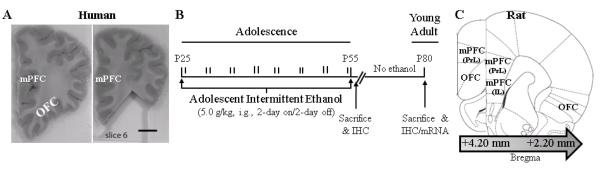
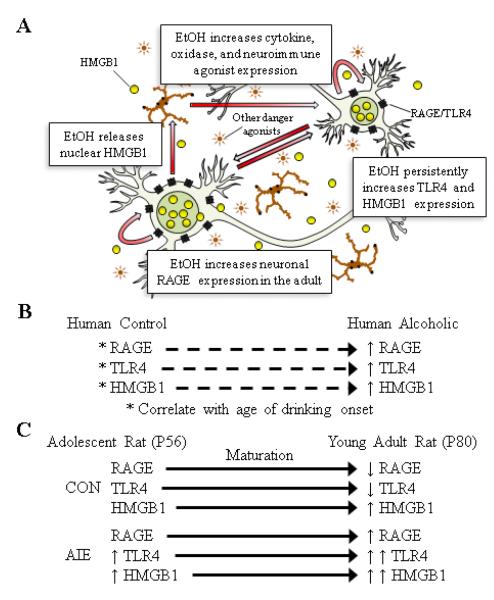
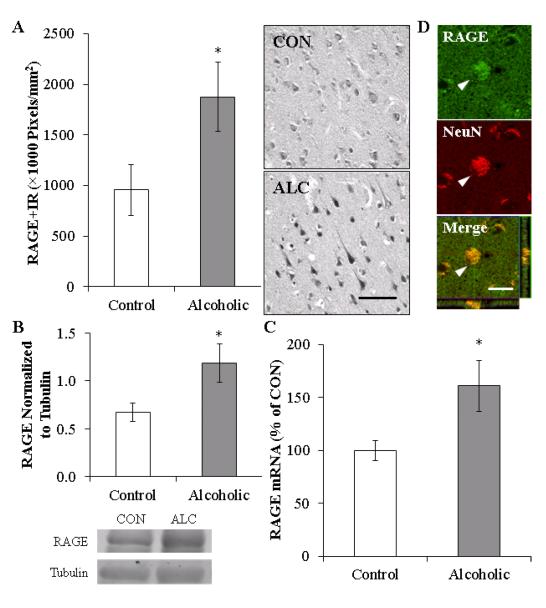
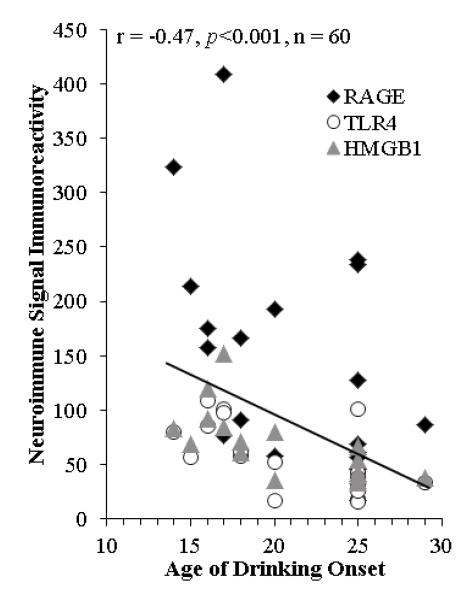
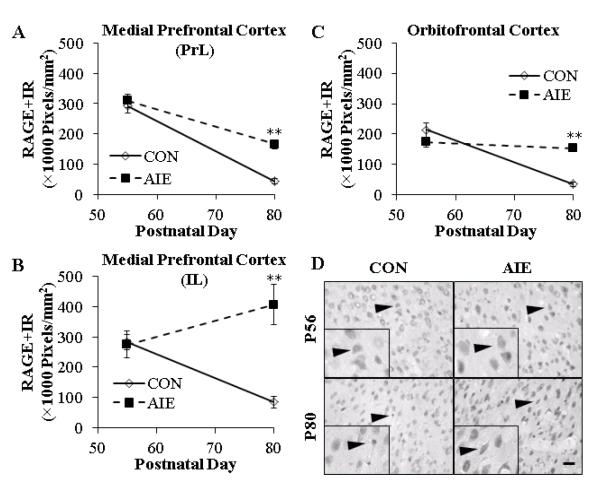
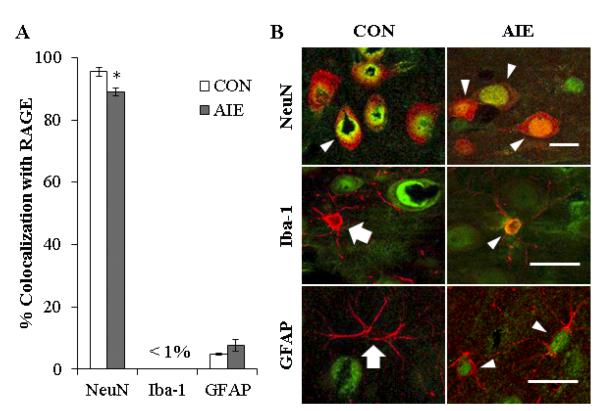
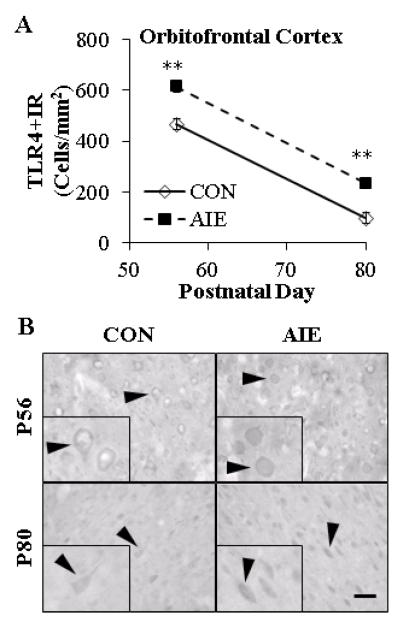
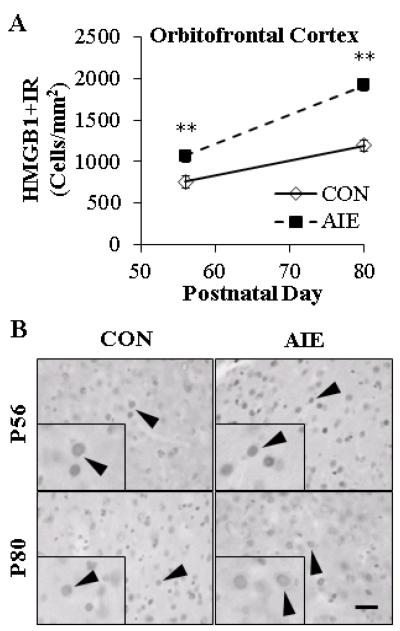
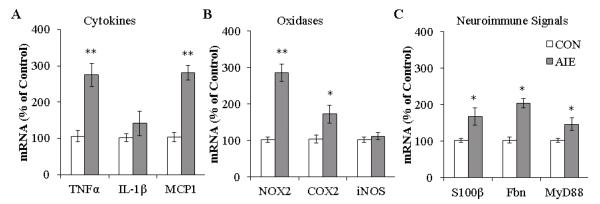
Adolescence is characterized behaviorally by increased impulsivity and risk-taking that declines in parallel with maturation of the prefrontal cortex and executive function. In the brain, the receptor for advanced glycation end products (RAGE) is critically involved in neurodevelopment and neuropathology. In humans, the risk of alcoholism is greatly increased in those who begin drinking between 13 and 15years of age, and adolescents binge drink more than any other age group. We have previously found that alcoholism is associated with increased expression of neuroimmune genes. This manuscript tested the hypothesis that adolescent binge drinking upregulates RAGE and Toll-like receptor (TLR) 4 as well as their endogenous agonist, high-mobility group box 1 (HMGB1). Immunohistochemistry, Western blot, and mRNA analyses found that RAGE expression was increased in the human post-mortem alcoholic orbitofrontal cortex (OFC). Further, an earlier age of drinking onset correlated with increased expression of RAGE, TLR4, and HMGB1. To determine if alcohol contributed to these changes, we used an adolescent binge ethanol model in rats (5.0g/kg, i.g., 2-day on/2-day off from postnatal day [P] 25 to P55) and assessed neuroimmune gene expression. We found an age-associated decline of RAGE expression from late adolescence (P56) to young adulthood (P80). Adolescent intermittent ethanol exposure did not alter RAGE expression at P56, but increased RAGE in the young adult PFC (P80). Adolescent intermittent ethanol exposure also increased TLR4 and HMGB1 expression at P56 that persisted into young adulthood (P80). Assessment of young adult frontal cortex mRNA (RT-PCR) found increased expression of proinflammatory cytokines, oxidases, and neuroimmune agonists at P80, 25days after ethanol treatment. Together, these human and animal data support the hypothesis that an early age of drinking onset upregulates RAGE/TLR4-HMGB1 and other neuroimmune genes that persist into young adulthood and could contribute to risk of alcoholism or other brain diseases associated with neuroinflammation.
青春期的行为特征是冲动性和冒险行为增加,而这种增加与前额叶皮层和执行功能的成熟呈平行下降趋势。在大脑中,晚期糖基化终产物受体 (RAGE) 对于神经发育和神经病理学至关重要。在人类中,那些在 13 至 15 岁之间开始饮酒的人,患酒精中毒的风险大大增加,而青少年比任何其他年龄段的人都更频繁地狂饮。我们之前发现,酒精中毒与神经免疫基因的表达增加有关。本手稿检验了以下假设:青少年狂饮会上调 RAGE 和 Toll 样受体 (TLR) 4 及其内源性激动剂高迁移率族蛋白 B1 (HMGB1)。免疫组织化学、Western blot 和 mRNA 分析发现,RAGE 表达在人类酒精中毒性眶额皮质 (OFC) 中增加。此外,饮酒起始年龄越早,RAGE、TLR4 和 HMGB1 的表达越高。为了确定酒精是否导致了这些变化,我们使用了一种青少年 binge 乙醇模型大鼠 (5.0g/kg,i.g.,从出生后第 25 天到第 55 天,每两天一次,为期两天),并评估了神经免疫基因的表达。我们发现,从青春期后期 (P56) 到成年早期 (P80),RAGE 表达呈年龄相关性下降。青少年间歇性乙醇暴露在 P56 时不会改变 RAGE 表达,但会增加年轻成年 PFC 的 RAGE(P80)。青少年间歇性乙醇暴露还增加了 P56 时的 TLR4 和 HMGB1 表达,并持续到成年早期 (P80)。对年轻成年额皮质 mRNA(逆转录聚合酶链反应)的评估发现,在乙醇处理后 25 天的 P80 时,促炎细胞因子、氧化酶和神经免疫激动剂的表达增加。这些人类和动物数据共同支持了这样一个假设,即饮酒起始年龄较早会上调 RAGE/TLR4-HMGB1 和其他神经免疫基因,这些基因会持续到成年早期,并可能导致酒精中毒或其他与神经炎症相关的脑部疾病的风险增加。