Center for Computational Neuroscience and Neural Technology, Boston University, 677 Beacon Street, Boston, MA 02215, United States.
Brain Lang. 2013 Sep;126(3):263-78. doi: 10.1016/j.bandl.2013.05.016. Epub 2013 Jul 19.
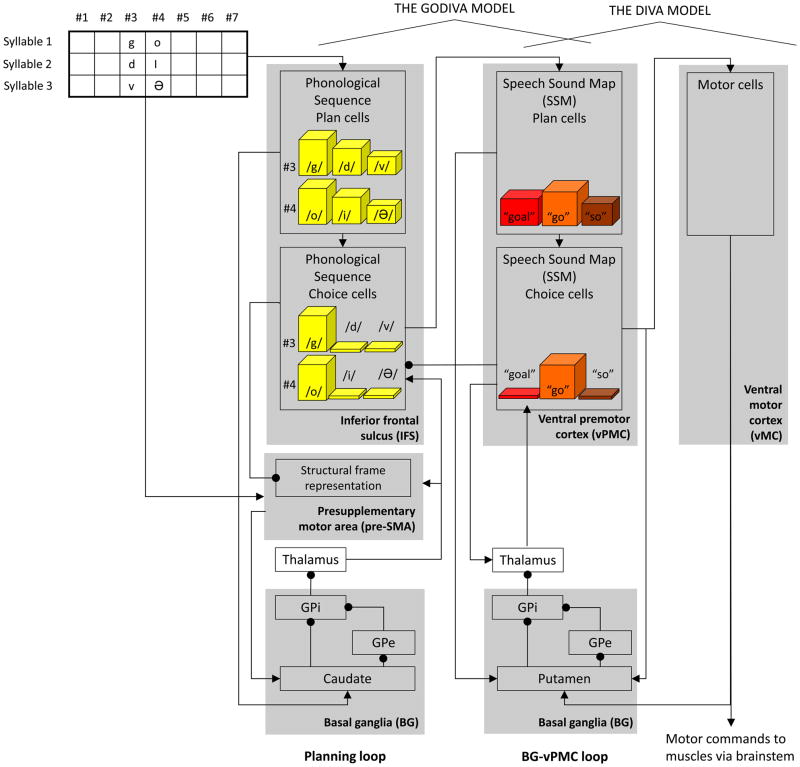
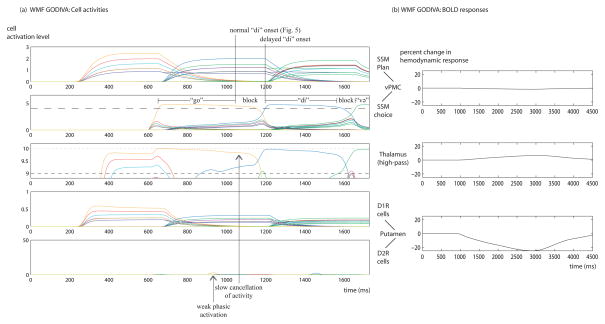
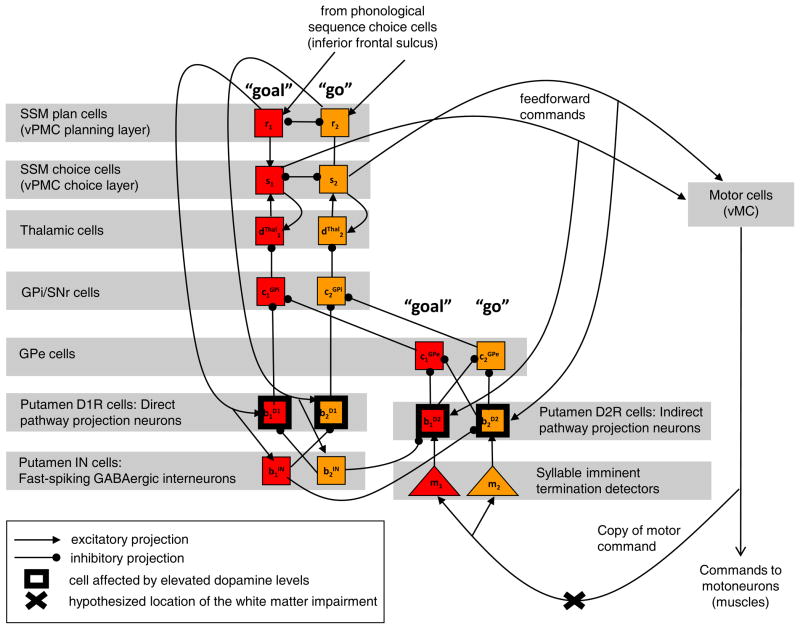
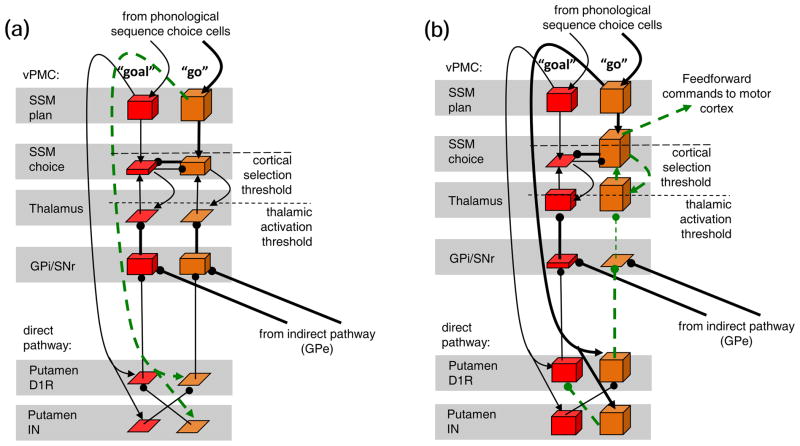
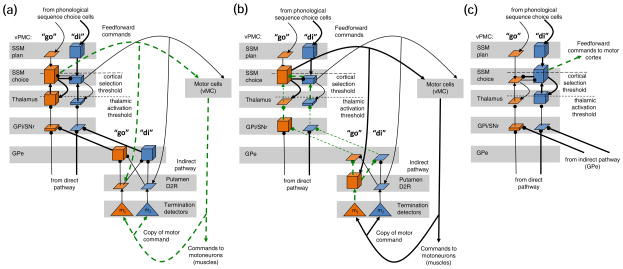
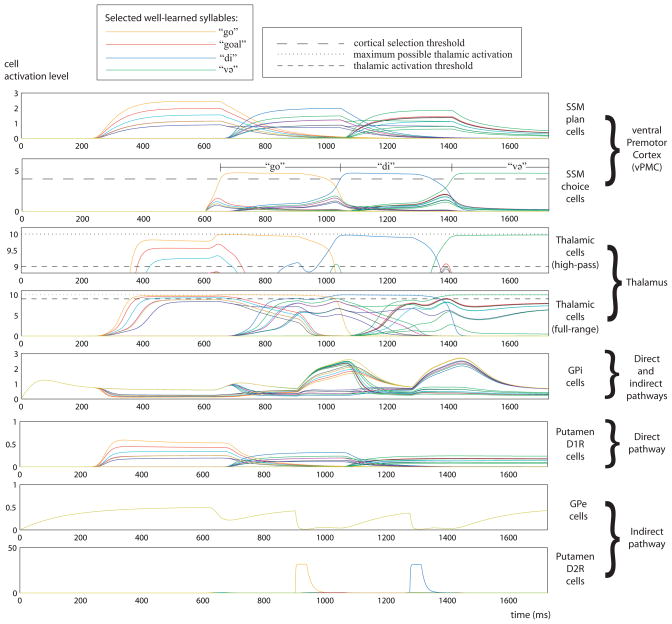
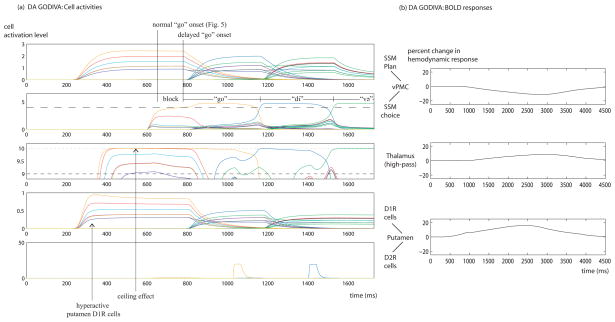
Atypical white-matter integrity and elevated dopamine levels have been reported for individuals who stutter. We investigated how such abnormalities may lead to speech dysfluencies due to their effects on a syllable-sequencing circuit that consists of basal ganglia (BG), thalamus, and left ventral premotor cortex (vPMC). "Neurally impaired" versions of the neurocomputational speech production model GODIVA were utilized to test two hypotheses: (1) that white-matter abnormalities disturb the circuit via corticostriatal projections carrying copies of executed motor commands and (2) that dopaminergic abnormalities disturb the circuit via the striatum. Simulation results support both hypotheses: in both scenarios, the neural abnormalities delay readout of the next syllable's motor program, leading to dysfluency. The results also account for brain imaging findings during dysfluent speech. It is concluded that each of the two abnormality types can cause stuttering moments, probably by affecting the same BG-thalamus-vPMC circuit.
已有研究报道口吃者的白质完整性和多巴胺水平异常。我们研究了这些异常如何通过影响由基底神经节(BG)、丘脑和左腹侧运动前皮质(vPMC)组成的音节序列回路导致言语不流畅,因为这些回路与言语产生的神经回路有关。利用“神经损伤”版本的神经计算言语产生模型 GODIVA 来检验两个假设:(1)白质异常通过携带执行运动指令副本的皮质纹状体投射干扰回路;(2)多巴胺异常通过纹状体干扰回路。模拟结果支持这两个假设:在这两种情况下,神经异常都会延迟下一个音节运动程序的读出,导致言语不流畅。结果还解释了言语不流畅期间的脑成像发现。结论是,两种异常类型中的每一种都可能导致口吃,可能是通过影响相同的 BG-丘脑-vPMC 回路。