Department of Otorhinolaryngology Head and Neck Surgery, Zhujiang Hospital, Southern Medical University, Guangzhou, People's Republic of China.
Int J Nanomedicine. 2013;8:2443-51. doi: 10.2147/IJN.S46327. Epub 2013 Jul 10.
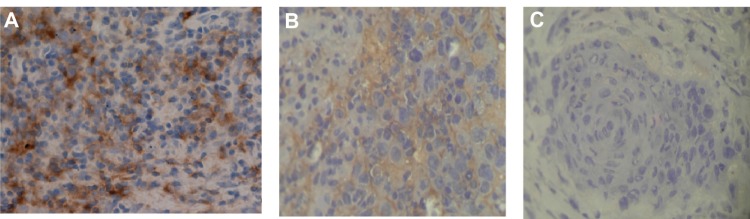
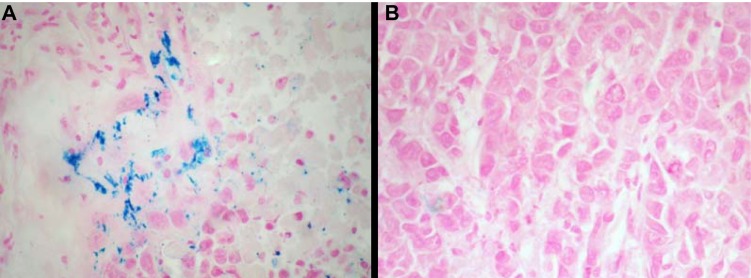
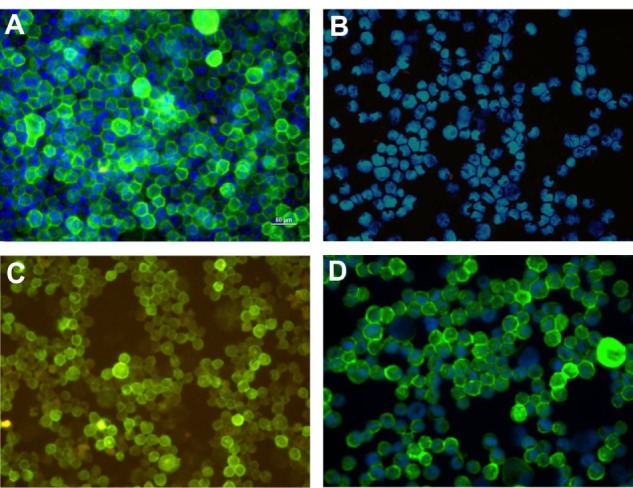
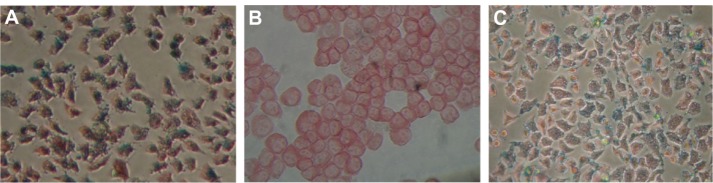
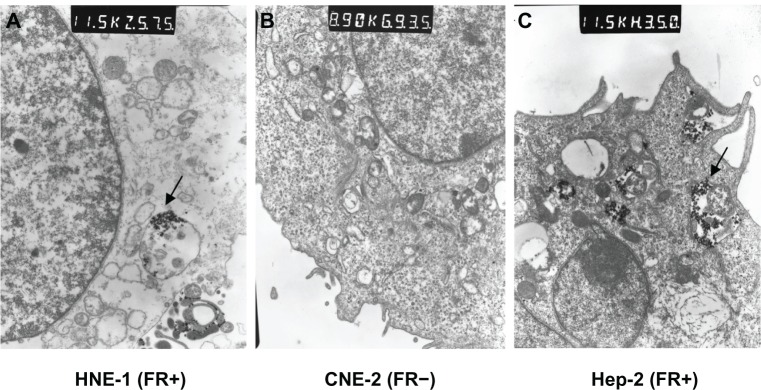
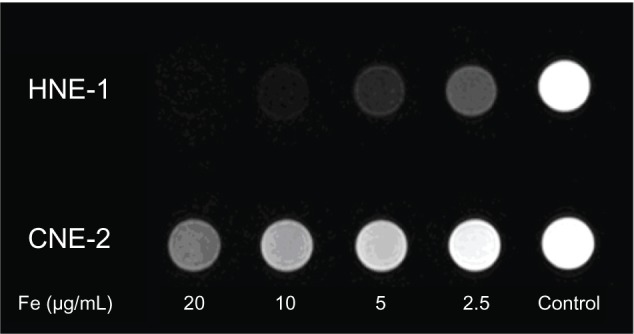
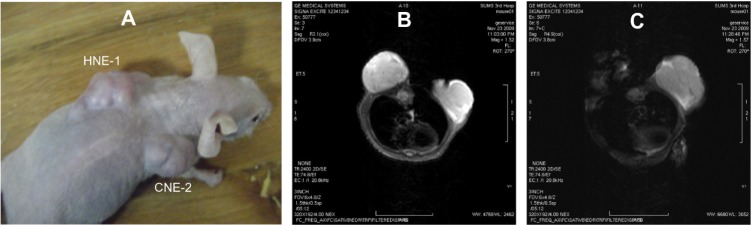
Immunohistochemistry and an immunofluorescence technique was used to detect folate receptor expression in tissue samples and cell lines of head and neck squamous carcinoma, including 20 tissue samples of nasopharyngeal carcinoma, 16 tissue samples of laryngeal carcinoma, and HNE-1, HNE-2, CNE-1, CNE-2, SUNE-1, 5-8F, and Hep-2 cell lines. Iron staining, electron microscopy, and magnetic resonance imaging were used to observe endocytosis of folate-conjugated cisplatin-loaded magnetic nanoparticles (CDDP-FA-ASA-MNP) in cultured cells and transplanted tumors. As shown by immunohistochemistry, 83.3% (30/36) of the head and neck squamous carcinomas expressed the folate receptor versus none in the control group (0/24). Only the HNE-1 and Hep-2 cell lines expressed the folate receptor, and the other five cell lines did not. Endocytosis of CDDP-FA-ASA-MNP was seen in HNE-1 and Hep-2 cells by iron staining and electron microscopy. A similar result was seen in transplanted tumors in nude mice. Magnetic resonance imaging showed low signal intensity of HNE-1 cells and HNE-1 transplanted tumors on T2-weighted images after uptake of CDDP-FA-ASA-MNP, and this was not seen in CNE-2 transplanted tumors. In conclusion, head and neck squamous carcinoma cell strongly expressed the folate receptor, while normal tissue did not. The folate receptor can mediate endocytosis of folate-conjugated anticancer nanomedicines, and lays the foundation for molecular targeted treatment of cancer.
免疫组织化学和免疫荧光技术用于检测头颈部鳞状细胞癌组织样本和细胞系中的叶酸受体表达,包括 20 例鼻咽癌组织样本、16 例喉癌组织样本和 HNE-1、HNE-2、CNE-1、CNE-2、SUNE-1、5-8F 和 Hep-2 细胞系。铁染色、电子显微镜和磁共振成像用于观察叶酸偶联顺铂载磁纳米颗粒(CDDP-FA-ASA-MNP)在培养细胞和移植瘤中的内吞作用。免疫组织化学结果显示,83.3%(30/36)的头颈部鳞状细胞癌表达叶酸受体,而对照组(0/24)无表达。只有 HNE-1 和 Hep-2 细胞系表达叶酸受体,其他 5 个细胞系不表达。铁染色和电子显微镜观察到 HNE-1 和 Hep-2 细胞内吞 CDDP-FA-ASA-MNP。裸鼠移植瘤也观察到类似结果。磁共振成像显示,HNE-1 细胞和 HNE-1 移植瘤在摄取 CDDP-FA-ASA-MNP 后 T2 加权图像上呈低信号强度,而 CNE-2 移植瘤则无此表现。综上所述,头颈部鳞状细胞癌强烈表达叶酸受体,而正常组织不表达。叶酸受体可介导叶酸偶联抗癌纳米药物的内吞作用,为癌症的分子靶向治疗奠定了基础。