Environmental Health Group, Faculty of Infectious Diseases, London School of Hygiene and Tropical Medicine, London, United Kingdom.
PLoS One. 2013 Jul 18;8(7):e67951. doi: 10.1371/journal.pone.0067951. Print 2013.
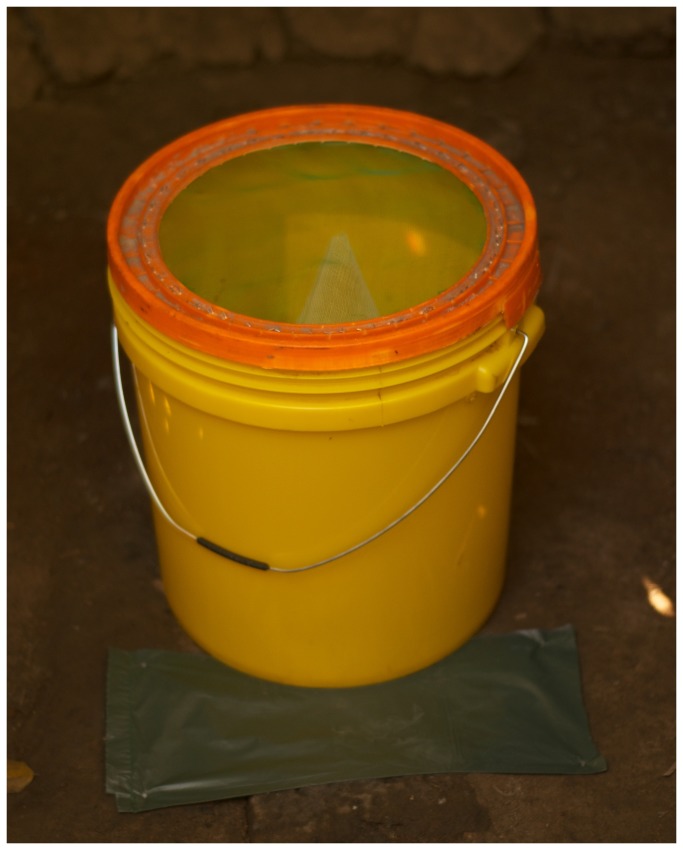
The disposal of human excreta in latrines is an important step in reducing the transmission of diarrhoeal diseases. However, in latrines, flies can access the latrine contents and serve as a mechanical transmitter of diarrhoeal pathogens. Furthermore, the latrine contents can be used as a breeding site for flies, which may further contribute to disease transmission. Latrines do not all produce flies, and there are some which produce only a few, while others can produce thousands. In order to understand the role of the latrine in determining this productivity, a pilot study was conducted, in which fifty latrines were observed in and around Ifakara, Tanzania. The characteristics of the latrine superstructure, use of the latrine, and chemical characteristics of pit latrine contents were compared to the numbers of flies collected in an exit trap placed over the drop hole in the latrine. Absence of a roof was found to have a significant positive association (t=3.17, p=0.003) with the total number of flies collected, and temporary superstructures, particularly as opposed to brick superstructures (z=4.26, p<0.001), and increased total solids in pit latrines (z=2.57, p=0.01) were significantly associated with increased numbers of blowflies leaving the latrine. The number of larvae per gram was significantly associated with the village from which samples were taken, with the largest difference between two villages outside Ifakara (z=2.12, p=0.03). The effect of latrine superstructure (roof, walls) on fly production may indicate that improvements in latrine construction could result in decreases in fly populations in areas where they transmit diarrhoeal pathogens.
厕所中的人类排泄物处理是减少腹泻病传播的重要步骤。然而,在厕所中,苍蝇可以接触到厕所内的粪便,并成为腹泻病原体的机械传播媒介。此外,厕所内的粪便可能成为苍蝇的滋生地,从而进一步促进疾病传播。并非所有厕所都会产生苍蝇,有些厕所只产生少量苍蝇,而有些厕所则可能产生数千只苍蝇。为了了解厕所在决定这种生产力方面的作用,进行了一项试点研究,在坦桑尼亚伊法卡拉及其周边地区观察了 50 个厕所。将厕所的上层建筑特征、使用情况以及坑式厕所内容物的化学特性与放置在厕所排污口上方出口陷阱中收集到的苍蝇数量进行了比较。结果发现,没有屋顶与收集到的苍蝇总数呈显著正相关(t=3.17,p=0.003),临时上层建筑,尤其是与砖上层建筑相比(z=4.26,p<0.001),以及坑式厕所中总固体含量增加(z=2.57,p=0.01)与离开厕所的苍蝇数量增加显著相关。每克幼虫的数量与采样村庄显著相关,其中两个位于伊法卡拉之外的村庄之间的差异最大(z=2.12,p=0.03)。厕所上层建筑(屋顶、墙壁)对苍蝇产量的影响可能表明,改进厕所建设可以减少在传播腹泻病原体的地区的苍蝇数量。