Department of Molecular Genetics, the Rappaport Family Institute for Research in the Medical Sciences, Technion-Israel Institute of Technology, Haifa, Israel.
PLoS One. 2013 Jul 3;8(7):e68396. doi: 10.1371/journal.pone.0068396. Print 2013.
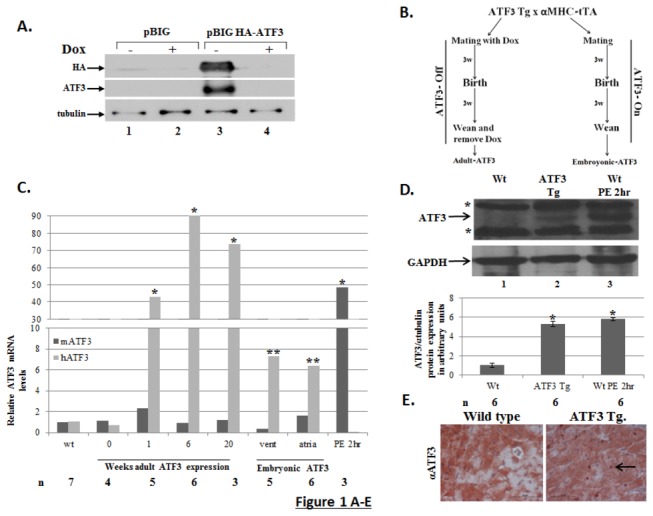
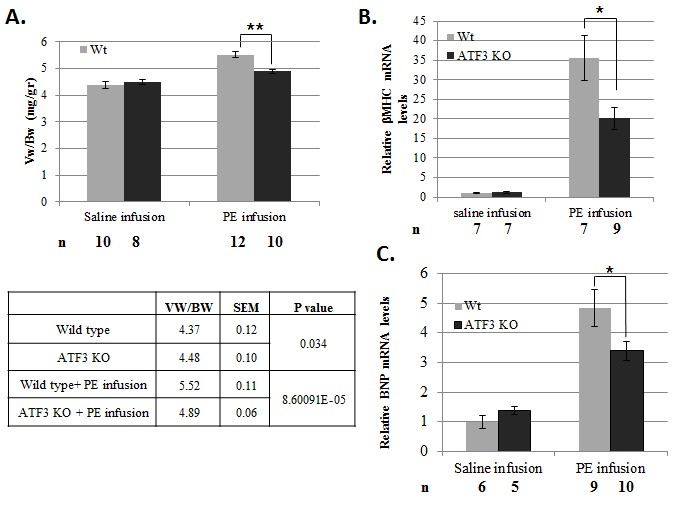
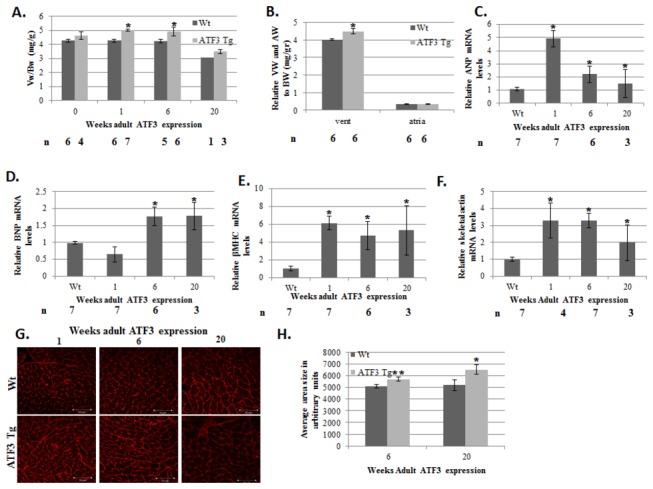
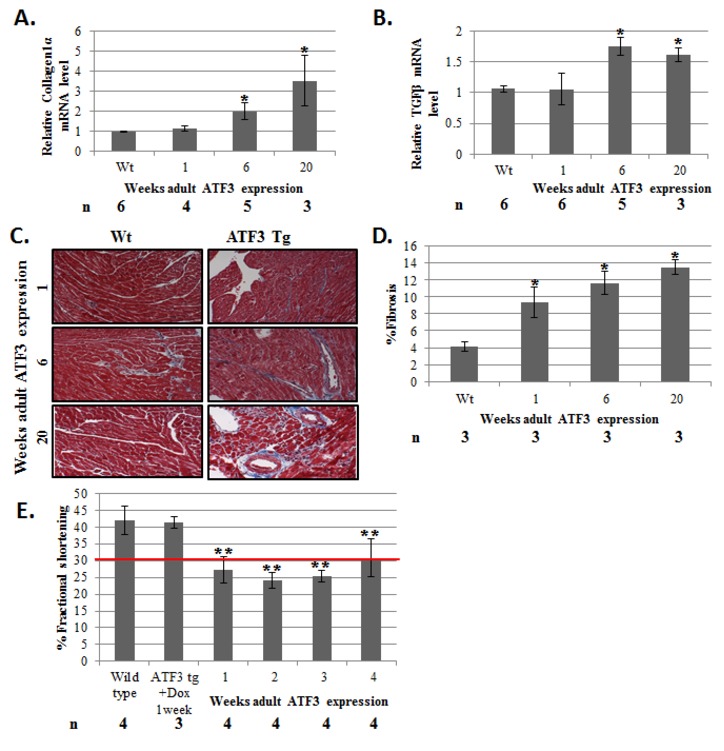
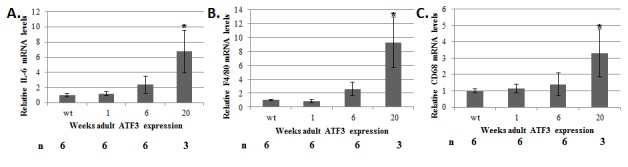
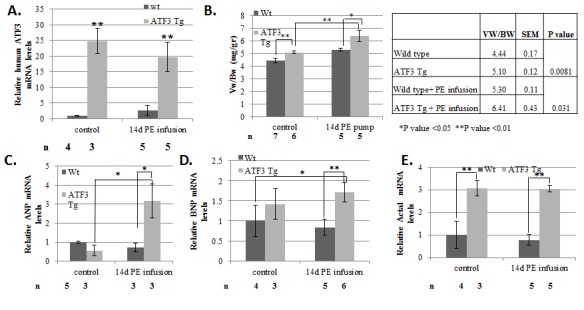
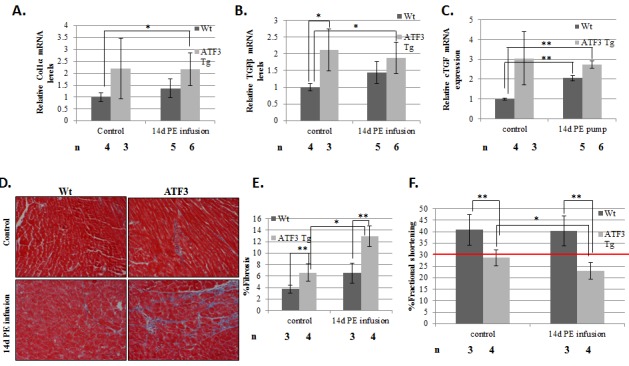
Cardiac hypertrophy is an adaptive response to various mechanophysical and pathophysiological stresses. However, when chronic stress is sustained, the beneficial response turns into a maladaptive process that eventually leads to heart failure. Although major advances in the treatment of patients have reduced mortality, there is a dire need for novel treatments for cardiac hypertrophy. Accordingly, considerable efforts are being directed towards developing mice models and understanding the processes that lead to cardiac hypertrophy. A case in point is ATF3, an immediate early transcription factor whose expression is induced in various cardiac stress models but has been reported to have conflicting functional significance in hypertrophy. To address this issue, we generated a transgenic mouse line with tetracycline-regulated ATF3 cardiac expression. These mice allowed us to study the consequence of ATF3 expression in the embryo or during the adult period, thus distinguishing the effect of ATF3 on development versus pathogenesis of cardiac dysfunction. Importantly, ATF3 expression in adult mice resulted in rapid ventricles hypertrophy, heart dysfunction, and fibrosis. When combined with a phenylephrine-infusion pressure overload model, the ATF3 expressing mice displayed a severe outcome and heart dysfunction. In a complementary approach, ATF3 KO mice displayed a lower level of heart hypertrophy in the same pressure overload model. In summary, ectopic expression of ATF3 is sufficient to promote cardiac hypertrophy and exacerbates the deleterious effect of chronic pressure overload; conversely, ATF3 deletion protects the heart. Therefore, ATF3 may serve as an important drug target to reduce the detrimental consequences of heart hypertrophy.
心肌肥厚是对各种机械物理和病理生理应激的适应性反应。然而,当慢性应激持续存在时,有益的反应就会转变为适应不良的过程,最终导致心力衰竭。尽管治疗患者的主要进展降低了死亡率,但仍然迫切需要治疗心肌肥厚的新方法。因此,人们正在努力开发小鼠模型,并深入了解导致心肌肥厚的过程。ATF3 就是一个很好的例子,它是一种即刻早期转录因子,在各种心脏应激模型中表达上调,但在心肌肥厚中具有相互矛盾的功能意义。为了解决这个问题,我们生成了一种四环素调控的 ATF3 心脏表达的转基因小鼠系。这些小鼠使我们能够研究 ATF3 在胚胎期或成年期表达的后果,从而区分 ATF3 对心脏功能障碍发展和发病机制的影响。重要的是,成年小鼠中 ATF3 的表达导致心室迅速肥厚、心脏功能障碍和纤维化。当与苯肾上腺素输注压力超负荷模型结合使用时,表达 ATF3 的小鼠表现出严重的后果和心脏功能障碍。在一种互补的方法中,在相同的压力超负荷模型中,ATF3 KO 小鼠的心脏肥厚程度较低。总之,ATF3 的异位表达足以促进心肌肥厚,并加重慢性压力超负荷的有害影响;相反,ATF3 的缺失则保护心脏。因此,ATF3 可能成为减少心脏肥厚不良后果的一个重要药物靶点。