Department of Pharmaceutical Chemistry, University of California San Francisco, San Francisco, California, USA.
PLoS One. 2013 Jul 18;8(7):e69153. doi: 10.1371/journal.pone.0069153. Print 2013.
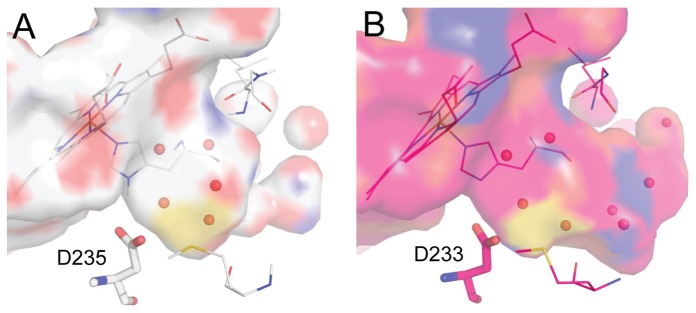
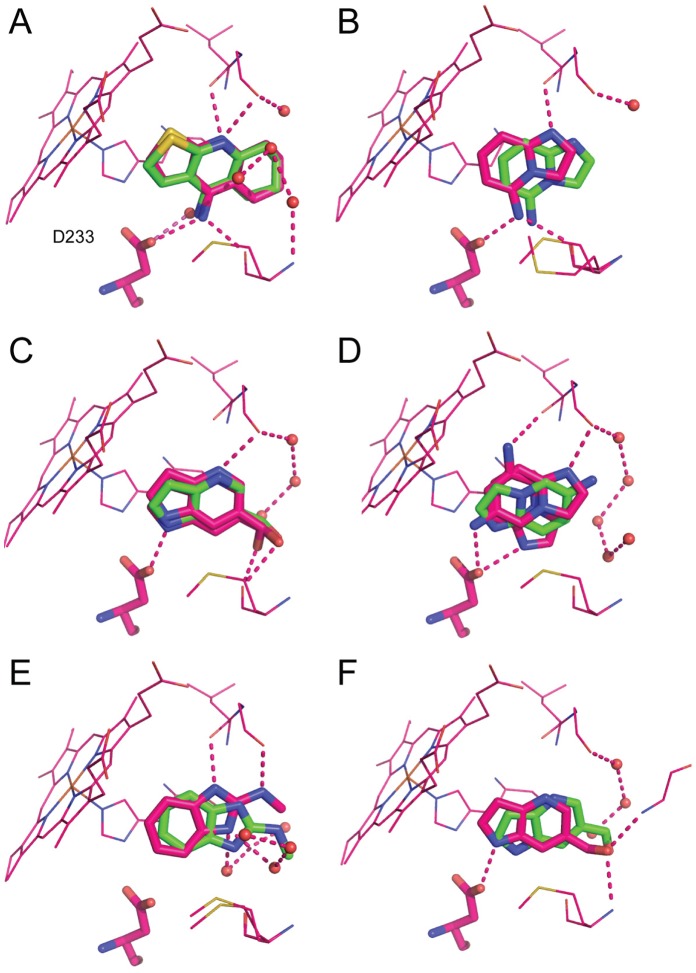
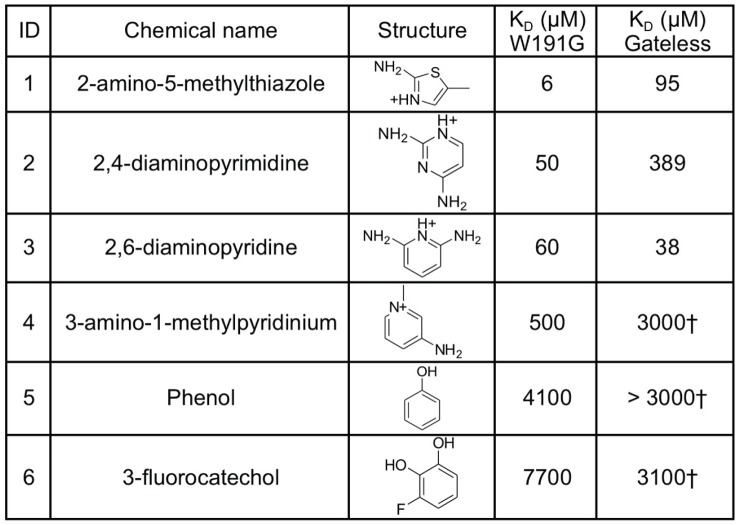
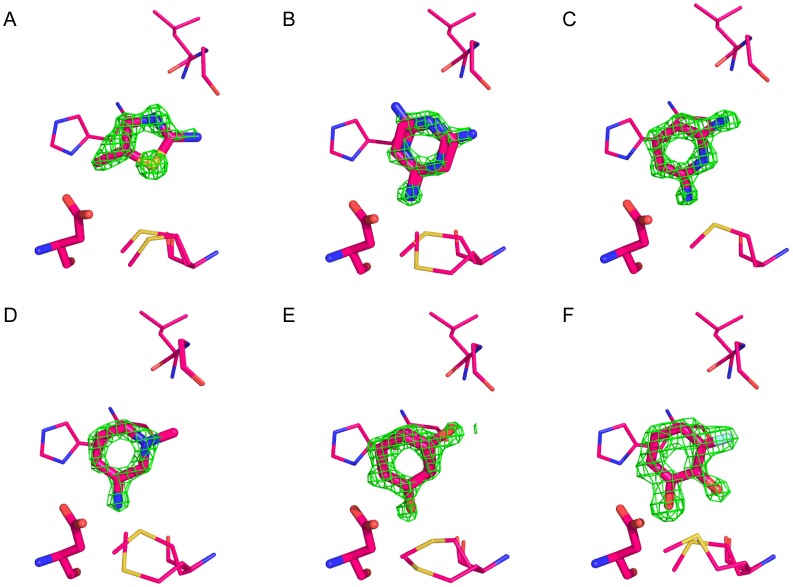
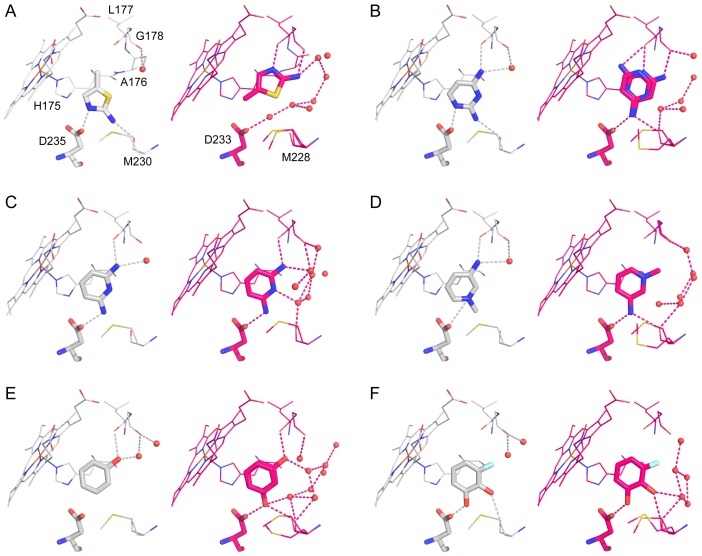
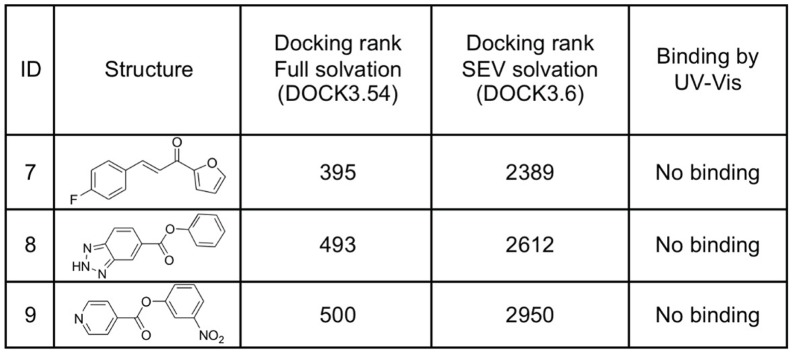
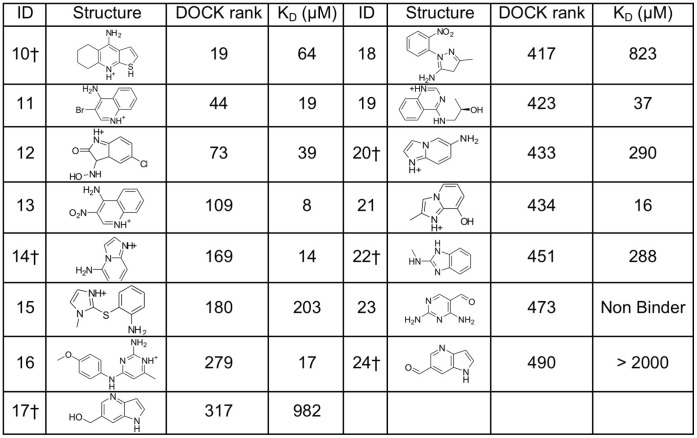
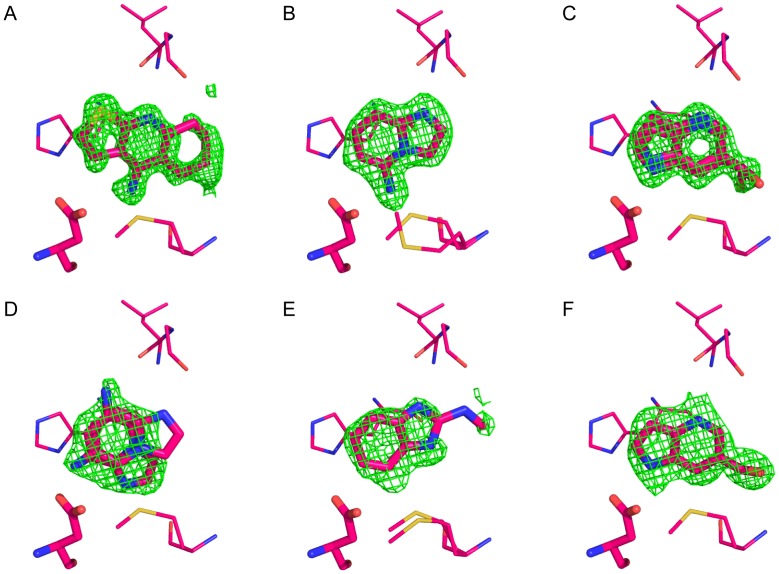
A key challenge in structure-based discovery is accounting for modulation of protein-ligand interactions by ordered and bulk solvent. To investigate this, we compared ligand binding to a buried cavity in Cytochrome c Peroxidase (CcP), where affinity is dominated by a single ionic interaction, versus a cavity variant partly opened to solvent by loop deletion. This opening had unexpected effects on ligand orientation, affinity, and ordered water structure. Some ligands lost over ten-fold in affinity and reoriented in the cavity, while others retained their geometries, formed new interactions with water networks, and improved affinity. To test our ability to discover new ligands against this opened site prospectively, a 534,000 fragment library was docked against the open cavity using two models of ligand solvation. Using an older solvation model that prioritized many neutral molecules, three such uncharged docking hits were tested, none of which was observed to bind; these molecules were not highly ranked by the new, context-dependent solvation score. Using this new method, another 15 highly-ranked molecules were tested for binding. In contrast to the previous result, 14 of these bound detectably, with affinities ranging from 8 µM to 2 mM. In crystal structures, four of these new ligands superposed well with the docking predictions but two did not, reflecting unanticipated interactions with newly ordered waters molecules. Comparing recognition between this open cavity and its buried analog begins to isolate the roles of ordered solvent in a system that lends itself readily to prospective testing and that may be broadly useful to the community.
基于结构的发现面临的一个关键挑战是如何解释有序溶剂和主体溶剂对蛋白配体相互作用的调节。为了研究这一点,我们比较了配体与细胞色素 c 过氧化物酶 (CcP) 中一个埋藏腔的结合,在该腔中,亲和力主要由单个离子相互作用决定,而腔的变体则通过环缺失部分开放到溶剂中。这种开口出人意料地影响了配体的取向、亲和力和有序水结构。一些配体的亲和力损失了十倍以上,并在腔中重新定向,而其他配体则保留了它们的几何形状,与水分子网络形成新的相互作用,并提高了亲和力。为了测试我们针对这个开放位点进行前瞻性发现新配体的能力,我们使用两种配体溶剂化模型将 534,000 个片段库对接至开放腔。使用优先考虑许多中性分子的较旧溶剂化模型,我们测试了三个这样的不带电荷的对接命中,没有一个被观察到结合;这些分子在新的、依赖上下文的溶剂化评分中排名不高。使用这种新方法,我们测试了另外 15 个高排名的分子是否结合。与之前的结果相反,其中 14 个明显结合,亲和力范围从 8µM 到 2mM。在晶体结构中,这四个新配体中的四个与对接预测很好地叠加,但有两个没有,这反映了与新有序水分子的意外相互作用。比较这个开放腔与其埋藏类似物之间的识别开始分离有序溶剂在一个易于进行前瞻性测试的系统中的作用,并且可能对整个社区具有广泛的用处。