Centers for Disease Control and Prevention, Atlanta, Georgia 30333, USA.
Emerg Infect Dis. 2013 Aug;19(8):1198-205. doi: 10.3201/eid1908.130465.
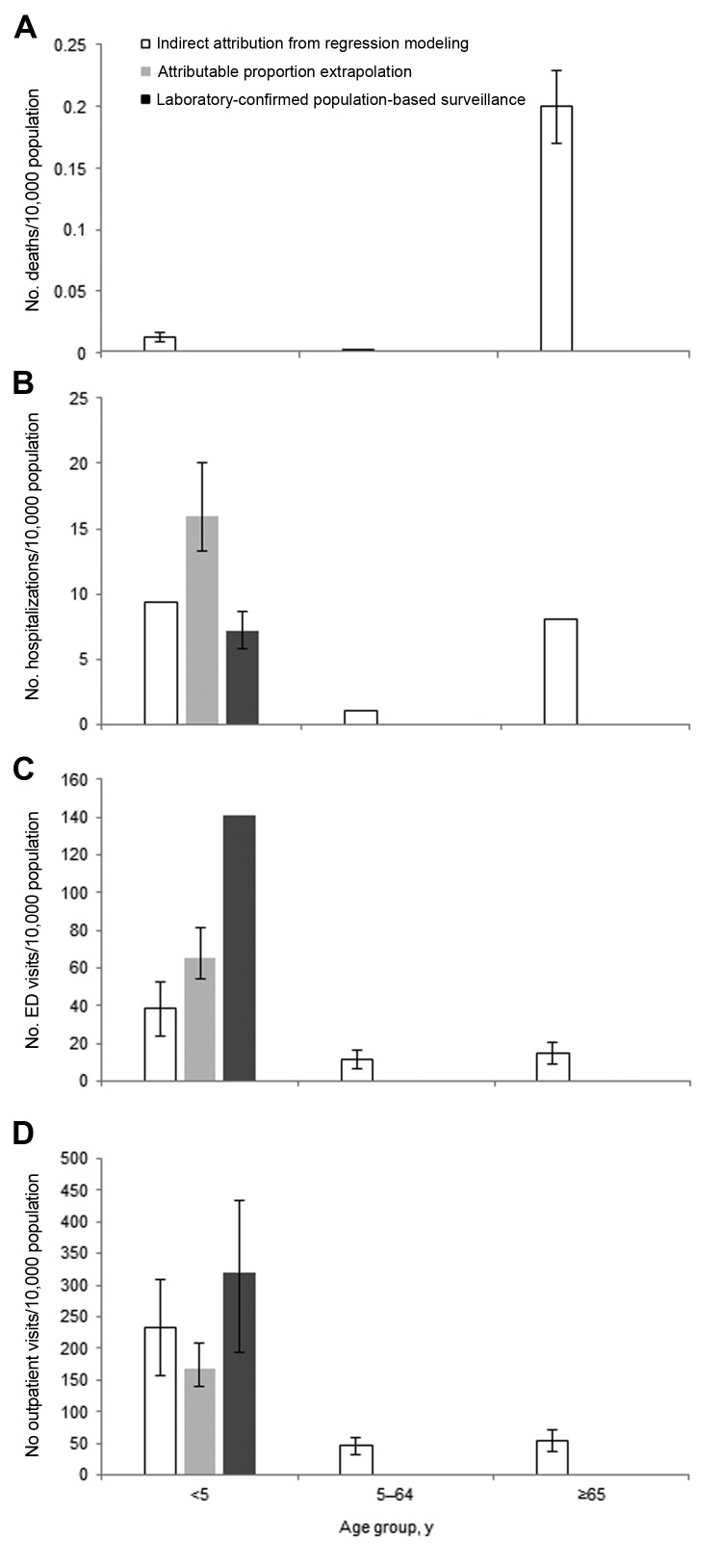
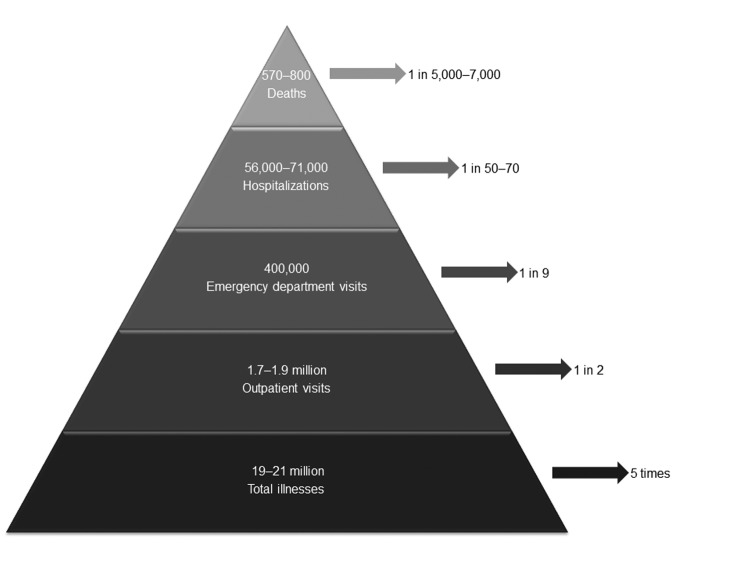
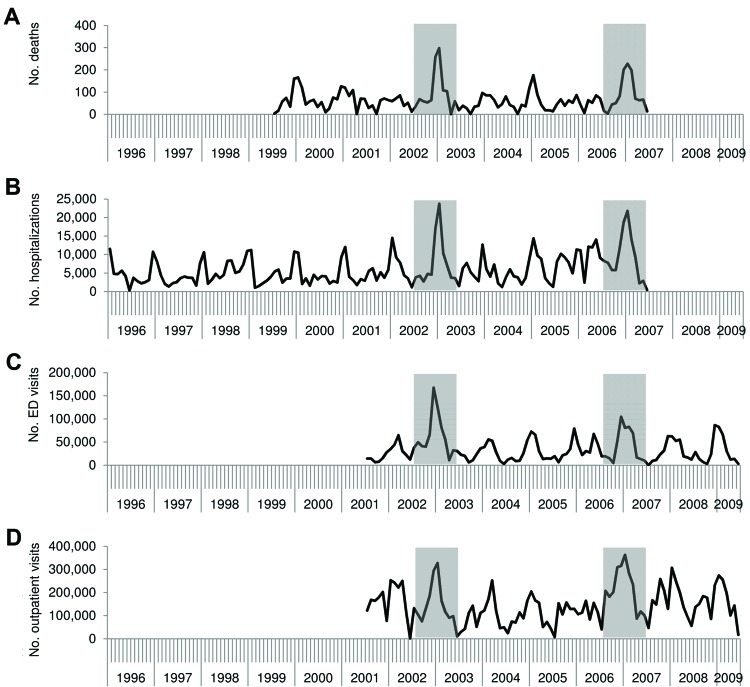
Although recognized as the leading cause of epidemic acute gastroenteritis across all age groups, norovirus has remained poorly characterized with respect to its endemic disease incidence. Use of different methods, including attributable proportion extrapolation, population-based surveillance, and indirect modeling, in several recent studies has considerably improved norovirus disease incidence estimates for the United States. Norovirus causes an average of 570-800 deaths, 56,000-71,000 hospitalizations, 400,000 emergency department visits, 1.7-1.9 million outpatient visits, and 19-21 million total illnesses per year. Persons >65 years of age are at greatest risk for norovirus-associated death, and children <5 years of age have the highest rates of norovirus-associated medical care visits. Endemic norovirus disease occurs year round but exhibits a pronounced winter peak and increases by ≤ 50% during years in which pandemic strains emerge. These findings support continued development and targeting of appropriate interventions, including vaccines, for norovirus disease.
虽然诺如病毒被认为是各年龄段人群中导致流行性急性胃肠炎的主要病原体,但对于其地方性疾病发病率,人们仍知之甚少。在最近的几项研究中,使用归因比例外推法、基于人群的监测和间接建模等不同方法,极大地提高了美国诺如病毒疾病发病率的估计值。诺如病毒每年导致平均 570-800 人死亡、56000-71000 人住院、400000 人急诊就诊、170-190 万人门诊就诊和 1900-2100 万人患病。年龄>65 岁的人群感染诺如病毒相关死亡的风险最高,年龄<5 岁的儿童感染诺如病毒相关医疗就诊的比例最高。地方性诺如病毒疾病全年发生,但有明显的冬季高峰,在大流行毒株出现的年份上升≤50%。这些发现支持针对诺如病毒疾病继续开发和针对适当干预措施,包括疫苗。