Division of Cardiovascular and Diabetes Medicine, University of Dundee, UK.
Cardiovasc Diabetol. 2013 Jul 23;12:109. doi: 10.1186/1475-2840-12-109.
Left ventricular hypertrophy has multiple aetiologies including diabetes and genetic factors. We aimed to identify genetic variants predicting left ventricular hypertrophy in diabetic individuals.
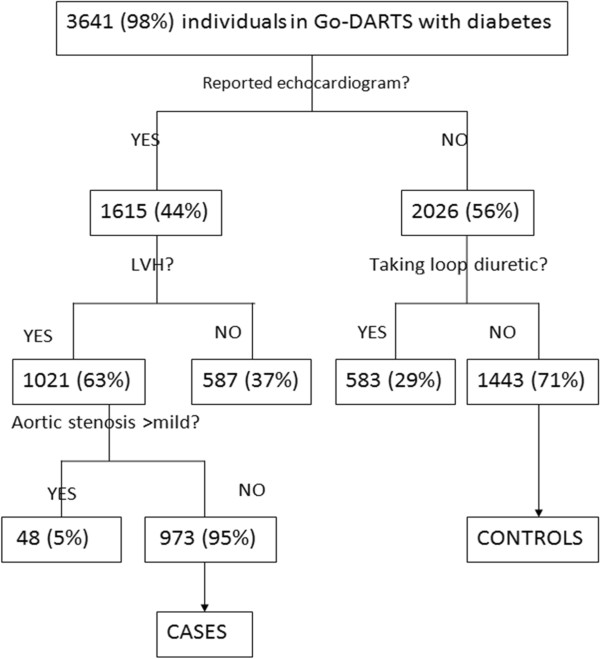
Demographic, echocardiographic, prescribing, morbidity, mortality and genotyping databases connected with the Genetics of Diabetes Audit and Research in Tayside, Scotland project were accurately linked using a patient-specific identifier. Left ventricular hypertrophy cases were identified using echocardiographic data.Genotyping data from 973 cases and 1443 non-left ventricular hypertrophy controls were analysed, investigating whether single nucleotide polymorphisms associated with left ventricular hypertrophy in previous Genome Wide Association Studies predicted left ventricular hypertrophy in our population of individuals with type 2 diabetes. Meta-analysis assessed overall significance of these single nucleotide polymorphisms, which were also used to create gene scores. Logistic regression assessed whether these scores predicted left ventricular hypertrophy.
Two single nucleotide polymorphisms previously associated with left ventricular hypertrophy were significant: rs17132261: OR 2.03, 95% CI 1.10-3.73, p-value 0.02 and rs2292462: OR 0.82, 95% CI 0.73-0.93 and p-value 2.26x10⁻³. Meta-analysis confirmed rs17132261 and rs2292462 were associated with left ventricular hypertrophy (p=1.03x10⁻⁸ and p=5.86x10⁻¹⁰ respectively) and one single nucleotide polymorphisms in IGF1R (rs4966014) became genome wide significant upon meta-analysis although was not significant in our study. Gene scoring based on published single nucleotide polymorphisms also predicted left ventricular hypertrophy in our study.Rs17132261, within SLC25A46, encodes a mitochondrial phosphate transporter, implying abnormal myocardial energetics contribute to left ventricular hypertrophy development. Rs2292462 lies within the obesity-implicated neuromedin B gene. Rs4966014 lies within the IGF1R1 gene. IGF1 signalling is an established factor in cardiac hypertrophy.
We created a resource to study genetics of left ventricular hypertrophy in diabetes and validated our left ventricular hypertrophy phenotype in replicating single nucleotide polymorphisms identified by previous genome wide association studies investigating left ventricular hypertrophy.
左心室肥厚有多种病因,包括糖尿病和遗传因素。我们旨在确定预测糖尿病患者左心室肥厚的遗传变异。
使用患者特定标识符准确链接与苏格兰泰赛德遗传学糖尿病审计和研究项目相关的人口统计学、超声心动图、处方、发病率、死亡率和基因分型数据库。使用超声心动图数据确定左心室肥厚病例。分析了 973 例病例和 1443 例非左心室肥厚对照的基因分型数据,研究了以前的全基因组关联研究中与左心室肥厚相关的单核苷酸多态性是否预测了我们 2 型糖尿病患者人群中的左心室肥厚。Meta 分析评估了这些单核苷酸多态性的总体意义,并用于创建基因评分。逻辑回归评估了这些评分是否预测了左心室肥厚。
先前与左心室肥厚相关的两个单核苷酸多态性具有统计学意义:rs17132261:OR 2.03,95%CI 1.10-3.73,p 值 0.02 和 rs2292462:OR 0.82,95%CI 0.73-0.93,p 值 2.26x10⁻³。Meta 分析证实 rs17132261 和 rs2292462 与左心室肥厚相关(p=1.03x10⁻⁸ 和 p=5.86x10⁻¹⁰),IGF1R 中的一个单核苷酸多态性(rs4966014)在 Meta 分析后达到全基因组显著水平,尽管在我们的研究中不显著。基于已发表的单核苷酸多态性的基因评分也预测了我们研究中的左心室肥厚。rs17132261 位于 SLC25A46 内,编码线粒体磷酸转运体,表明异常的心肌能量代谢导致左心室肥厚的发展。rs2292462 位于与肥胖相关的神经肽 B 基因内。rs4966014 位于 IGF1R1 基因内。IGF1 信号是心脏肥厚的一个既定因素。
我们创建了一个资源来研究糖尿病患者左心室肥厚的遗传学,并通过复制以前研究左心室肥厚的全基因组关联研究中确定的单核苷酸多态性来验证我们的左心室肥厚表型。