School of Biosciences, Cardiff University, Cardiff, United Kingdom.
PLoS One. 2013 Jul 22;8(7):e68933. doi: 10.1371/journal.pone.0068933. Print 2013.
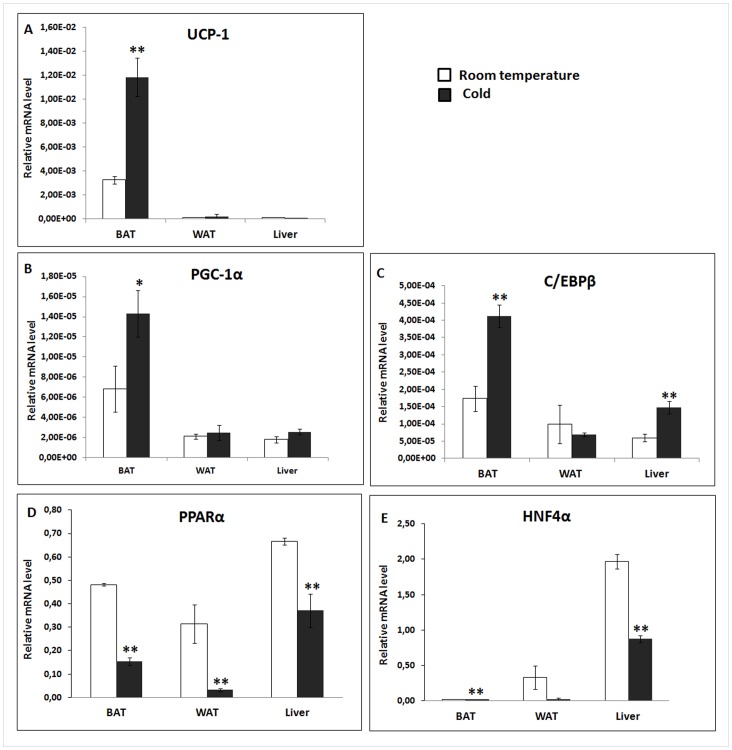
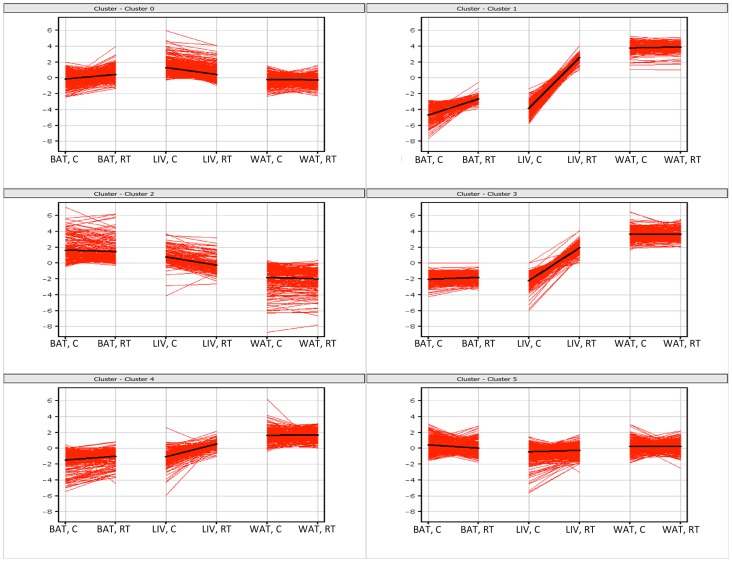
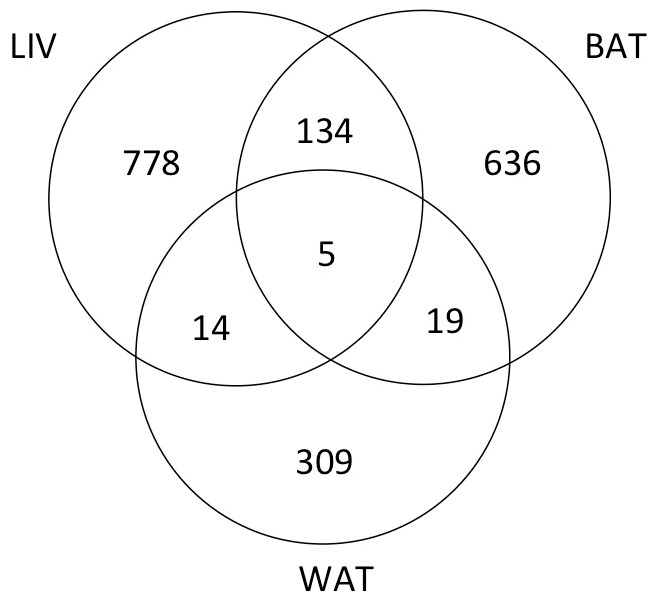
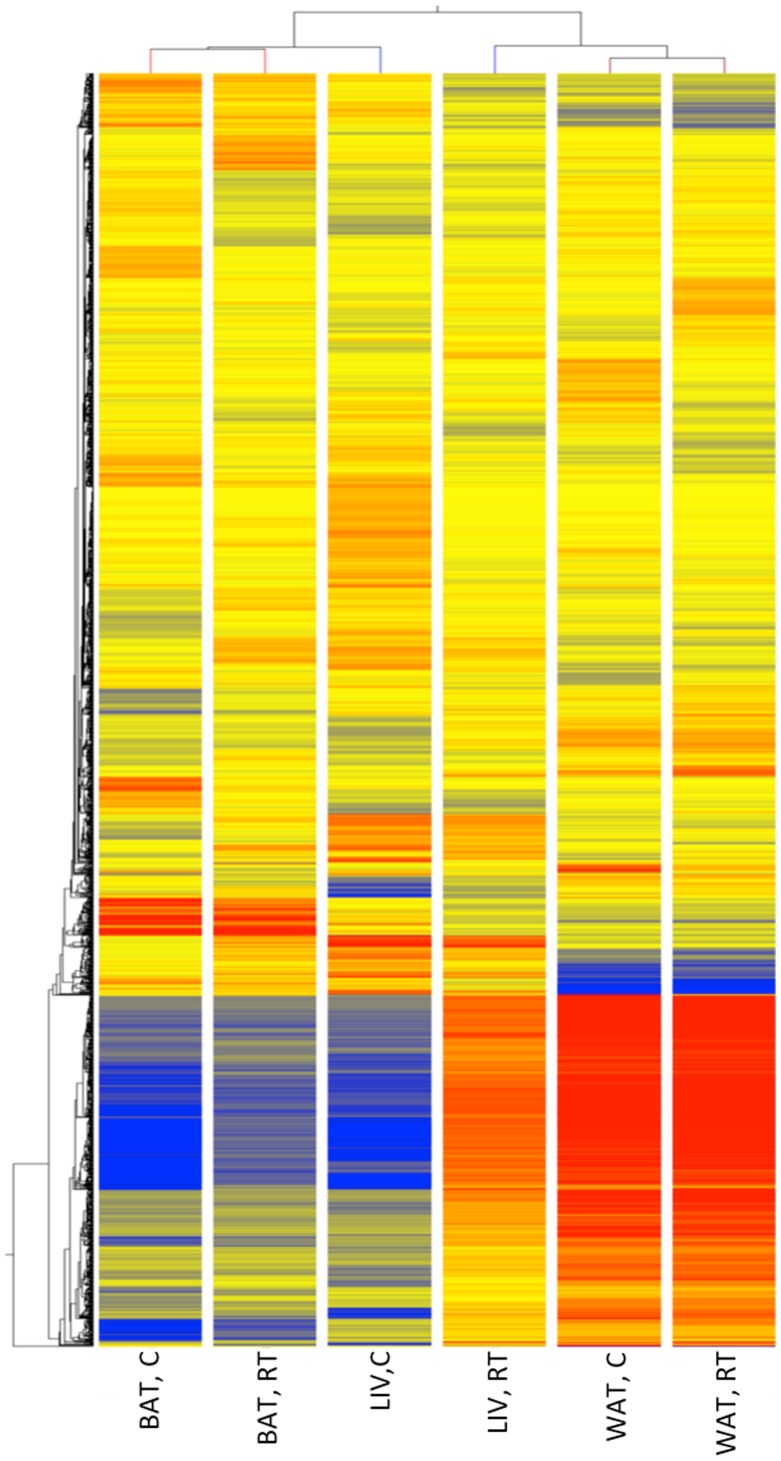
Cold exposure imposes a metabolic challenge to mammals that is met by a coordinated response in different tissues to prevent hypothermia. This study reports a transcriptomic analysis in brown adipose tissue (BAT), white adipose (WAT) and liver of mice in response to 24 h cold exposure at 8°C. Expression of 1895 genes were significantly (P<0.05) up- or down-regulated more than two fold by cold exposure in all tissues but only 5 of these genes were shared by all three tissues, and only 19, 14 and 134 genes were common between WAT and BAT, WAT and liver, and BAT and liver, respectively. We confirmed using qRT-PCR, the increased expression of a number of characteristic BAT genes during cold exposure. In both BAT and the liver, the most common direction of change in gene expression was suppression (496 genes in BAT and 590 genes in liver). Gene ontology analysis revealed for the first time significant (P<0.05) down regulation in response to cold, of genes involved in oxidoreductase activity, lipid metabolic processes and protease inhibitor activity, in both BAT and liver, but not WAT. The results reveal an unexpected importance of down regulation of cytochrome P450 gene expression and apolipoprotein, in both BAT and liver, but not WAT, in response to cold exposure. Pathway analysis suggests a model in which down regulation of the nuclear transcription factors HNF4α and PPARα in both BAT and liver may orchestrate the down regulation of genes involved in lipoprotein and steroid metabolism as well as Phase I enzymes belonging to the cytochrome P450 group in response to cold stress in mice. We propose that the response to cold stress involves decreased gene expression in a range of cellular processes in order to maximise pathways involved in heat production.
冷暴露对哺乳动物施加了代谢挑战,不同组织会协调响应以防止体温过低。本研究报告了在 8°C 下冷暴露 24 小时后,棕色脂肪组织(BAT)、白色脂肪(WAT)和肝脏中小鼠的转录组分析结果。在所有组织中,有 1895 个基因的表达受到冷暴露的显著(P<0.05)上调或下调,倍数超过两倍,但这 5 个基因在所有三种组织中均有表达,只有 WAT 和 BAT、WAT 和肝脏、BAT 和肝脏之间分别有 19、14 和 134 个基因存在共有。我们使用 qRT-PCR 证实了在冷暴露期间许多特征性 BAT 基因表达的增加。在 BAT 和肝脏中,基因表达变化最常见的方向是抑制(BAT 中有 496 个基因,肝脏中有 590 个基因)。GO 分析首次揭示,在冷暴露时,BAT 和肝脏中氧化还原酶活性、脂质代谢过程和蛋白酶抑制剂活性相关基因的表达显著(P<0.05)下调,但 WAT 中没有。结果表明,在冷暴露时,BAT 和肝脏中细胞色素 P450 基因和载脂蛋白的表达下调出乎意料地重要,但 WAT 中没有。通路分析表明,在冷应激时,BAT 和肝脏中核转录因子 HNF4α 和 PPARα 的下调可能协调参与脂蛋白和类固醇代谢以及细胞色素 P450 组 I 期酶的基因下调。我们提出,对冷应激的反应涉及一系列细胞过程中的基因表达降低,以最大限度地提高与产热相关的途径。