Koehbach Johannes, Attah Alfred F, Berger Andreas, Hellinger Roland, Kutchan Toni M, Carpenter Eric J, Rolf Megan, Sonibare Mubo A, Moody Jones O, Wong Gane Ka-Shu, Dessein Steven, Greger Harald, Gruber Christian W
Center for Physiology and Pharmacology, Medical University of Vienna, Schwarzspanierstrasse 17, 1090, Vienna, Austria.
Biopolymers. 2013 Sep;100(5):438-52. doi: 10.1002/bip.22328.
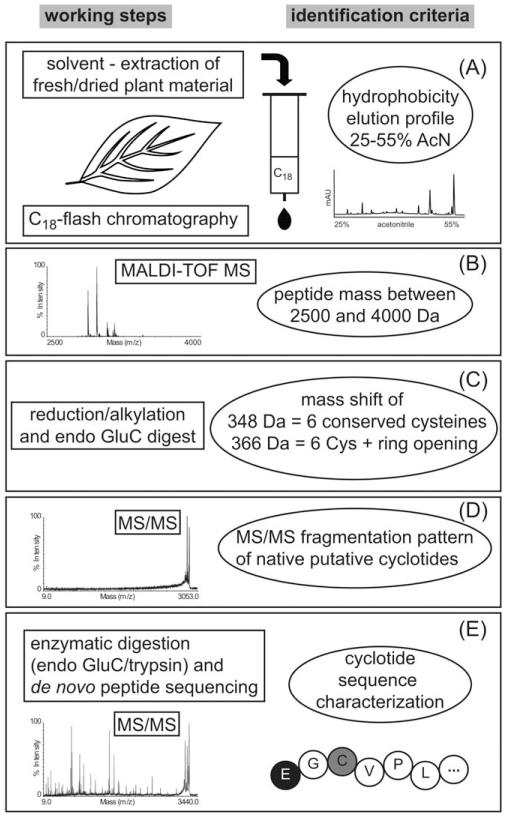
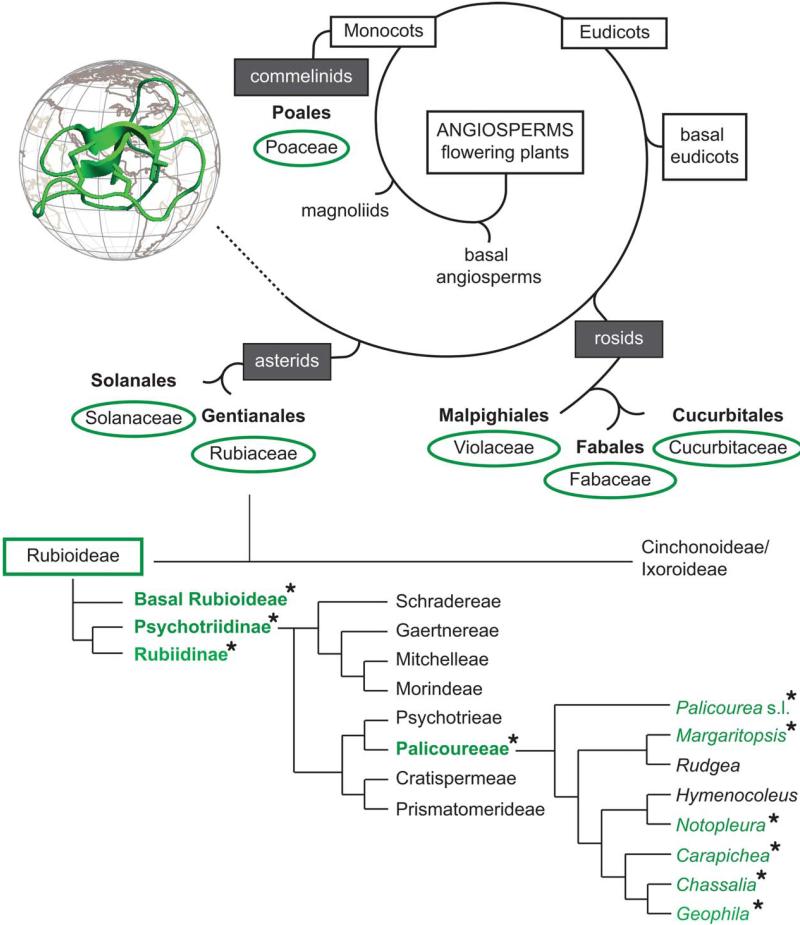
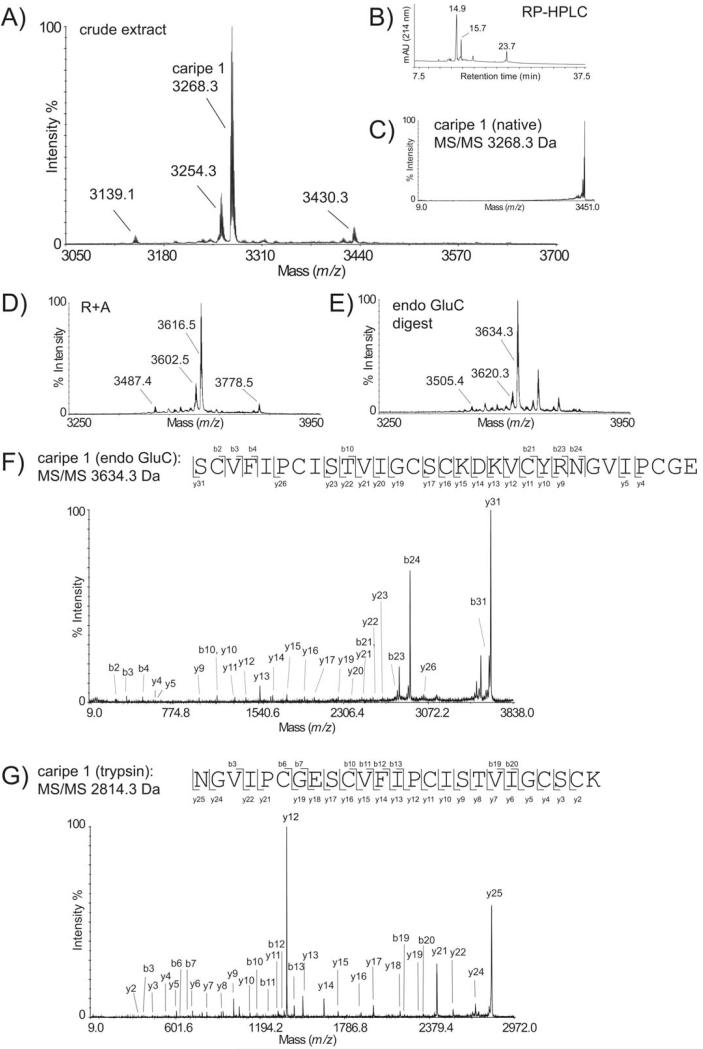
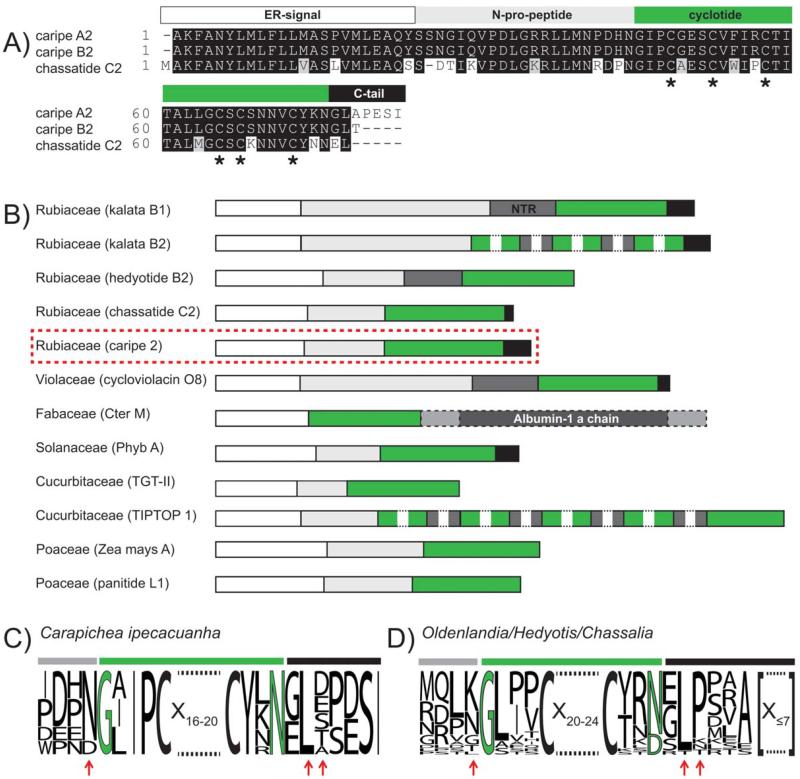
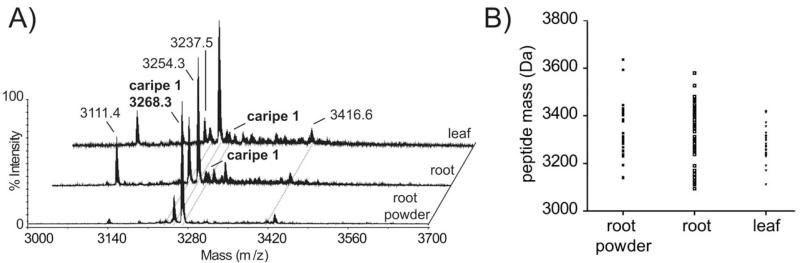
Cyclotides are a unique class of ribosomally synthesized cysteine-rich miniproteins characterized by a head-to-tail cyclized backbone and three conserved disulfide-bonds in a knotted arrangement. Originally they were discovered in the coffee-family plant Oldenlandia affinis (Rubiaceae) and have since been identified in several species of the violet, cucurbit, pea, potato, and grass families. However, the identification of novel cyclotide-containing plant species still is a major challenge due to the lack of a rapid and accurate analytical workflow in particular for large sampling numbers. As a consequence, their phylogeny in the plant kingdom remains unclear. To gain further insight into the distribution and evolution of plant cyclotides, we analyzed ∼300 species of >40 different families, with special emphasis on plants from the order Gentianales. For this purpose, we have developed a refined screening methodology combining chemical analysis of plant extracts and bioinformatic analysis of transcript databases. Using mass spectrometry and transcriptome-mining, we identified nine novel cyclotide-containing species and their related cyclotide precursor genes in the tribe Palicoureeae. The characterization of novel peptide sequences underlines the high variability and plasticity of the cyclotide framework, and a comparison of novel precursor proteins from Carapichea ipecacuanha illustrated their typical cyclotide gene architectures. Phylogenetic analysis of their distribution within the Psychotria alliance revealed cyclotides to be restricted to Palicourea, Margaritopsis, Notopleura, Carapichea, Chassalia, and Geophila. In line with previous reports, our findings confirm cyclotides to be one of the largest peptide families within the plant kingdom and suggest that their total number may exceed tens of thousands.
环肽是一类独特的核糖体合成的富含半胱氨酸的小蛋白,其特征是具有头尾环化的主链和以纽结排列的三个保守二硫键。最初它们是在茜草科植物近缘耳草中发现的,此后在紫罗兰科、葫芦科、豆科、茄科和禾本科的多个物种中也被鉴定出来。然而,由于缺乏一种快速准确的分析流程,尤其是对于大量样本,鉴定含有新型环肽的植物物种仍然是一项重大挑战。因此,它们在植物界的系统发育仍然不清楚。为了进一步了解植物环肽的分布和进化,我们分析了40多个不同科的约300个物种,特别关注龙胆目植物。为此,我们开发了一种精细的筛选方法,将植物提取物的化学分析和转录本数据库的生物信息学分析相结合。通过质谱分析和转录组挖掘,我们在帕利库里族中鉴定出了9个含有新型环肽的物种及其相关的环肽前体基因。新型肽序列的表征强调了环肽框架的高度变异性和可塑性,对药用南美吐根新型前体蛋白的比较展示了它们典型的环肽基因结构。对它们在九节属类群中分布的系统发育分析表明,环肽仅限于帕利库里属、珍珠木属、假九节属、药用南美吐根属、鸡屎树属和胶冠草属。与之前的报道一致,我们的研究结果证实环肽是植物界中最大的肽家族之一,并表明它们的总数可能超过数万种。