Department of Clinical and Health Psychology, University of Florida, Gainesville, FL, USA.
J Pain Res. 2013 Jul 22;6:577-88. doi: 10.2147/JPR.S46295. Print 2013.
Studies in the United States have found that patients' sex, race, and age influence the pain assessment and treatment decisions of laypeople and medical professionals. However, there is limited research as to whether people of other nationalities make pain management decisions differently based on demographic characteristics. Therefore, the purpose of the following study was to compare pain assessment and treatment decisions of undergraduate students in Jordan and the United States as a preliminary examination of nationality as a potential proxy for cultural differences in pain decisions.
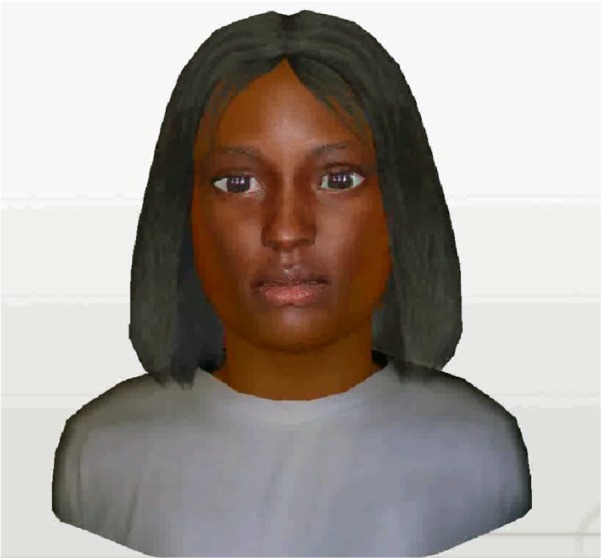
Virtual human (VH) technology was used to examine the influences of patients' sex (male or female), race (light-skinned or dark-skinned), and age (younger or older) on students' pain management decisions. Seventy-five American and 104 Jordanian undergraduate students participated in this web-based study.
American and Jordanian students rated pain intensity higher in females and older adults and were more likely to recommend medical help to these groups, relative to males and younger adults. Furthermore, Jordanian participants rated pain intensity higher and were more likely to recommend medical help for all patient demographic groups (ie, sex, race, age) than American participants.
This is the first cross-national study that compares pain decisions between undergraduate students. The results suggest that sex, race, and age cues are used in pain assessment and treatment by both Americans and Jordanians, with Jordanians more likely to rate pain higher and recommend medical help to patients. Additional research is needed to determine the cultural determinants of these differences.
美国的研究发现,患者的性别、种族和年龄会影响非专业医疗人员和专业医疗人员对疼痛的评估和治疗决策。然而,关于其他国家的人是否会根据人口特征对疼痛管理决策做出不同的判断,相关研究有限。因此,本研究的目的是比较约旦和美国本科生对疼痛的评估和治疗决策,初步考察国籍是否可以作为疼痛决策中文化差异的潜在替代指标。
使用虚拟人(VH)技术来考察患者的性别(男性或女性)、种族(浅色皮肤或深色皮肤)和年龄(年轻或年长)对学生疼痛管理决策的影响。75 名美国本科生和 104 名约旦本科生参与了这项基于网络的研究。
与男性和年轻成年人相比,美国和约旦的学生认为女性和年长成年人的疼痛强度更高,更有可能向这些群体推荐医疗帮助。此外,与美国参与者相比,约旦参与者对所有患者人口统计学群体(即性别、种族、年龄)的疼痛强度评估更高,更有可能推荐医疗帮助。
这是首次在跨国家层面上比较本科生的疼痛决策。研究结果表明,性别、种族和年龄线索被美国人和约旦人用于疼痛评估和治疗,而约旦人更有可能对疼痛做出更高的评估,并更有可能向患者推荐医疗帮助。需要进一步研究以确定这些差异的文化决定因素。