Department of Plant Breeding and Genetics, Cornell University Ithaca, NY, USA.
Front Plant Sci. 2013 Jul 29;4:275. doi: 10.3389/fpls.2013.00275. eCollection 2013.
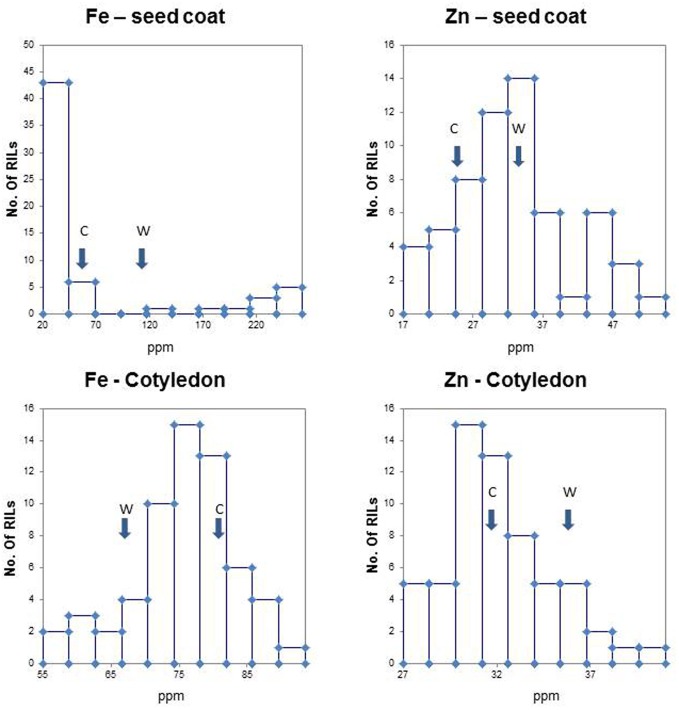
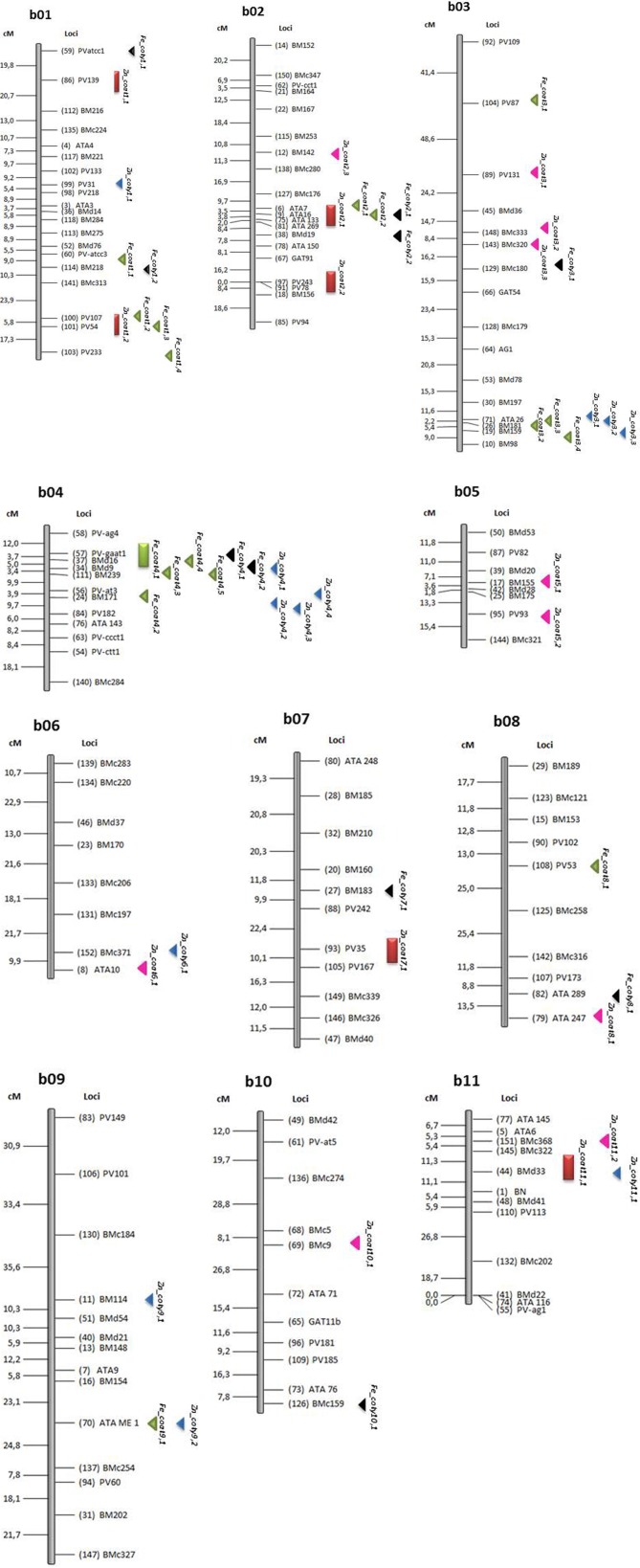
Common beans (Phaseolus vulgaris L.), like many legumes, are rich in iron, zinc, and certain other microelements that are generally found to be in low concentrations in cereals, other seed crops, and root or tubers and therefore are good candidates for biofortification. But a quandary exists in common bean biofortification: namely that the distribution of iron has been found to be variable between the principal parts of seed; namely the cotyledonary tissue, embryo axis and seed coat. The seed coat represents ten or more percent of the seed weight and must be considered specifically as it accumulates much of the anti-nutrients such as tannins that effect mineral bioavailability. Meanwhile the cotyledons accumulate starch and phosphorus in the form of phytates. The goal of this study was to evaluate a population of progeny derived from an advanced backcross of a wild bean and a cultivated Andean bean for seed coat versus cotyledonary minerals to identify variability and predict inheritance of the minerals. We used wild common beans because of their higher seed mineral concentration compared to cultivars and greater proportion of seed coat to total seed weight. Results showed the most important gene for seed coat iron was on linkage group B04 but also identified other QTL for seed coat and cotyledonary iron and zinc on other linkage groups, including B11 which has been important in studies of whole seed. The importance of these results in terms of physiology, candidate genes and plant breeding are discussed.
普通菜豆(Phaseolus vulgaris L.)与许多豆类一样,富含铁、锌和某些其他微量元素,这些微量元素通常在谷物、其他种子作物以及根茎类作物中含量较低,因此是生物强化的良好候选物。但是,普通菜豆的生物强化存在一个难题:即铁的分布在种子的主要部分之间存在差异;即子叶组织、胚轴和种皮。种皮占种子重量的百分之十以上,必须具体考虑,因为它积累了大量的抗营养物质,如单宁,影响矿物质的生物利用度。同时,子叶以植酸盐的形式积累淀粉和磷。本研究的目的是评估来自野生豆和安第斯栽培豆的高级回交后代群体的种皮与子叶矿物质,以确定矿物质的可变性和遗传预测。我们使用野生普通菜豆,因为它们的种子矿物质浓度高于品种,而且种皮占总种子重量的比例更大。结果表明,种皮铁的最重要基因位于连锁群 B04 上,但也在其他连锁群上鉴定到了种皮和子叶铁锌的其他 QTL,包括在整个种子研究中很重要的 B11。讨论了这些结果在生理学、候选基因和植物育种方面的重要性。