Meir-Shafrir Keren, Pollack Shimon
Institute for Allergy, Immunology & AIDS, Rambam Health Care Campus, Haifa, Israel, and the.
Rambam Maimonides Med J. 2012 Oct 31;3(4):e0025. doi: 10.5041/RMMJ.10089. Print 2012 Oct.
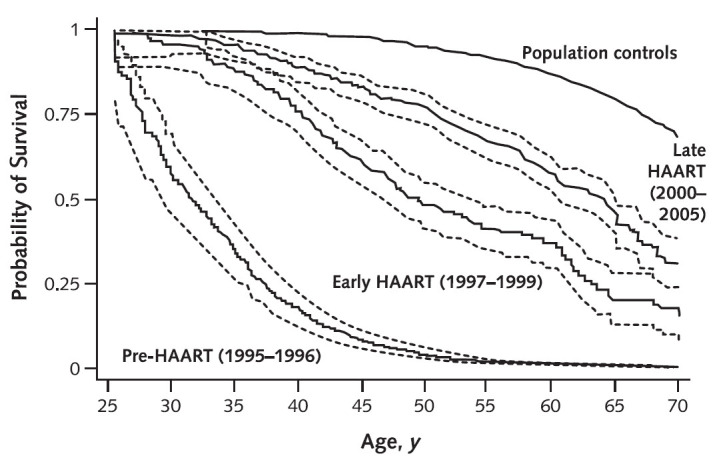
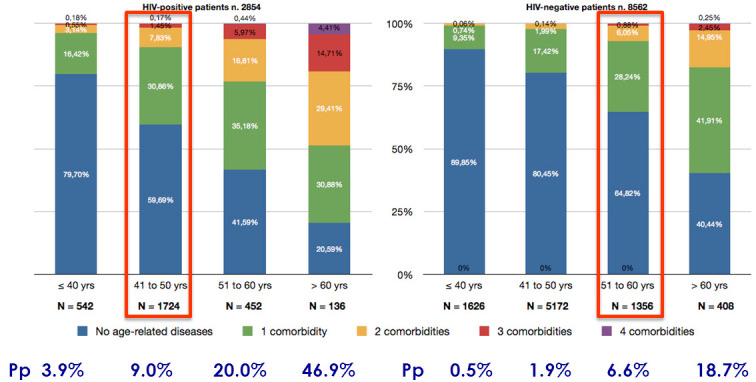
Life expectancy has been increasing in the last few decades in the Western world and is accompanied by higher occurrence of age-related diseases like metabolic, cardiovascular, and renal diseases and also with a decline in immune functions. In HIV-infected people, due to the use of combination antiretroviral therapy (cART), life expectancy has increased. As a result, non-AIDS conditions which are age-associated have become more prevalent and appear earlier, resulting in accelerated aging in HIV patients. These non-AIDS conditions in HIV patients are associated with CD4+ T cell counts: lower counts are associated with higher rates of liver, cardiovascular, renal, and neurocognitive disorders. The effect of viral load and cART on the earlier occurrence of age-associated diseases is less significant than the CD4 count effect. Thus, the loss of immune functions in HIV-infected patients may enhance aging.