Biosciences, College of Life and Environmental Sciences, University of Exeter, Stocker Road, Exeter, EX4 4QD, UK.
Plant J. 2013 Oct;76(2):247-57. doi: 10.1111/tpj.12303.
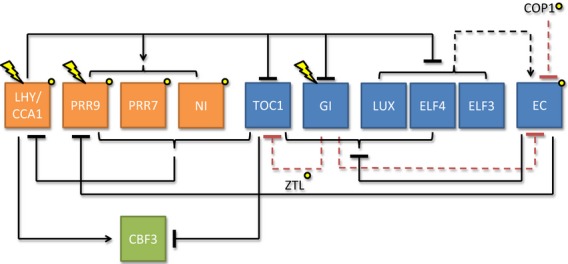
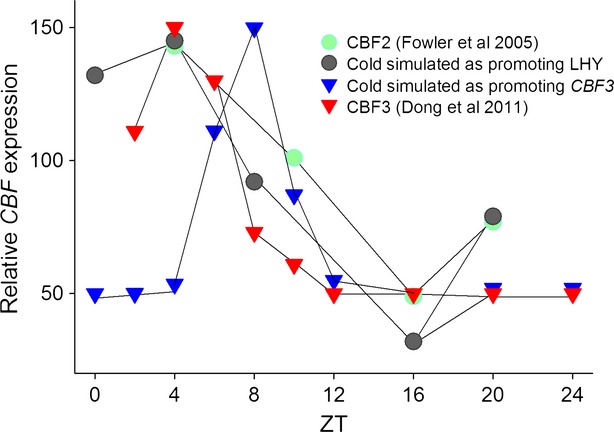
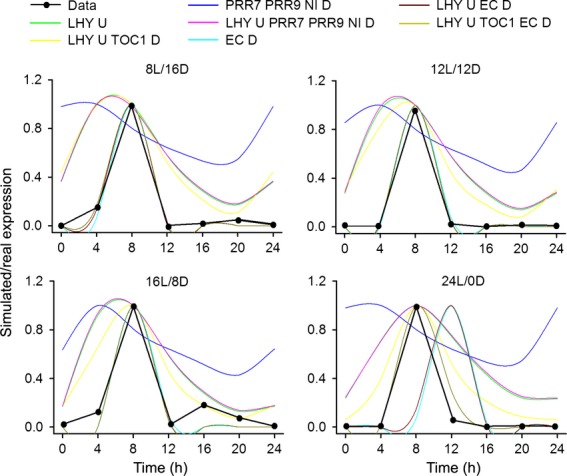
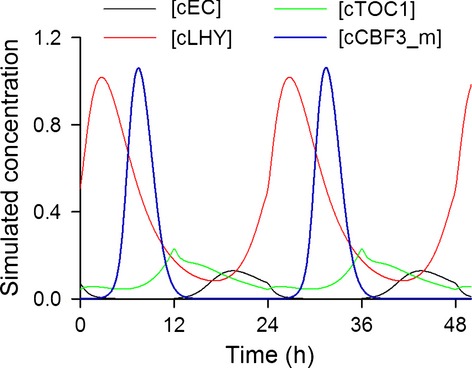
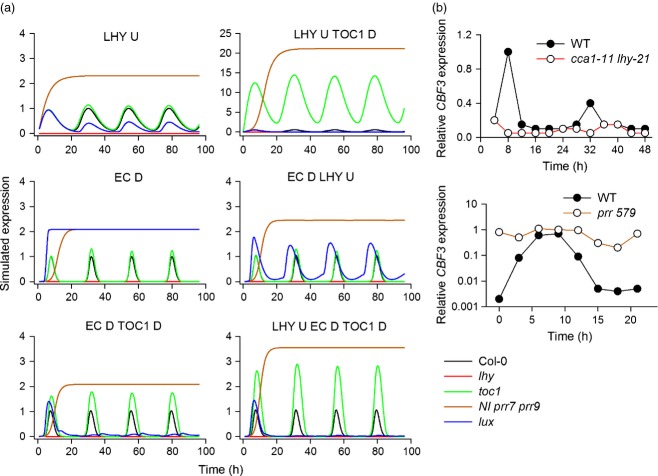
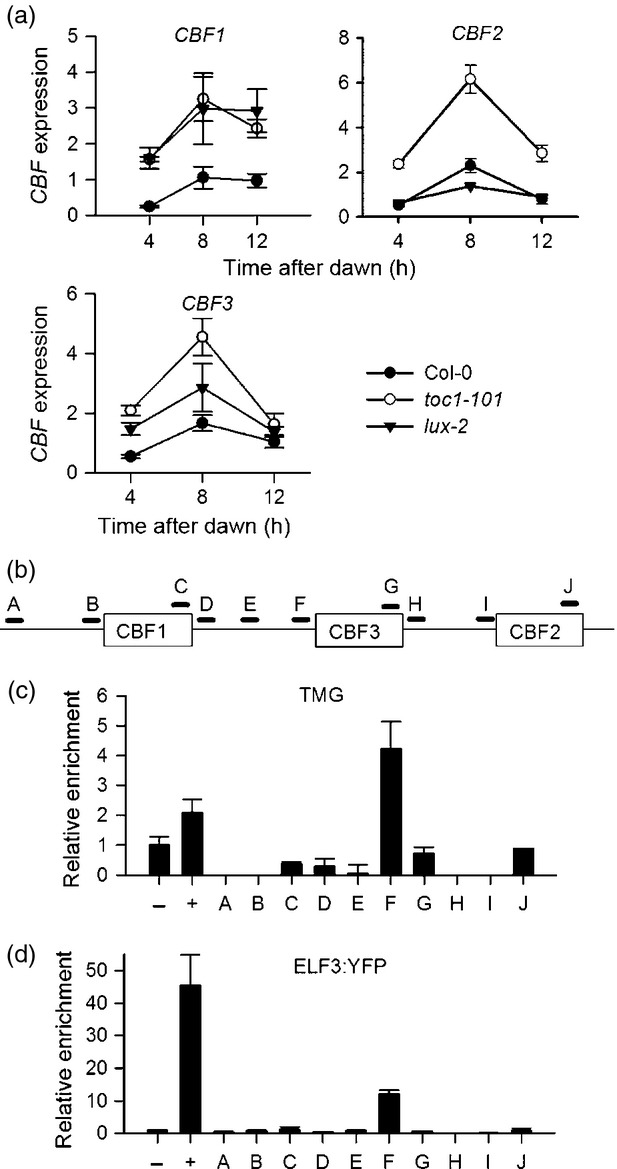
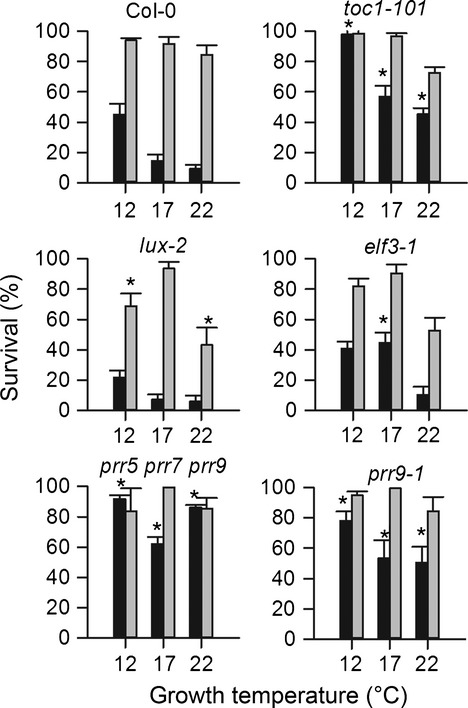
Circadian clocks confer advantages by restricting biological processes to certain times of day through the control of specific phased outputs. Control of temperature signalling is an important function of the plant oscillator, but the architecture of the gene network controlling cold signalling by the clock is not well understood. Here we use a model ensemble fitted to time-series data and a corrected Akaike Information Criterion (AICc) analysis to extend a dynamic model to include the control of the key cold-regulated transcription factors C-REPEAT BINDING FACTORs 1-3 (CBF1, CBF2, CBF3). AICc was combined with in silico analysis of genetic perturbations in the model ensemble, and selected a model that predicted mutant phenotypes and connections between evening-phased circadian clock components and CBF3 transcriptional control, but these connections were not shared by CBF1 and CBF2. In addition, our model predicted the correct gating of CBF transcription by cold only when the cold signal originated from the clock mechanism itself, suggesting that the clock has an important role in temperature signal transduction. Our data shows that model selection could be a useful method for the expansion of gene network models.
生物钟通过控制特定相位的输出,将生物过程限制在一天中的特定时间,从而带来优势。温度信号的控制是植物振荡器的一个重要功能,但是时钟控制冷信号的基因网络的结构还不是很清楚。在这里,我们使用模型集合拟合时间序列数据,并使用修正的 Akaike 信息准则(AICc)分析将动态模型扩展到包括关键的冷调节转录因子 C-重复结合因子 1-3(CBF1、CBF2、CBF3)的控制。AICc 与模型集合中的遗传扰动的计算机分析相结合,选择了一个可以预测突变表型和夜间相位生物钟成分与 CBF3 转录控制之间的连接的模型,但这些连接与 CBF1 和 CBF2 并不共享。此外,我们的模型预测只有当冷信号来自时钟机制本身时,CBF 转录才会被正确地调控,这表明时钟在温度信号转导中起着重要的作用。我们的数据表明,模型选择可能是扩展基因网络模型的一种有用方法。