Parnell Scott E, Holloway Hunter T, O'Leary-Moore Shonagh K, Dehart Deborah B, Paniaqua Beatriz, Oguz Ipek, Budin Francois, Styner Martin A, Johnson G Allan, Sulik Kathleen K
Bowles Center for Alcohol Studies, University of North Carolina, Chapel Hill, NC, USA; Department of Cell Biology and Physiology, University of North Carolina, Chapel Hill, NC, USA.
Neurotoxicol Teratol. 2013 Sep-Oct;39:77-83. doi: 10.1016/j.ntt.2013.07.009. Epub 2013 Jul 30.
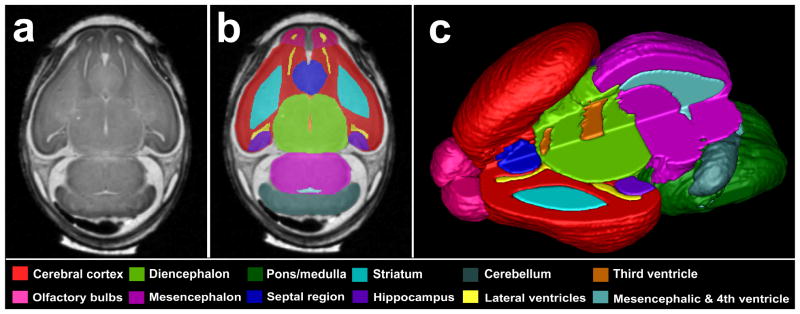
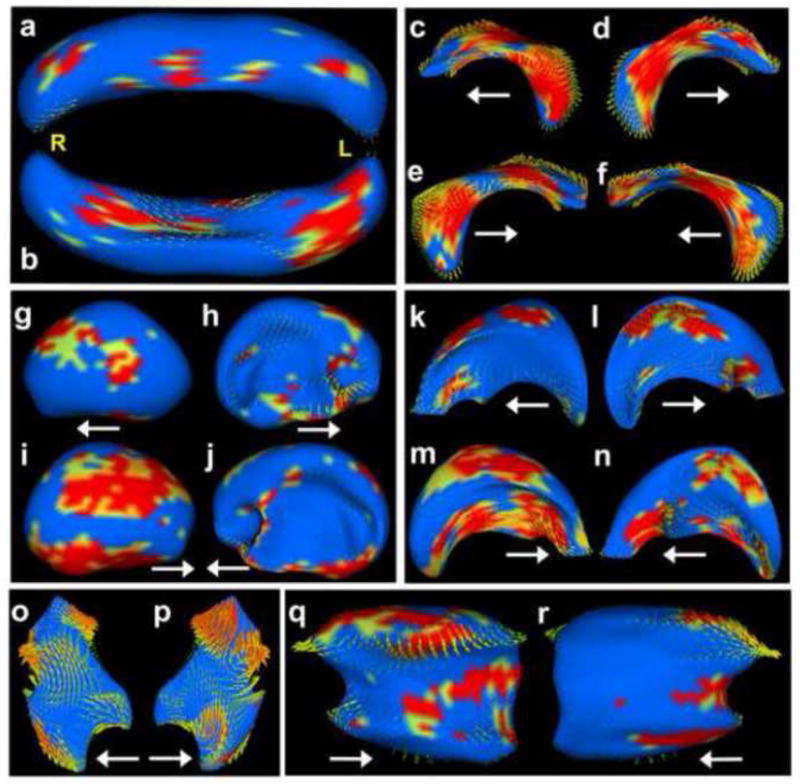
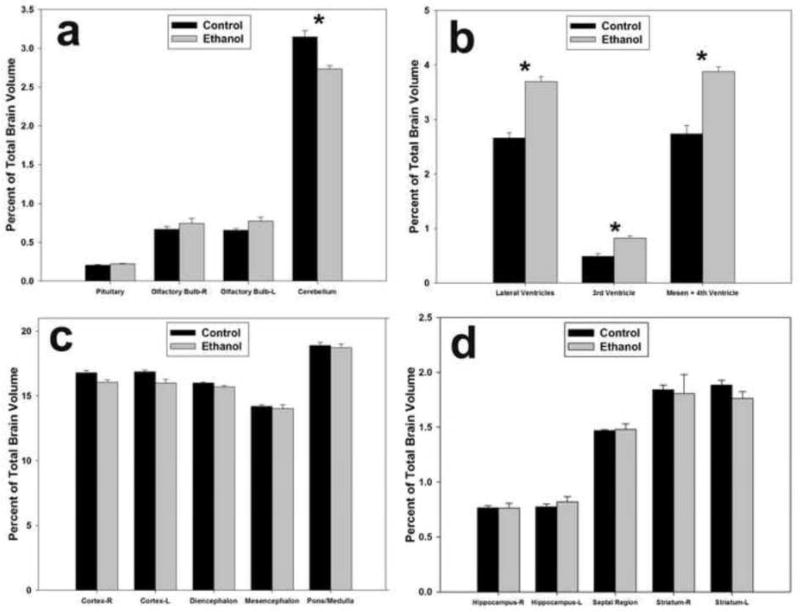
Animal model-based studies have shown that ethanol exposure during early gestation induces developmental stage-specific abnormalities of the face and brain. The exposure time-dependent variability in ethanol's teratogenic outcomes is expected to contribute significantly to the wide spectrum of effects observed in humans with fetal alcohol spectrum disorder (FASD). The work presented here employs a mouse FASD model and magnetic resonance microscopy (MRM; high resolution magnetic resonance imaging) in studies designed to further our understanding of the developmental stage-specific defects of the brain that are induced by ethanol. At neurulation stages, i.e. at the beginning of gestational day (GD) 9 and again 4 hours later, time-mated C57Bl/6J dams were intraperitoneally administered 2.9 g/kg ethanol or vehicle. Ethanol-exposed fetuses were collected on GD 17, processed for MRM analysis, and results compared to comparably staged controls. Linear and volume measurements as well as shape changes for numerous individual brain regions were determined. GD 9 ethanol exposure resulted in significantly increased septal region width, reduction of cerebellar volume, and enlargement of all of the ventricles. Additionally, the results of shape analyses showed that many areas of the ethanol-exposed brains including the cerebral cortex, hippocampus and right striatum were significantly misshapen. These data demonstrate that ethanol can induce dysmorphology that may not be obvious based on volumetric analyses alone, highlight the asymmetric aspects of ethanol-induced defects, and add to our understanding of ethanol's developmental stage-dependent neuroteratogenesis.
基于动物模型的研究表明,妊娠早期接触乙醇会诱发面部和大脑特定发育阶段的异常。乙醇致畸结果中与接触时间相关的变异性,预计会对胎儿酒精谱系障碍(FASD)患者中观察到的广泛影响有显著贡献。本文介绍的研究采用小鼠FASD模型和磁共振显微镜(MRM;高分辨率磁共振成像),旨在进一步了解乙醇诱导的大脑特定发育阶段缺陷。在神经胚形成阶段,即在妊娠第9天开始时以及4小时后,对已定时交配的C57Bl/6J母鼠腹腔注射2.9 g/kg乙醇或赋形剂。在妊娠第17天收集接触乙醇的胎儿,进行MRM分析,并将结果与处于相应阶段的对照组进行比较。确定了许多单个脑区的线性和体积测量值以及形状变化。妊娠第9天接触乙醇导致隔区宽度显著增加、小脑体积减小以及所有脑室扩大。此外,形状分析结果表明,接触乙醇的大脑许多区域,包括大脑皮层、海马体和右侧纹状体,都有明显的畸形。这些数据表明,乙醇可诱发仅基于体积分析可能不明显的畸形,突出了乙醇诱导缺陷的不对称方面,并增进了我们对乙醇发育阶段依赖性神经致畸作用的理解。