Max Planck Institute of Molecular Cell Biology and Genetics Dresden, Germany.
Front Hum Neurosci. 2013 Aug 1;7:424. doi: 10.3389/fnhum.2013.00424. eCollection 2013.
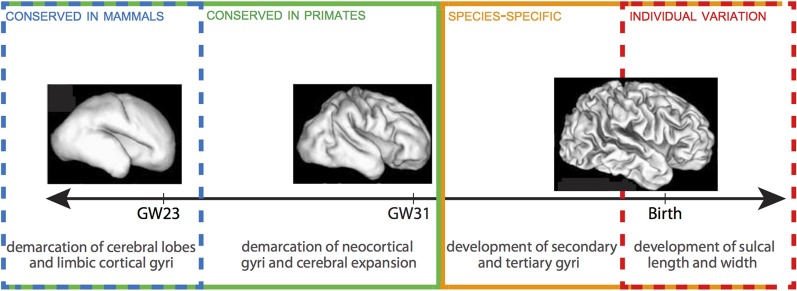
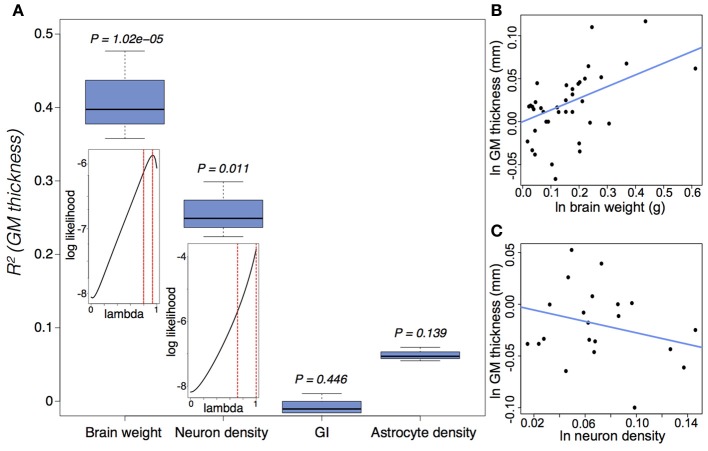
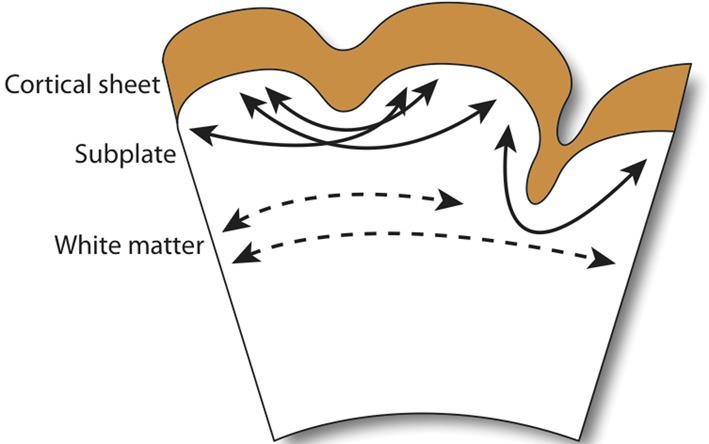
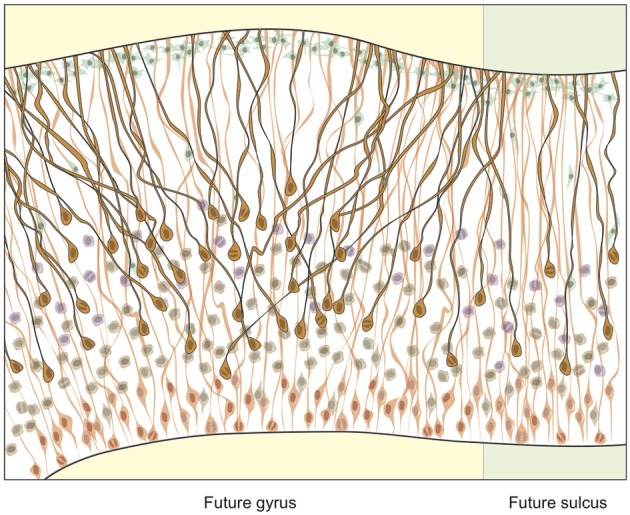
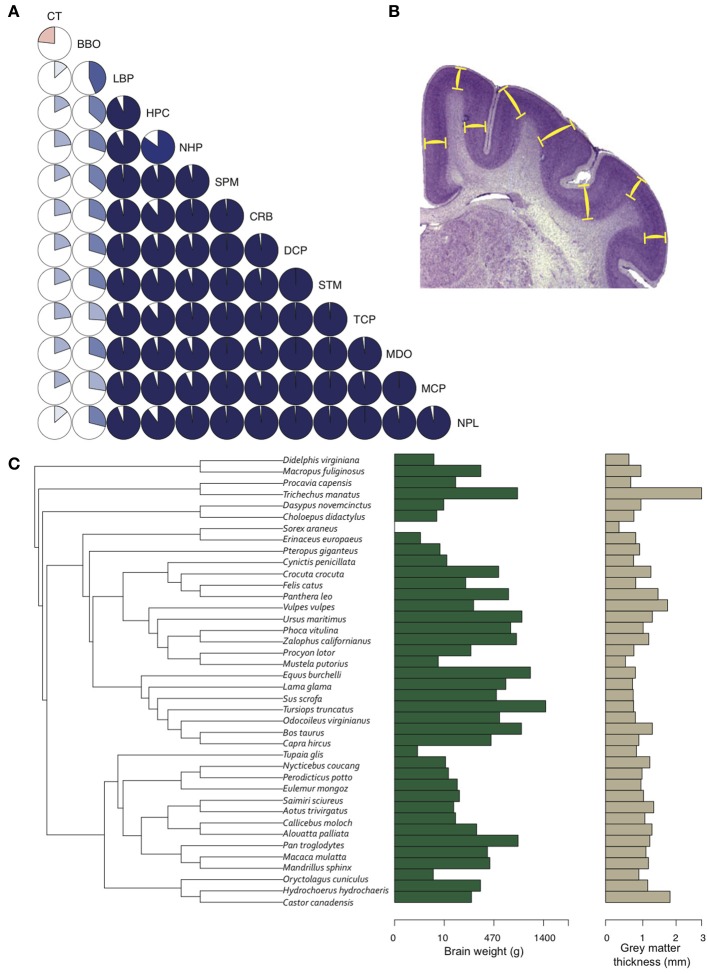
as it expands, so does it fold. The degree to which it folds, however, cannot strictly be attributed to its expansion. Across species, cortical volume does not keep pace with cortical surface area, but rather folds appear more rapidly than expected. As a result, larger brains quickly become disproportionately more convoluted than smaller brains. Both the absence (lissencephaly) and presence (gyrencephaly) of cortical folds is observed in all mammalian orders and, while there is likely some phylogenetic signature to the evolutionary appearance of gyri and sulci, there are undoubtedly universal trends to the acquisition of folds in an expanding neocortex. Whether these trends are governed by conical expansion of neocortical germinal zones, the distribution of cortical connectivity, or a combination of growth- and connectivity-driven forces remains an open question. But the importance of cortical folding for evolution of the uniquely mammalian neocortex, as well as for the incidence of neuropathologies in humans, is undisputed. In this hypothesis and theory article, we will summarize the development of cortical folds in the neocortex, consider the relative influence of growth- vs. connectivity-driven forces for the acquisition of cortical folds between and within species, assess the genetic, cell-biological, and mechanistic implications for neocortical expansion, and discuss the significance of these implications for human evolution, development, and disease. We will argue that evolutionary increases in the density of neuron production, achieved via maintenance of a basal proliferative niche in the neocortical germinal zones, drive the conical migration of neurons toward the cortical surface and ultimately lead to the establishment of cortical folds in large-brained mammal species.
随着大脑的扩张,它也会折叠。然而,折叠的程度并不能严格归因于其扩张。在不同物种中,皮质体积与皮质表面积并不保持同步,而是折叠出现得更快。因此,较大的大脑很快变得比较小的大脑更加复杂。在所有哺乳动物目中都观察到了皮质折叠的缺失(无脑回畸形)和存在(脑回畸形),虽然脑回和脑沟的进化出现可能具有一定的系统发育特征,但毫无疑问,在扩张的新皮质中获得折叠存在普遍趋势。这些趋势是由新皮质生发区的锥形扩张、皮质连接的分布还是生长和连接驱动力量的组合所决定,仍然是一个悬而未决的问题。但是,皮质折叠对于独特的哺乳动物新皮质的进化以及人类神经病理学的发生的重要性是无可争议的。在这篇假说和理论文章中,我们将总结新皮质中皮质折叠的发育,考虑生长与连接驱动力量对于不同物种和同一物种内皮质折叠获得的相对影响,评估新皮质扩张的遗传、细胞生物学和机制意义,并讨论这些意义对于人类进化、发育和疾病的重要性。我们将认为,神经元产生密度的增加是通过在新皮质生发区中维持基底增殖生态位来实现的,这种增加驱动神经元向皮质表面锥形迁移,并最终导致在大型哺乳动物物种中建立皮质折叠。