Halder Amal K, Molyneaux John W, Luby Stephen P, Ram Pavani K
International Centre for Diarrheal Disease Research, Bangladesh (icddr,b), Dhaka, Bangladesh.
BMC Public Health. 2013 Aug 2;13:705. doi: 10.1186/1471-2458-13-705.
Structured observation is frequently used to measure handwashing at critical events, such as after fecal contact and before eating, but it is time-consuming. We aimed to assess the impact of reducing the duration of structured observation on the number and type of critical events observed.
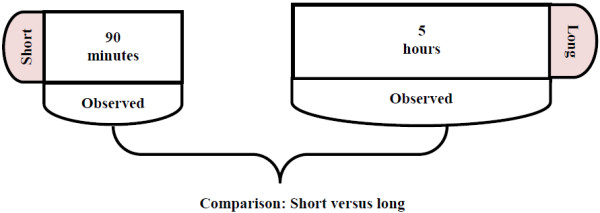
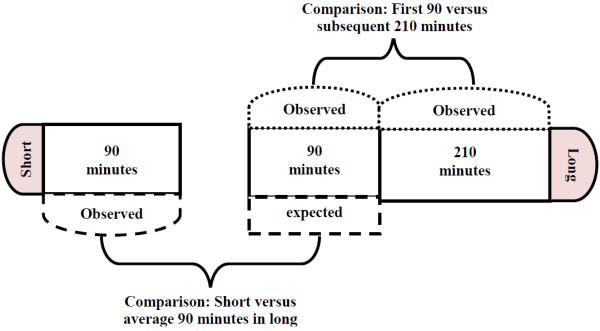
The study recruited 100 randomly selected households, 50 for short 90-minute observations and 50 for long 5-hour observations, in six rural Bangladeshi villages. Based on the first 90 minutes in the long observation households, we estimated the number of critical events for handwashing expected, and compared the expected number to the number of events actually observed in the short observation households. In long observation households, we compared soap use at critical events observed during the first 90 minutes to soap use at events observed during the latter 210 minutes of the 5-hour duration.
In short 90-minute observation households, the mean number of events observed was lower than the number of events expected: before eating (observed 0.25, expected 0.45, p<0.05) and after defecation (observed 0.0, expected 0.03, p=0.06). However, the mean number observed was higher than the expected for food preparation, food serving, and child feeding events. In long 5-hour observation households, soap was used more frequently at critical events observed in the first 90 minutes than in the remaining 210 minutes, but this difference was not significant (p=0.29).
Decreasing the duration of handwashing significantly reduced the observation of critical events of interest to evaluators of handwashing programs. Researchers seeking to measure observed handwashing behavior should continue with prolonged duration of structured observation. Future research should develop and evaluate novel models to reduce reactivity to observation and improve the measurement of handwashing behavior.
结构化观察常用于测量关键事件(如排便后和进食前)时的洗手情况,但耗时较长。我们旨在评估缩短结构化观察时长对所观察到的关键事件数量及类型的影响。
该研究在孟加拉国六个乡村随机选取了100户家庭,其中50户进行90分钟的短时间观察,50户进行5小时的长时间观察。根据长时间观察家庭中最初90分钟的情况,我们估算了预期的洗手关键事件数量,并将预期数量与短时间观察家庭中实际观察到的事件数量进行比较。在长时间观察家庭中,我们比较了5小时时长内最初90分钟观察到的关键事件的肥皂使用情况与后210分钟观察到的事件的肥皂使用情况。
在90分钟短时间观察的家庭中,观察到的事件平均数量低于预期数量:进食前(观察到0.25,预期0.45,p<0.05)和排便后(观察到0.0,预期0.03,p=0.06)。然而,观察到的平均数量高于食物准备、上菜和喂食儿童事件的预期数量。在5小时长时间观察的家庭中,最初90分钟观察到的关键事件中肥皂使用频率高于剩余210分钟,但这种差异不显著(p=0.29)。
缩短洗手观察时长显著减少了洗手项目评估人员感兴趣的关键事件的观察数量。试图测量观察到的洗手行为的研究人员应继续采用较长时间的结构化观察。未来的研究应开发并评估新的模式,以降低对观察的反应性并改进洗手行为的测量。