Departamento de Parasitologia, Instituto de Ciências Biomédicas, Universidade de São Paulo, São Paulo, SP, Brazil.
Parasit Vectors. 2013 Aug 3;6(1):221. doi: 10.1186/1756-3305-6-221.
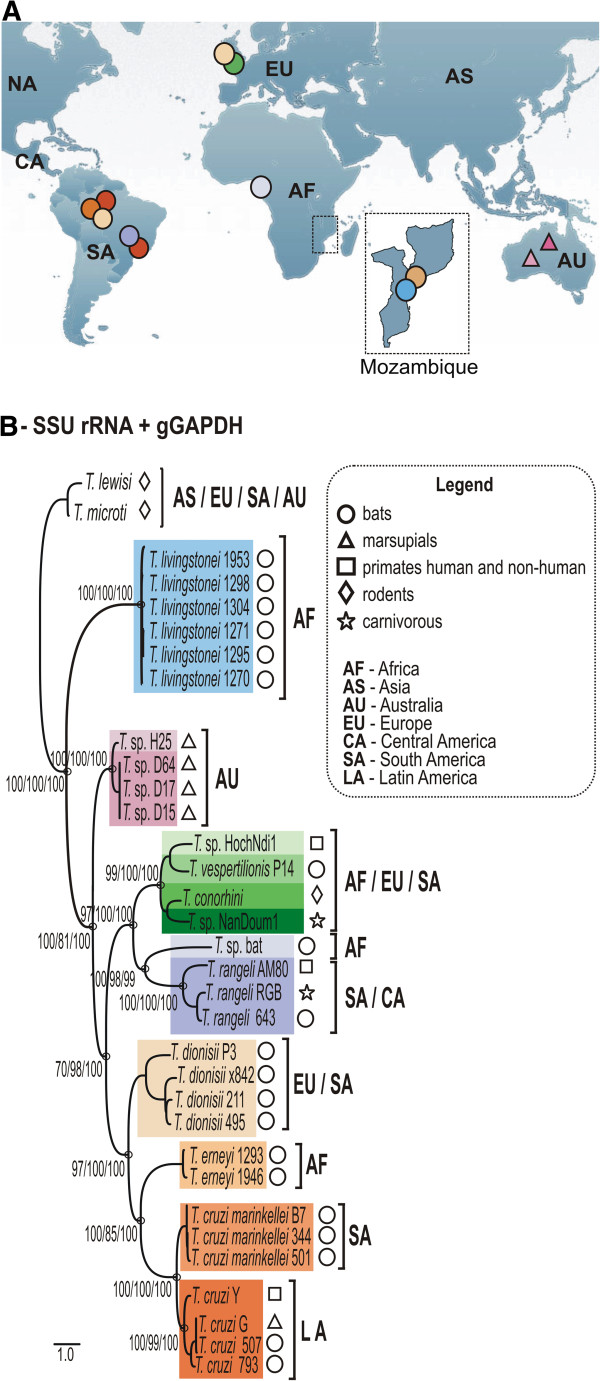
Bat trypanosomes have been implicated in the evolutionary history of the T. cruzi clade, which comprises species from a wide geographic and host range in South America, Africa and Europe, including bat-restricted species and the generalist agents of human American trypanosomosis T. cruzi and T. rangeli.
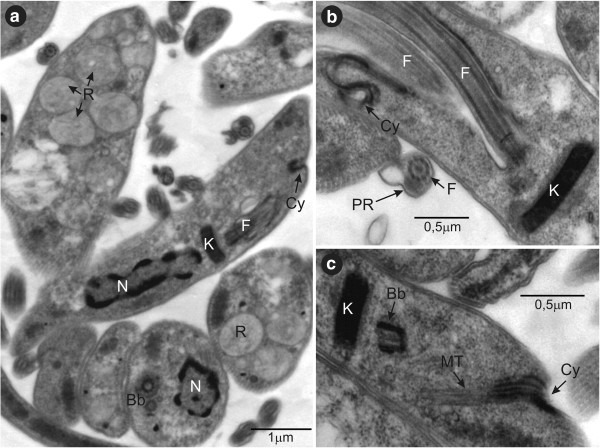
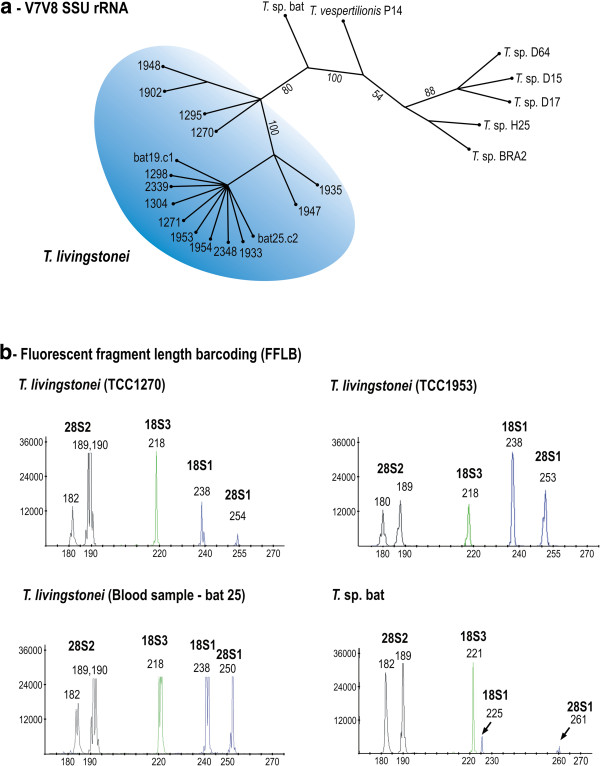
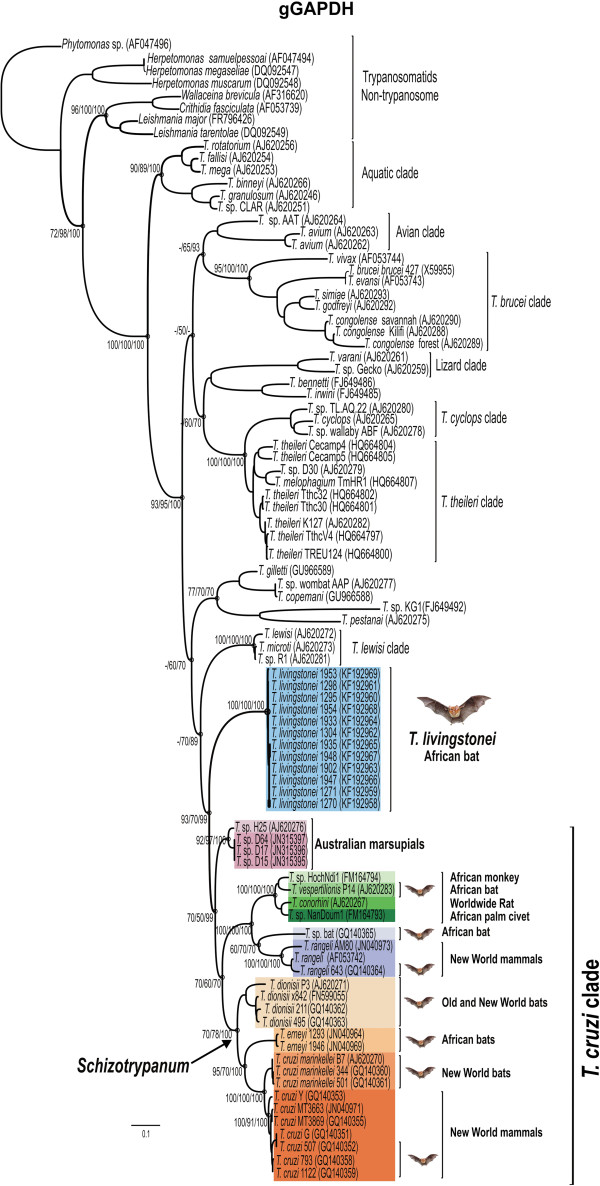
Trypanosomes from bats (Rhinolophus landeri and Hipposideros caffer) captured in Mozambique, southeast Africa, were isolated by hemoculture. Barcoding was carried out through the V7V8 region of Small Subunit (SSU) rRNA and Fluorescent Fragment Length barcoding (FFLB). Phylogenetic inferences were based on SSU rRNA, glyceraldehyde phosphate dehydrogenase (gGAPDH) and Spliced Leader (SL) genes. Morphological characterization included light, scanning and transmission electron microscopy.
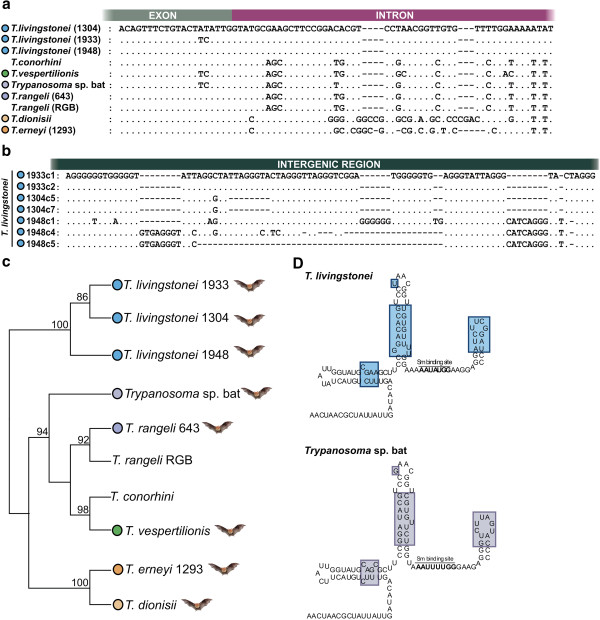
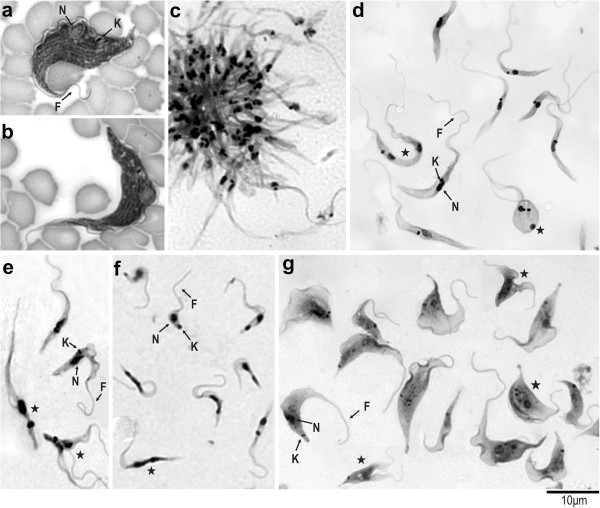
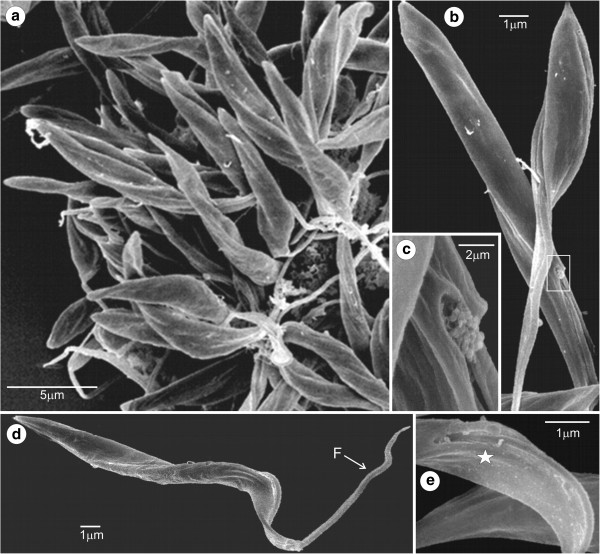
New trypanosomes from bats clustered together forming a clade basal to a larger assemblage called the T. cruzi clade. Barcoding, phylogenetic analyses and genetic distances based on SSU rRNA and gGAPDH supported these trypanosomes as a new species, which we named Trypanosoma livingstonei n. sp. The large and highly polymorphic SL gene repeats of this species showed a copy of the 5S ribosomal RNA into the intergenic region. Unique morphological (large and broad blood trypomastigotes compatible to species of the subgenus Megatrypanum and cultures showing highly pleomorphic epimastigotes and long and slender trypomastigotes) and ultrastructural (cytostome and reservosomes) features and growth behaviour (when co-cultivated with HeLa cells at 37°C differentiated into trypomastigotes resembling the blood forms and do not invaded the cells) complemented the description of this species.
Phylogenetic inferences supported the hypothesis that Trypanosoma livingstonei n. sp. diverged from a common ancestral bat trypanosome that evolved exclusively in Chiroptera or switched at independent opportunities to mammals of several orders forming the clade T. cruzi, hence, providing further support for the bat seeding hypothesis to explain the origin of T. cruzi and T. rangeli.
蝙蝠锥体虫与 T. cruzi 进化枝的进化历史有关,该进化枝包括来自南美的广泛地理和宿主范围的物种,包括蝙蝠专性物种以及人类美洲锥虫病的普遍病原体 T. cruzi 和 T. rangeli。
从莫桑比克(东南非)捕获的蝙蝠(Rhinolophus landeri 和 Hipposideros caffer)中通过血培养分离锥体虫。通过小亚基(SSU)rRNA 和荧光片段长度条形码(FFLB)的 V7V8 区进行条形码标记。系统发育推断基于 SSU rRNA、甘油醛磷酸脱氢酶(gGAPDH)和拼接领导者(SL)基因。形态特征包括光镜、扫描和透射电镜。
来自蝙蝠的新锥体虫聚集在一起,形成一个分支,位于一个更大的称为 T. cruzi 进化枝的集合体的基部。基于 SSU rRNA 和 gGAPDH 的条形码标记、系统发育分析和遗传距离支持这些锥体虫是一种新物种,我们将其命名为 Trypanosoma livingstonei n. sp。该物种的大且高度多态性的 SL 基因重复显示出 5S 核糖体 RNA 进入基因间区的拷贝。独特的形态学(大而宽的血液锥虫体与 Megatrypanum 亚属的物种兼容,培养物显示高度多形性的前鞭毛体和长而细的锥虫体)和超微结构(胞口和储备体)特征以及生长行为(当与 HeLa 细胞共培养时在 37°C 下分化为类似于血液形式的锥虫体,并且不入侵细胞)补充了该物种的描述。
系统发育推断支持了以下假说,即 Trypanosoma livingstonei n. sp. 从一个共同的蝙蝠锥体虫祖先分化而来,该祖先仅在翼手目动物中进化,或者在独立的机会中切换到几个目哺乳动物中形成 T. cruzi 进化枝,因此,进一步支持蝙蝠播种假说来解释 T. cruzi 和 T. rangeli 的起源。