Advanced Baby Imaging Lab, School of Engineering, Brown University, Providence, RI, 02912, USA,
Pediatr Radiol. 2014 Jan;44(1):64-72. doi: 10.1007/s00247-013-2752-8. Epub 2013 Aug 6.
Etiological studies of many neurological and psychiatric disorders are increasingly turning toward longitudinal investigations of infant brain development in order to discern predisposing structural and/or functional differences prior to the onset of overt clinical symptoms. While MRI provides a noninvasive window into the developing brain, MRI of infants and toddlers is challenging due to the modality's extreme motion sensitivity and children's difficulty in remaining still during image acquisition.
Here, we outline a broad research protocol for successful MRI of children under 4 years of age during natural, non-sedated sleep.
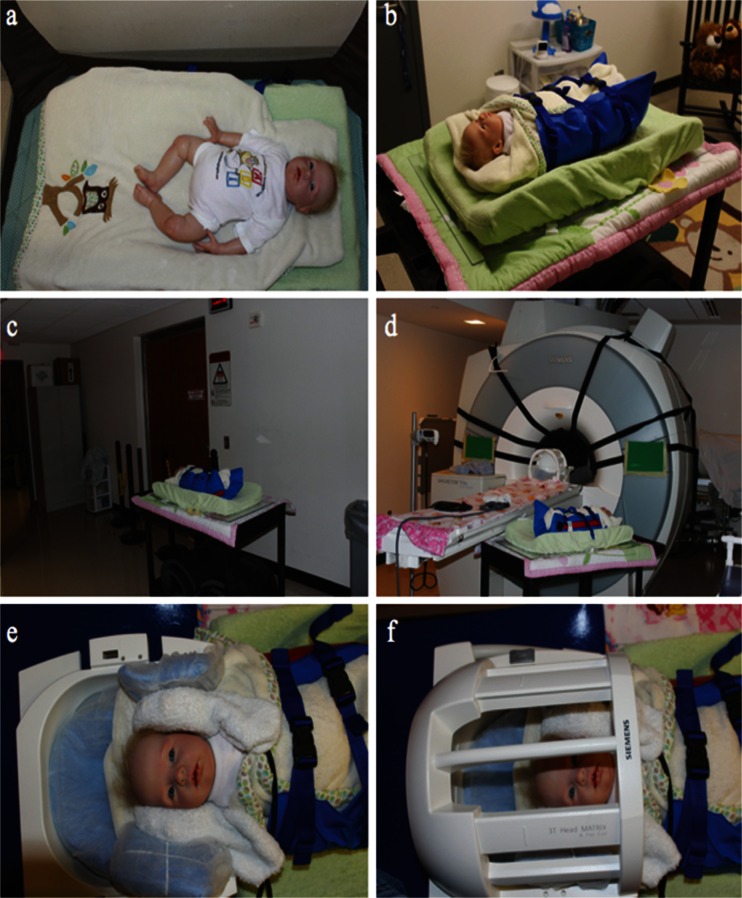
All children were imaged during natural, non-sedated sleep. Active and passive measures to reduce acoustic noise were implemented to reduce the likelihood of the children waking up during acquisition. Foam cushions and vacuum immobilizers were used to limit intra-scan motion artifacts.
More than 380 MRI datasets have been successfully acquired from 220 children younger than 4 years of age within the past 39 months. Implemented measures permitted children to remain asleep for the duration of the scan and allowed the data to be acquired with an overall 97% success rate.
The proposed method greatly advances current pediatric imaging techniques and may be readily implemented in other research and clinical settings to facilitate and further improve pediatric neuroimaging.
为了在明显临床症状出现之前发现潜在的结构和/或功能差异,许多神经和精神疾病的病因研究越来越倾向于对婴儿大脑发育进行纵向研究。虽然 MRI 为研究发育中的大脑提供了一个非侵入性的窗口,但由于该模态对运动极为敏感,以及儿童在图像采集过程中难以保持静止,婴儿和学步儿的 MRI 检查颇具挑战性。
本文概述了一个广泛的研究方案,旨在在自然非镇静睡眠状态下成功对 4 岁以下儿童进行 MRI 检查。
所有儿童均在自然非镇静睡眠状态下进行成像。采取主动和被动措施来降低声噪,以降低儿童在采集过程中醒来的可能性。使用泡沫垫和真空固定器来限制扫描内运动伪影。
在过去的 39 个月中,我们从 220 名年龄小于 4 岁的儿童中成功获得了超过 380 个 MRI 数据集。实施的措施使儿童能够在整个扫描过程中保持睡眠状态,并且数据采集的总体成功率达到 97%。
该方法大大推进了当前的儿科成像技术,并可在其他研究和临床环境中轻松实施,以促进并进一步改善儿科神经影像学。