Division of Biological Sciences, University of Montana Missoula, Canada.
Ecol Evol. 2013 Jul;3(7):1837-47. doi: 10.1002/ece3.589. Epub 2013 May 18.
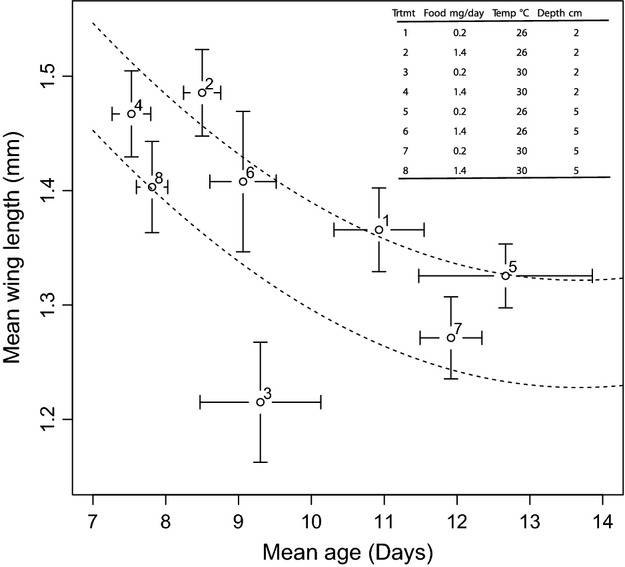
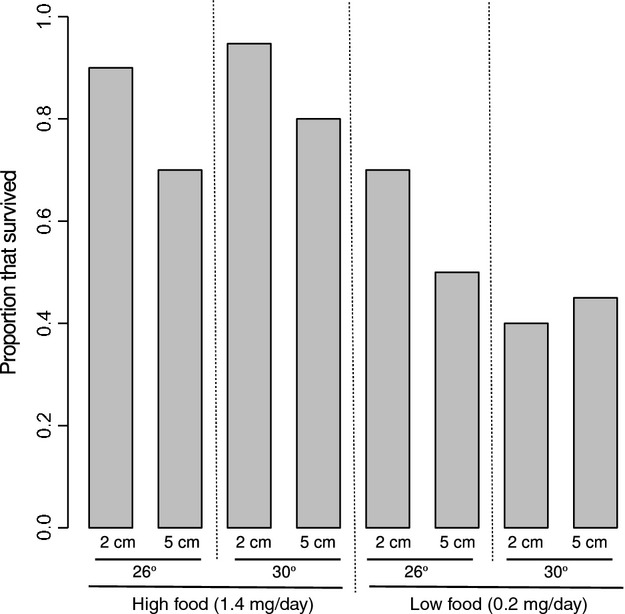
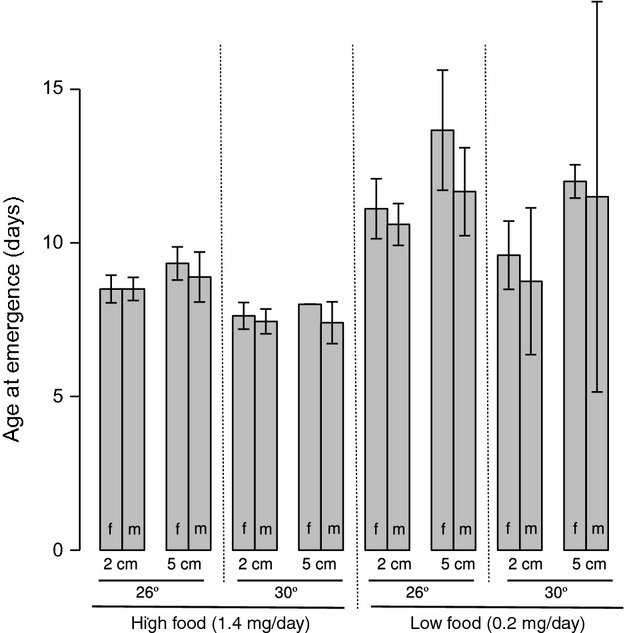
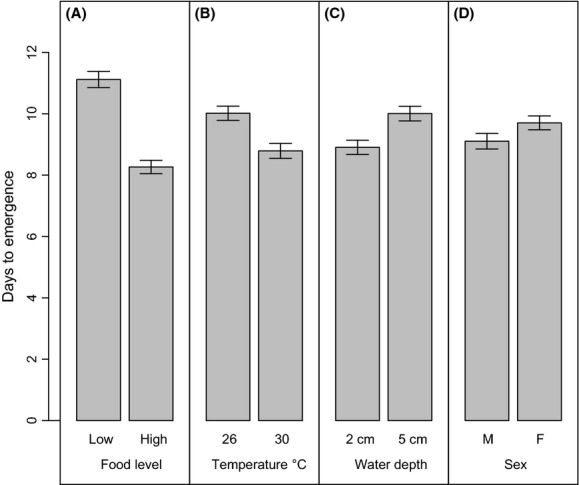
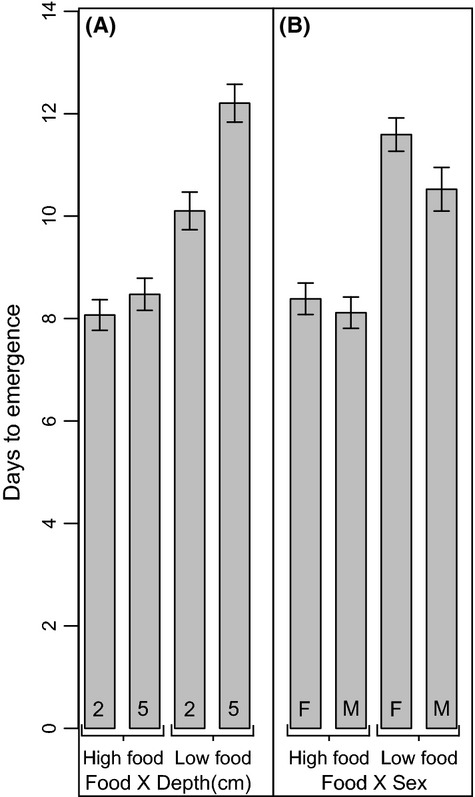
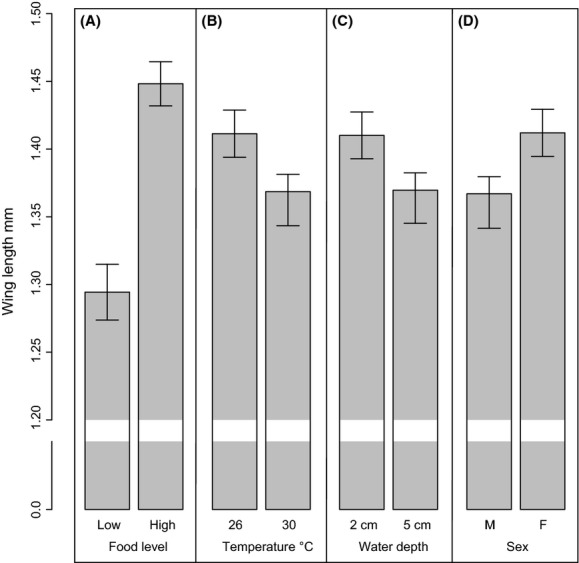
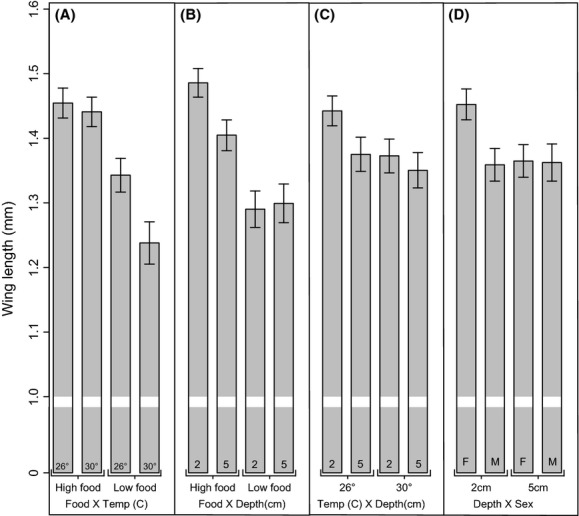
Environmental factors frequently act nonindependently to determine growth and development of insects. Because age and size at maturity strongly influence population dynamics, interaction effects among environmental variables complicate the task of predicting dynamics of insect populations under novel conditions. We reared larvae of the African malaria mosquito Anopheles gambiae sensu stricto (s.s.) under three factors relevant to changes in climate and land use: food level, water depth, and temperature. Each factor was held at two levels in a fully crossed design, for eight experimental treatments. Larval survival, larval development time, and adult size (wing length) were measured to indicate the importance of interaction effects upon population-level processes. For age and size at emergence, but not survival, significant interaction effects were detected for all three factors, in addition to sex. Some of these interaction effects can be understood as consequences of how the different factors influence energy usage in the context of a nonindependent relationship between age and size. Experimentally assessing interaction effects for all potential future sets of conditions is intractable. However, considering how different factors affect energy usage within the context of an insect's evolved developmental program can provide insight into the causes of complex environmental effects on populations.
环境因素经常非独立地作用于昆虫的生长和发育。由于成熟时的年龄和大小强烈影响种群动态,因此环境变量之间的相互作用使预测昆虫种群在新条件下的动态变得复杂。我们在与气候变化和土地利用相关的三个因素下饲养了非洲疟蚊按蚊 sensu stricto (s.s.) 的幼虫:食物水平、水深和温度。每个因素在完全交叉设计中保持两个水平,共进行了 8 种实验处理。测量幼虫存活率、幼虫发育时间和成虫大小(翅膀长度),以表明种群水平过程中相互作用的重要性。对于出现的年龄和大小,但不是存活率,除了性别之外,所有三个因素都检测到了显著的相互作用效应。其中一些相互作用效应可以理解为不同因素如何在年龄和大小之间非独立关系的背景下影响能量使用的结果。对于所有潜在的未来条件集,实验评估相互作用效应是不可行的。然而,考虑不同因素如何在昆虫进化的发育计划的背景下影响能量使用,可以深入了解复杂的环境效应对种群的影响的原因。