Biologie du Cancer et de l'Infection (UMR-S1036) and Biologie à Grande Echelle (UMR1038), INSERM, Grenoble, France.
mBio. 2013 Aug 6;4(4):e00309-13. doi: 10.1128/mBio.00309-13.
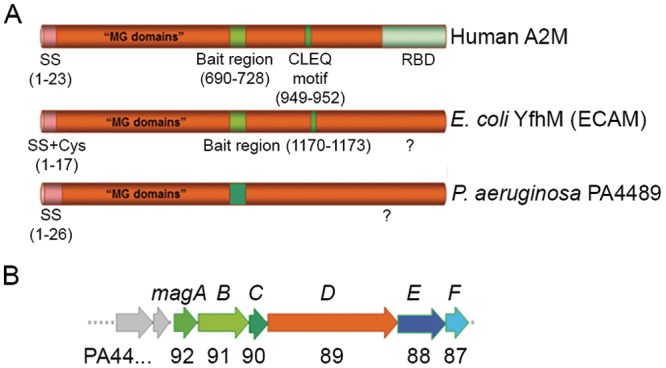
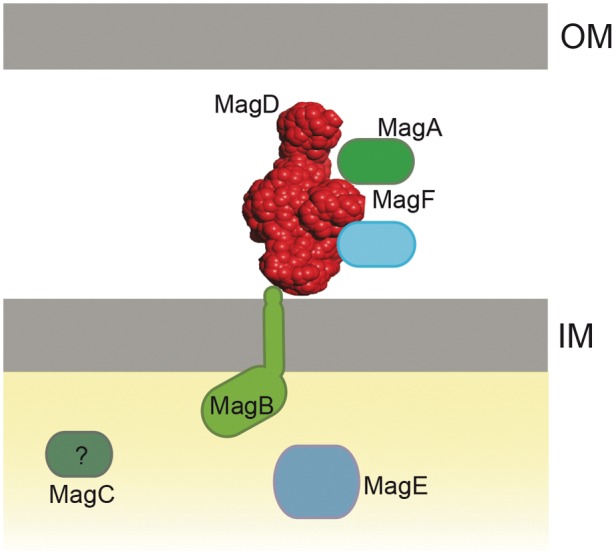
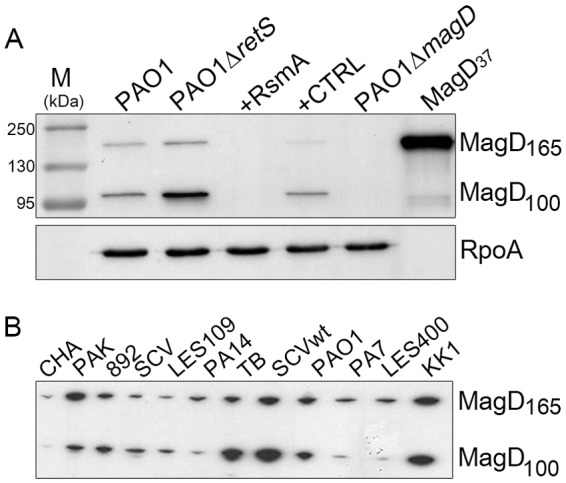
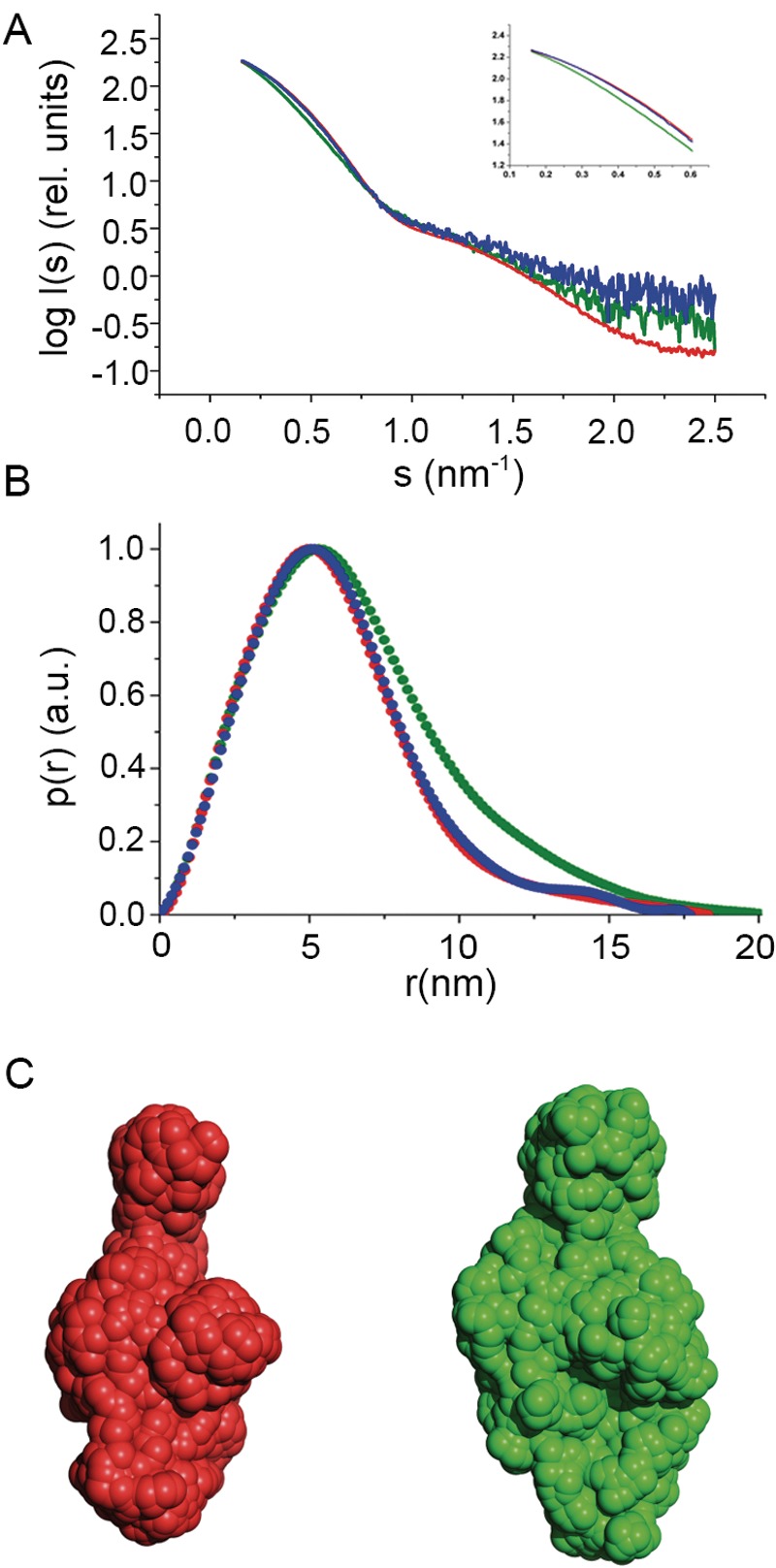
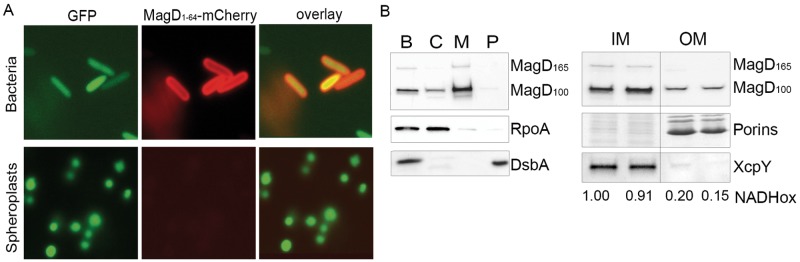
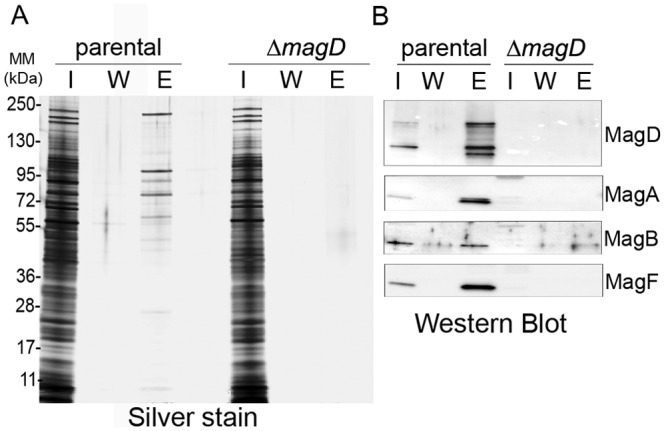
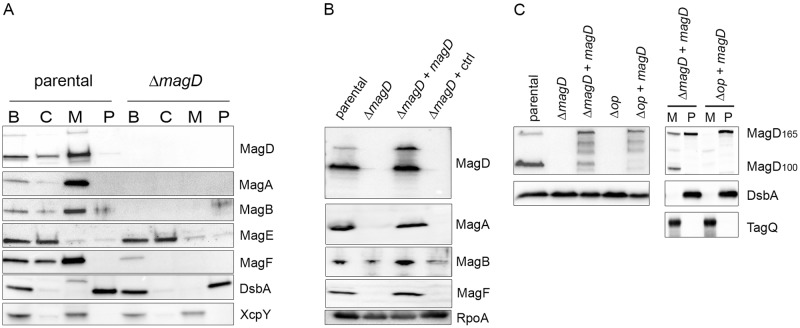
Human pathogens frequently use protein mimicry to manipulate host cells in order to promote their survival. Here we show that the opportunistic pathogen Pseudomonas aeruginosa synthesizes a structural homolog of the human α2-macroglobulin, a large-spectrum protease inhibitor and important player of innate immunity. Small-angle X-ray scattering analysis demonstrated that the fold of P. aeruginosa MagD (PA4489) is similar to that of the human macroglobulin and undergoes a conformational modification upon binding of human neutrophil elastase. MagD synthesis is under the control of a general virulence regulatory pathway including the inner membrane sensor RetS and the RNA-binding protein RsmA, and MagD undergoes cleavage from a 165-kDa to a 100-kDa form in all clinical isolates tested. Fractionation and immunoprecipitation experiments showed that MagD is translocated to the bacterial periplasm and resides within the inner membrane in a complex with three other molecular partners, MagA, MagB, and MagF, all of them encoded by the same six-gene genetic element. Inactivation of the whole 10-kb operon on the PAO1 genome resulted in mislocalization of uncleaved, in trans-provided MagD as well as its rapid degradation. Thus, pathogenic bacteria have acquired a homolog of human macroglobulin that plays roles in host-pathogen interactions potentially through recognition of host proteases and/or antimicrobial peptides; it is thus essential for bacterial defense.
The pathogenesis of Pseudomonas aeruginosa is multifactorial and relies on surface-associated and secreted proteins with different toxic activities. Here we show that the bacterium synthesizes a 160-kDa structural homolog of the human large-spectrum protease inhibitor α2-macroglobulin. The bacterial protein is localized in the periplasm and is associated with the inner membrane through the formation of a multimolecular complex. Its synthesis is coregulated at the posttranscriptional level with other virulence determinants, suggesting that it has a role in bacterial pathogenicity and/or in defense against the host immune system. Thus, this new P. aeruginosa macromolecular complex may represent a future target for antibacterial developments.
人体病原体经常利用蛋白质模拟来操纵宿主细胞,以促进其存活。在这里,我们表明,机会性病原体铜绿假单胞菌合成了人类 α2-巨球蛋白的结构类似物,α2-巨球蛋白是一种广谱蛋白酶抑制剂,也是先天免疫的重要参与者。小角度 X 射线散射分析表明,铜绿假单胞菌 MagD(PA4489)的折叠与人类巨球蛋白相似,并在与人中性粒细胞弹性蛋白酶结合时发生构象修饰。MagD 的合成受包括内膜传感器 RetS 和 RNA 结合蛋白 RsmA 在内的一般毒力调控途径的控制,并且在所有测试的临床分离株中,MagD 从 165 kDa 形式切割为 100 kDa 形式。分馏和免疫沉淀实验表明,MagD 易位到细菌周质,并与另外三个分子伴侣 MagA、MagB 和 MagF 一起位于内膜中,它们均由相同的六个基因遗传元件编码。PAO1 基因组上整个 10 kb 操纵子的失活导致未切割的 MagD 及其在转位时的快速降解。因此,病原菌获得了人类巨球蛋白的同源物,该同源物可能通过识别宿主蛋白酶和/或抗菌肽在宿主-病原体相互作用中发挥作用;因此,这对细菌防御至关重要。
铜绿假单胞菌的发病机制是多因素的,依赖于具有不同毒性活性的表面相关和分泌蛋白。在这里,我们表明该细菌合成了人类广谱蛋白酶抑制剂 α2-巨球蛋白的 160 kDa 结构类似物。该细菌蛋白位于周质中,并通过形成多分子复合物与内膜相关联。它的合成在转录后水平与其他毒力决定因素共同调控,表明它在细菌致病性和/或防御宿主免疫系统方面具有作用。因此,这个新的铜绿假单胞菌大分子复合物可能成为未来抗菌药物开发的目标。