Institut Curie, Centre de Recherche, Paris, France.
PLoS One. 2013 Jul 29;8(7):e69450. doi: 10.1371/journal.pone.0069450. Print 2013.
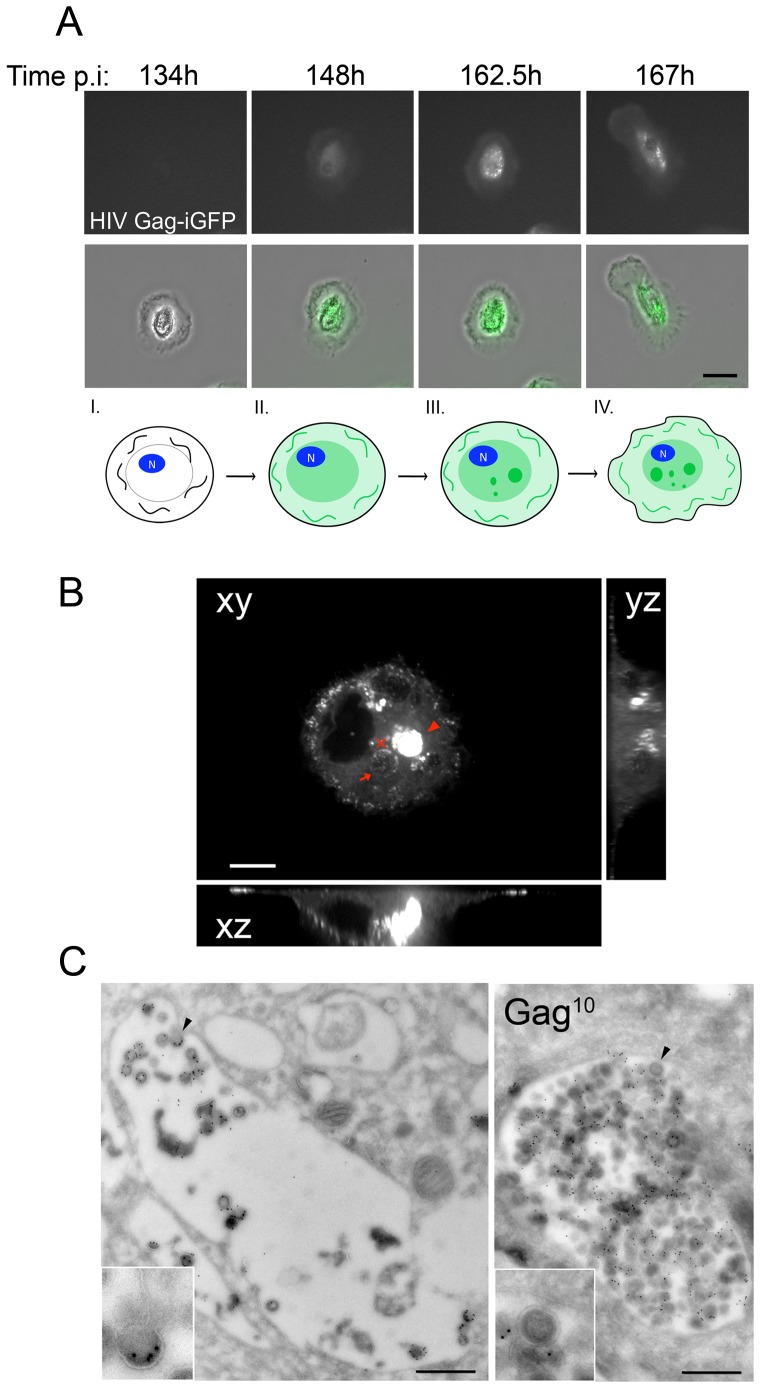
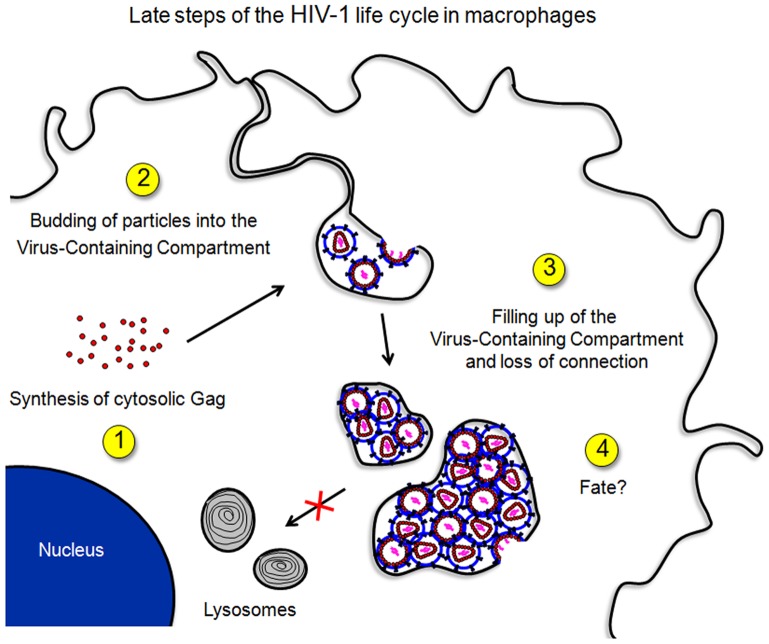
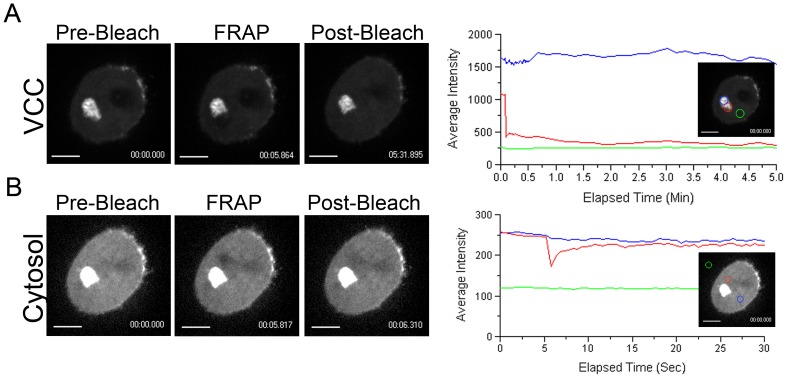
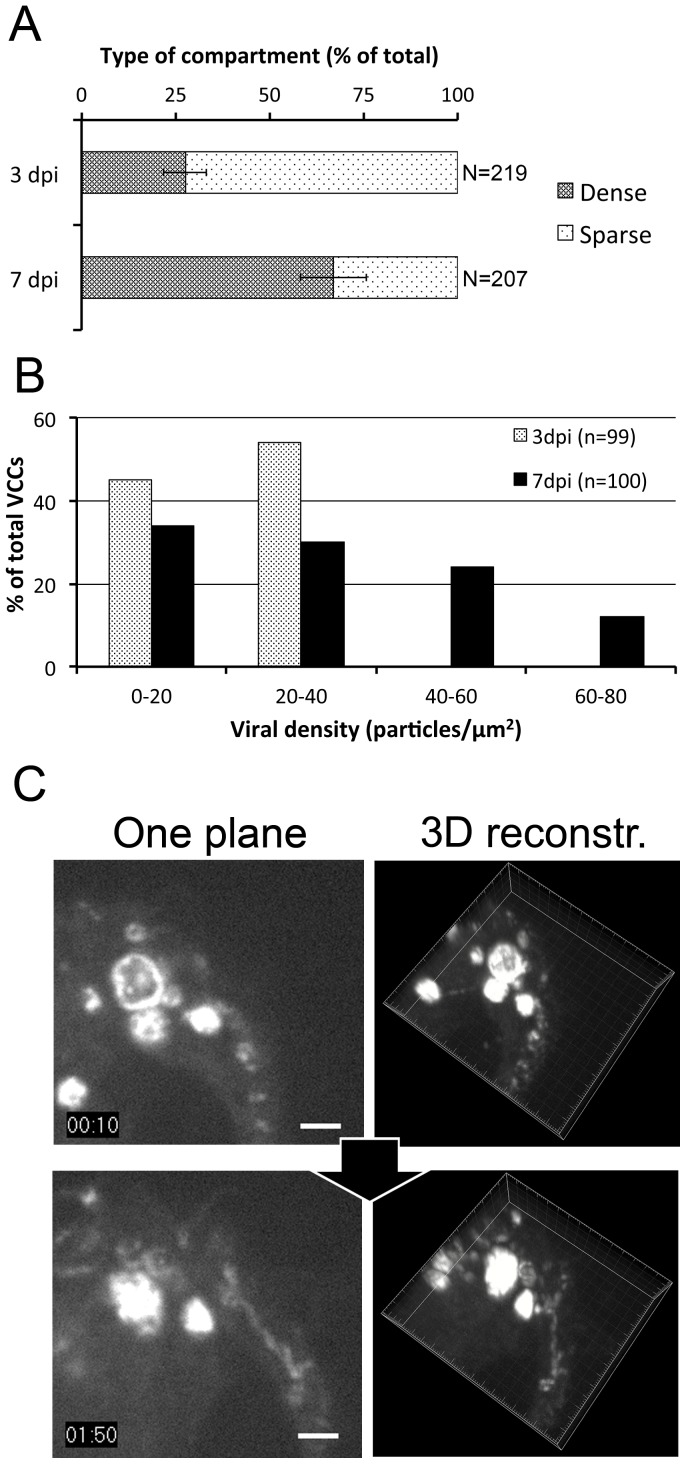
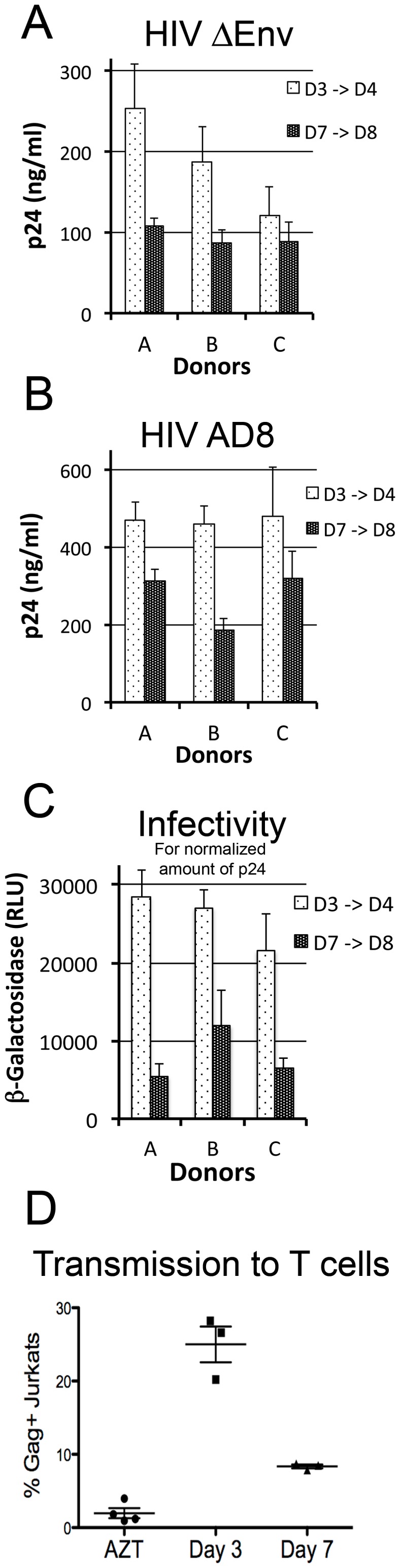
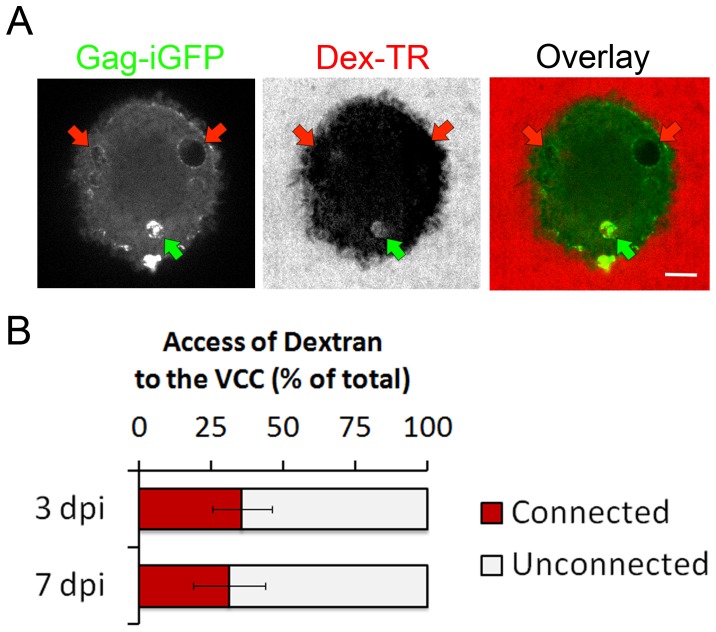
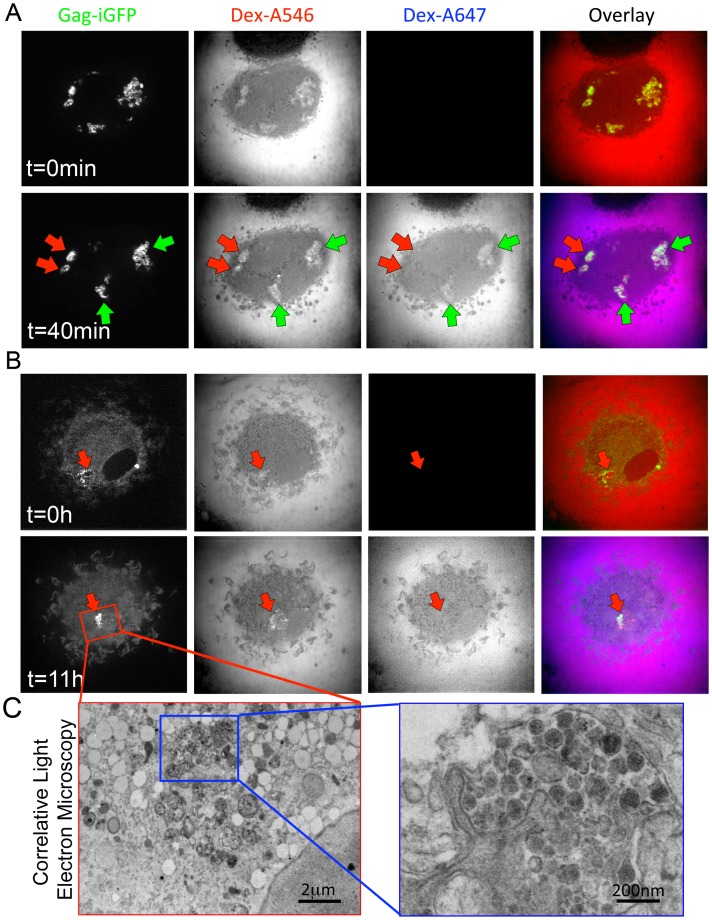
During HIV pathogenesis, infected macrophages behave as "viral reservoirs" that accumulate and retain virions within dedicated internal Virus-Containing Compartments (VCCs). The nature of VCCs remains ill characterized and controversial. Using wild-type HIV-1 and a replication-competent HIV-1 carrying GFP internal to the Gag precursor, we analyzed the biogenesis and evolution of VCCs in primary human macrophages. VCCs appear roughly 14 hours after viral protein synthesis is detected, initially contain few motile viral particles, and then mature to fill up with virions that become packed and immobile. The amount of intracellular Gag, the proportion of dense VCCs, and the density of viral particles in their lumen increased with time post-infection. In contrast, the secretion of virions, their infectivity and their transmission to T cells decreased overtime, suggesting that HIV-infected macrophages tend to pack and retain newly formed virions into dense compartments. A minor proportion of VCCs remains connected to the plasma membrane overtime. Surprisingly, live cell imaging combined with correlative light and electron microscopy revealed that such connections can be transient, highlighting their dynamic nature. Together, our results shed light on the late phases of the HIV-1 cycle and reveal some of its macrophage specific features.
在 HIV 发病机制中,受感染的巨噬细胞表现为“病毒储存库”,它们在专门的内部病毒包含隔室(VCC)中积累和保留病毒粒子。VCC 的性质仍然难以描述和存在争议。使用野生型 HIV-1 和携带 GFP 内部 Gag 前体的复制型 HIV-1,我们分析了原发性人巨噬细胞中 VCC 的发生和演变。VCC 大约在检测到病毒蛋白合成后 14 小时出现,最初包含很少的运动性病毒颗粒,然后成熟并充满被包装和固定的病毒粒子。细胞内 Gag 的量、致密 VCC 的比例以及腔室内病毒颗粒的密度随着感染后时间的增加而增加。相比之下,病毒粒子的分泌、它们的感染性以及它们向 T 细胞的传播随时间推移而减少,表明感染 HIV 的巨噬细胞倾向于将新形成的病毒粒子包装并保留在致密隔室中。一小部分 VCC 随着时间的推移仍与质膜相连。令人惊讶的是,活细胞成像与相关的光和电子显微镜结合显示,这种连接可以是短暂的,突出了它们的动态性质。总之,我们的结果阐明了 HIV-1 周期的后期阶段,并揭示了其一些巨噬细胞特异性特征。