Department of Gastroenterology and Nephrology, Graduate School of Medicine, Chiba University, Chiba, Japan.
PLoS One. 2013 Jul 29;8(7):e70010. doi: 10.1371/journal.pone.0070010. Print 2013.
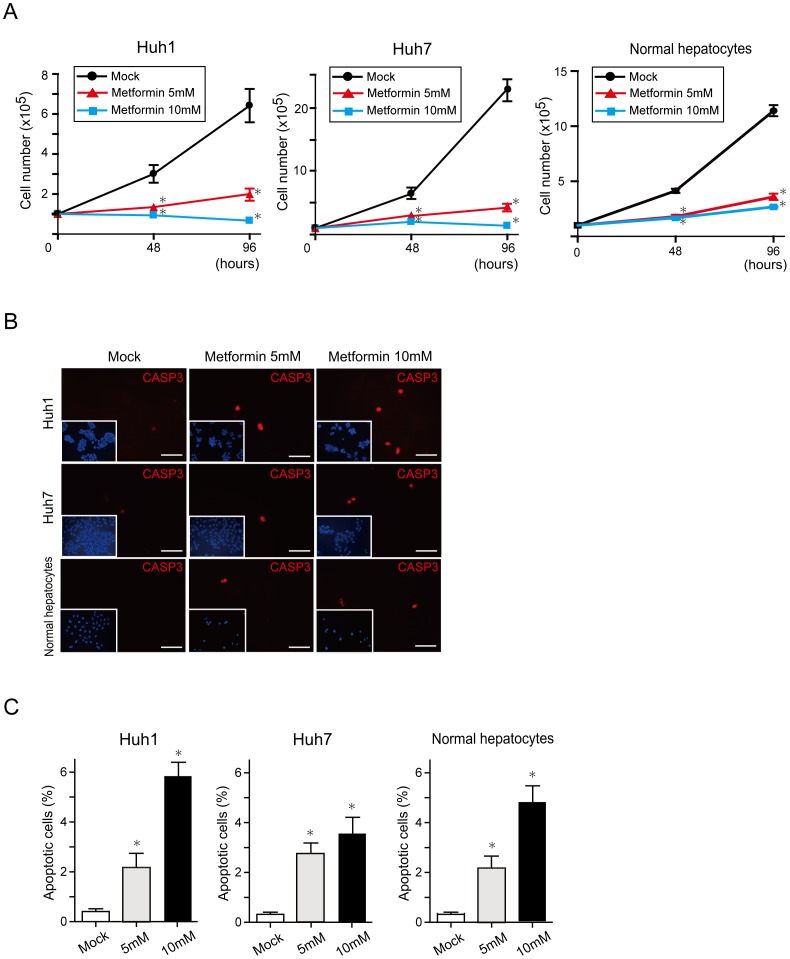
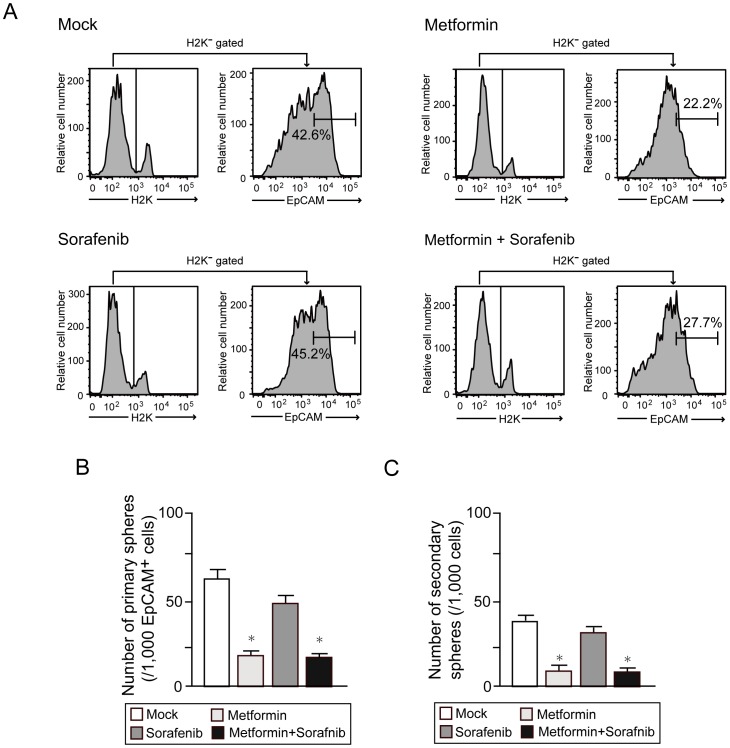
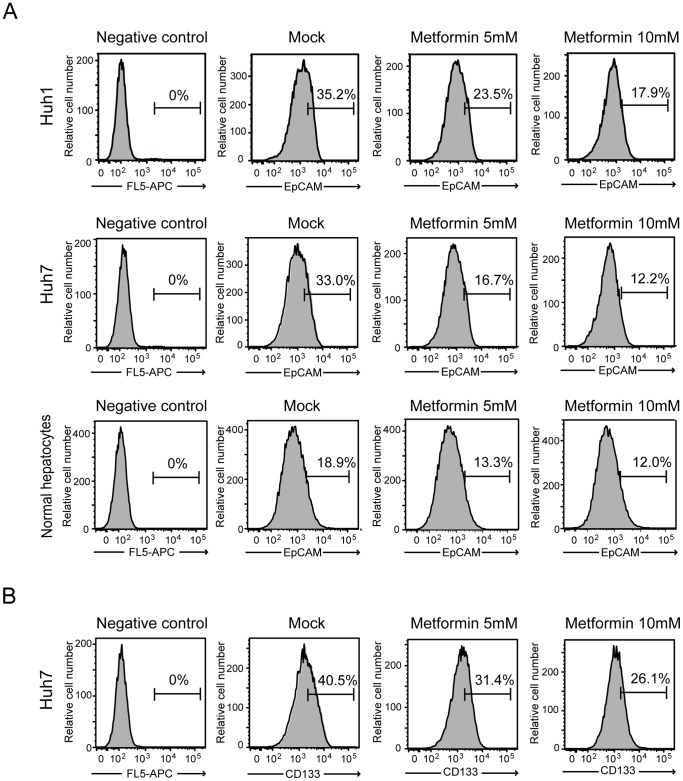
Metformin has been widely used as an oral drug for diabetes mellitus for approximately 60 years. Interestingly, recent reports showed that metformin exhibited an anti-tumor action in a wide range of malignancies including hepatocellular carcinoma (HCC). In the present study, we investigated its impact on tumor-initiating HCC cells. Metformin suppressed cell growth and induced apoptosis in a dose-dependent manner. Flow cytometric analysis showed that metformin treatment markedly reduced the number of tumor-initiating epithelial cell adhesion molecule (EpCAM)(+) HCC cells. Non-adherent sphere formation assays of EpCAM(+) cells showed that metformin impaired not only their sphere-forming ability, but also their self-renewal capability. Consistent with this, immunostaining of spheres revealed that metformin significantly decreased the number of component cells positive for hepatic stem cell markers such as EpCAM and α-fetoprotein. In a xenograft transplantation model using non-obese diabetic/severe combined immunodeficient mice, metformin and/or sorafenib treatment suppressed the growth of tumors derived from transplanted HCC cells. Notably, the administration of metformin but not sorafenib decreased the number of EpCAM(+) cells and impaired their self-renewal capability. As reported, metformin activated AMP-activated protein kinase (AMPK) through phosphorylation; however its inhibitory effect on the mammalian target of rapamycin (mTOR) pathway did not necessarily correlate with its anti-tumor activity toward EpCAM(+) tumor-initiating HCC cells. These results indicate that metformin is a promising therapeutic agent for the elimination of tumor-initiating HCC cells and suggest as-yet-unknown functions other than its inhibitory effect on the AMPK/mTOR pathway.
二甲双胍作为一种治疗糖尿病的口服药物,已经广泛使用了大约 60 年。有趣的是,最近的报告显示,二甲双胍在包括肝细胞癌(HCC)在内的多种恶性肿瘤中表现出抗肿瘤作用。在本研究中,我们研究了它对肿瘤起始 HCC 细胞的影响。二甲双胍以剂量依赖性方式抑制细胞生长并诱导细胞凋亡。流式细胞术分析显示,二甲双胍处理显著降低了肿瘤起始上皮细胞黏附分子(EpCAM)(+)HCC 细胞的数量。EpCAM(+)细胞的非贴壁球体形成实验表明,二甲双胍不仅损害了它们的球体形成能力,而且损害了它们的自我更新能力。与此一致的是,球体免疫染色显示,二甲双胍显著降低了肝干细胞标志物如 EpCAM 和甲胎蛋白阳性的组成细胞的数量。在使用非肥胖型糖尿病/严重联合免疫缺陷小鼠的异种移植移植模型中,二甲双胍和/或索拉非尼治疗抑制了源自移植 HCC 细胞的肿瘤的生长。值得注意的是,二甲双胍而非索拉非尼的给药降低了 EpCAM(+)细胞的数量并损害了它们的自我更新能力。据报道,二甲双胍通过磷酸化激活 AMP 激活的蛋白激酶(AMPK);然而,其对哺乳动物雷帕霉素靶蛋白(mTOR)途径的抑制作用并不一定与其对 EpCAM(+)肿瘤起始 HCC 细胞的抗肿瘤活性相关。这些结果表明,二甲双胍是一种有前途的治疗药物,可用于消除肿瘤起始 HCC 细胞,并暗示其除了抑制 AMPK/mTOR 途径之外还有未知的功能。