Department of Pathology and Molecular Medicine, Queen's University, Kingston, ON, Canada.
Int J Cancer. 2014 Mar 1;134(5):1055-66. doi: 10.1002/ijc.28432. Epub 2013 Sep 19.
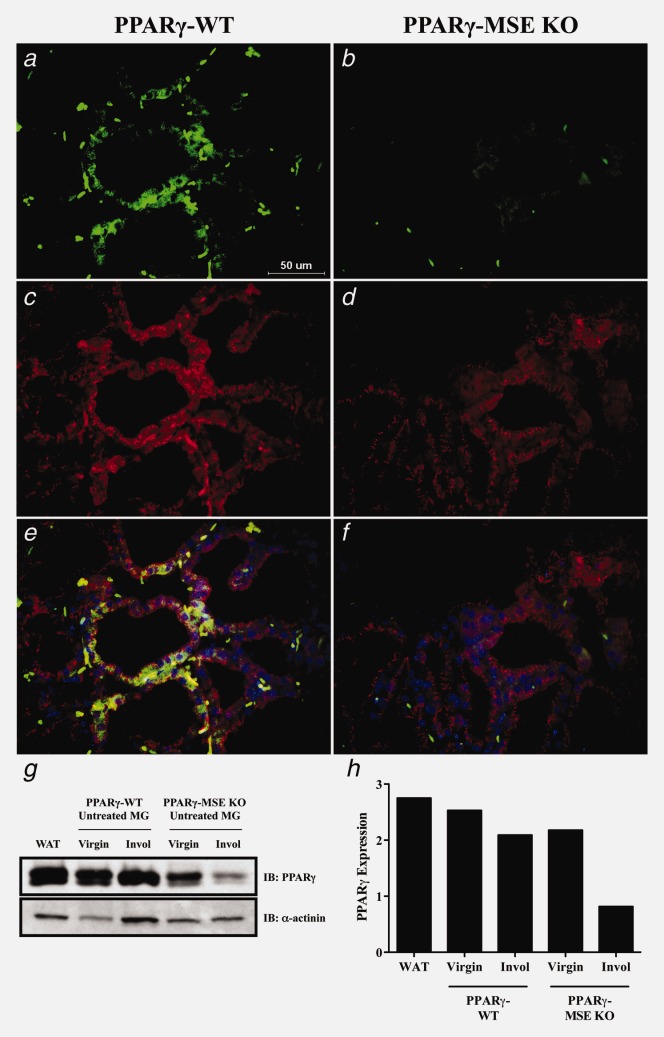
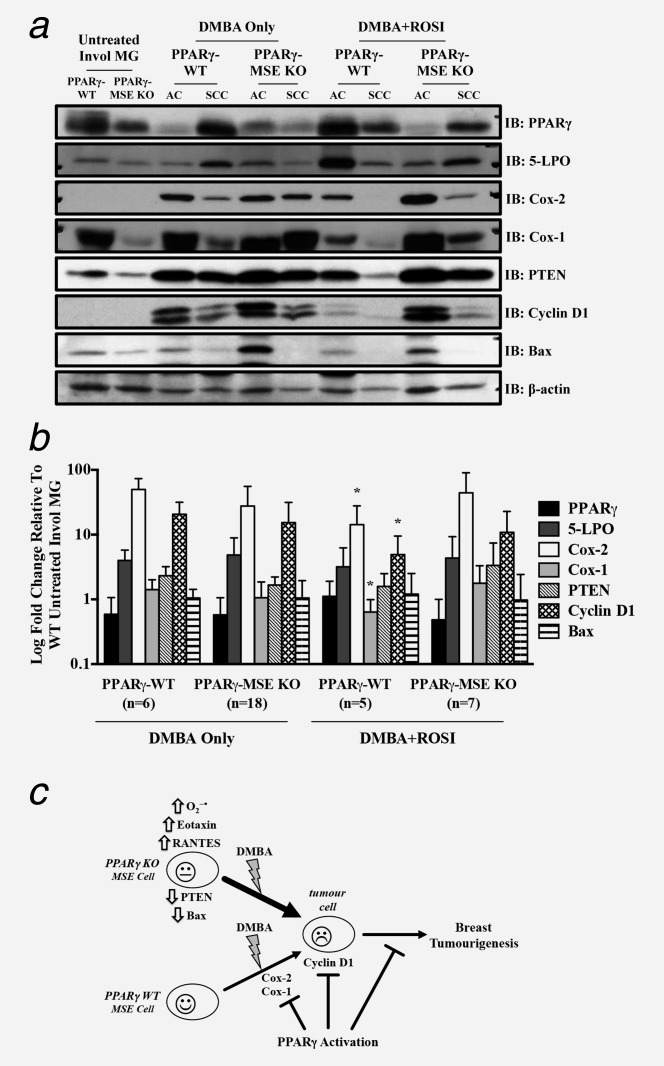
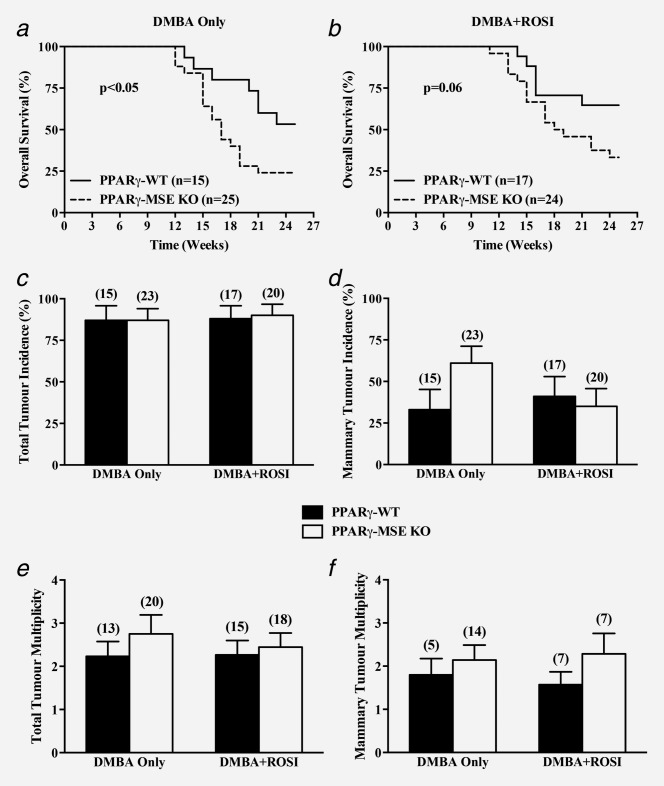
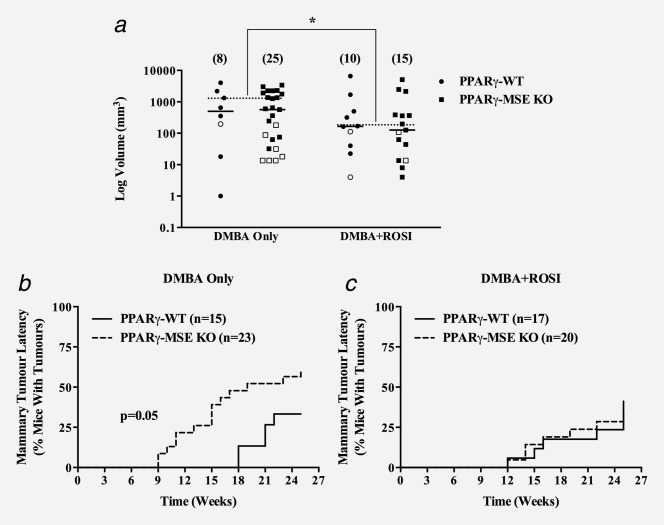
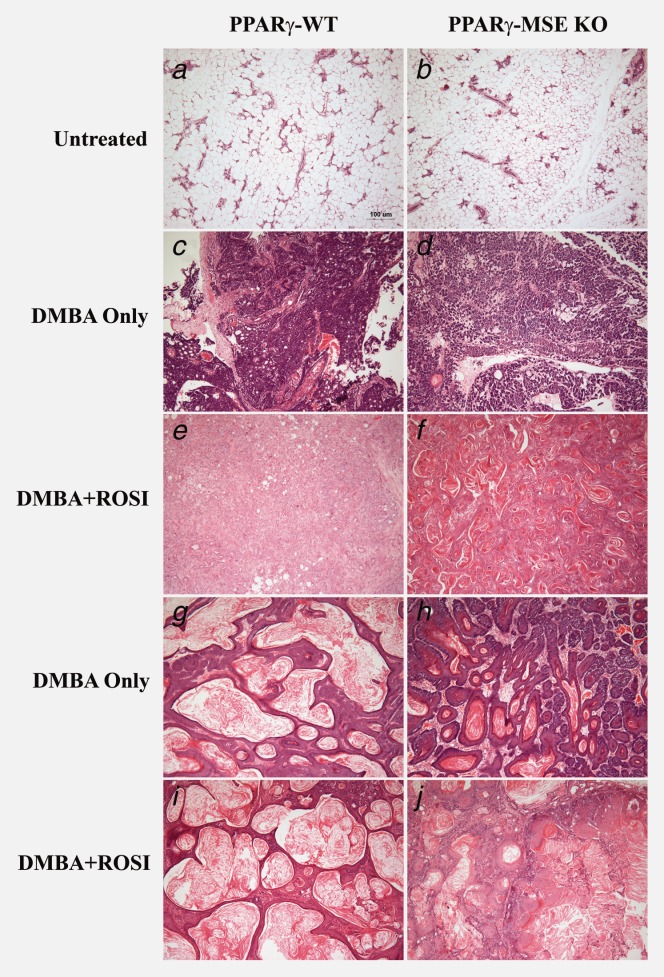
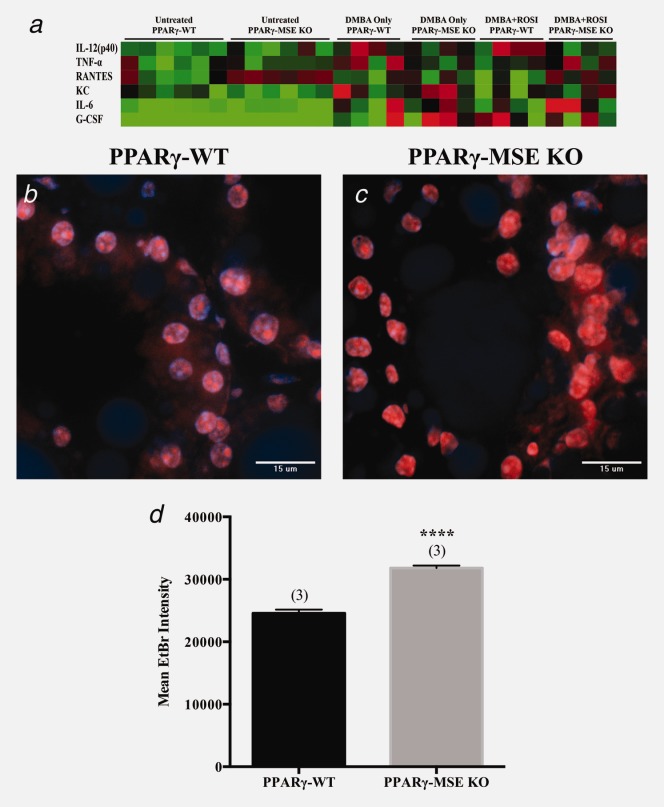
Breast cancer is the leading cause of new cancer diagnoses among women. Using peroxisome proliferator-activated receptor (PPAR)γ((+/-)) mice, we showed normal expression of PPARγ was critical to stop 7,12-dimethylbenz[a]anthracene (DMBA)-induced breast tumorigenesis. PPARγ is expressed in many breast cell types including mammary secretory epithelial (MSE) cells. MSEs proliferate as required during pregnancy, and undergo apoptosis or reversible transdifferentiation during involution once lactation is complete. Thus, MSE-specific loss of PPARγ was hypothesized to enhance DMBA-mediated breast tumorigenesis. To test this, MSE cell-specific PPARγ knockout (PPARγ-MSE KO) and control (PPARγ-WT) mice were generated, mated and allowed to nurse for three days. One week after involution, dams were treated with DMBA to initiate breast tumors, and randomized on week 7 to continue receiving a normal chow diet (DMBA Only: PPARγ-WT, n = 15; PPARγ-MSE KO, n = 25) or one supplemented with a PPARγ activating drug (DMBA + ROSI: PPARγ-WT, n = 17; PPARγ-MSE KO, n = 24), and monitored for changes in breast tumor outcomes. PPARγ-MSE KOs had significantly lower overall survival and decreased mammary tumor latency as compared to PPARγ-WT controls. PPARγ activation significantly reduced DMBA-mediated malignant mammary tumor volumes irrespective of genotype. MSE-specific PPARγ loss resulted in decreased mammary gland expression of PTEN and Bax, increased superoxide anion production, and elevated serum eotaxin and RANTES, creating a protumorigenic environment. Moreover, PPARγ activation in MSEs delayed mammary tumor growth in part by down-regulating Cox-1, Cox-2 and cyclin D1. Collectively, these studies highlight a protective role of MSE-specific PPARγ during breast tumorigenesis, and support a novel chemotherapeutic role of PPARγ activation in breast cancer.
乳腺癌是女性中癌症新发病例的主要原因。我们使用过氧化物酶体增殖物激活受体 (PPAR)γ((+/-)) 小鼠,结果表明 PPARγ 的正常表达对于阻止 7,12-二甲基苯并[a]蒽(DMBA)诱导的乳腺癌发生至关重要。PPARγ 在许多乳腺细胞类型中表达,包括乳腺分泌上皮 (MSE) 细胞。在怀孕期间,MSE 细胞按需增殖,一旦哺乳结束,就会通过细胞凋亡或可逆的转分化来进行 involution。因此,假设 MSE 特异性缺失 PPARγ 会增强 DMBA 介导的乳腺癌发生。为了验证这一点,我们生成了 MSE 细胞特异性 PPARγ 敲除 (PPARγ-MSE KO) 和对照 (PPARγ-WT) 小鼠,让它们交配并哺乳三天。 involution 一周后,用 DMBA 处理母鼠以启动乳腺肿瘤,并在第 7 周随机分配继续接受正常的普通饲料 (DMBA Only: PPARγ-WT,n = 15; PPARγ-MSE KO,n = 25) 或补充一种 PPARγ 激活药物 (DMBA + ROSI: PPARγ-WT,n = 17; PPARγ-MSE KO,n = 24),并监测乳腺肿瘤结局的变化。与 PPARγ-WT 对照组相比,PPARγ-MSE KO 小鼠的总生存率显著降低,乳腺肿瘤潜伏期缩短。PPARγ 激活显著降低了无论基因型如何,DMBA 介导的恶性乳腺肿瘤体积。MSE 特异性 PPARγ 缺失导致乳腺组织中 PTEN 和 Bax 的表达减少,超氧阴离子产生增加,血清 eotaxin 和 RANTES 水平升高,形成促肿瘤环境。此外,PPARγ 在 MSE 中的激活部分通过下调 Cox-1、Cox-2 和 cyclin D1 来延迟乳腺肿瘤的生长。总之,这些研究强调了 MSE 特异性 PPARγ 在乳腺癌发生过程中的保护作用,并支持 PPARγ 激活在乳腺癌中的新型化疗作用。